
Anodizing, conversion & passivation
Treatments that transform the metal surface itself — anodize, chem film, passivation, black oxide, phosphate.
Anodizing & conversion coatings
Grows or converts the metal surface itself — anodize, chem film, magnesium conversion. Thin, tightly bonded, no peeling.
| Finish | Suitable materials | Thickness (µm) | Hardness (HV) | Salt spray (h) | Max temp (°C) | Electrical | Relative cost |
|---|---|---|---|---|---|---|---|
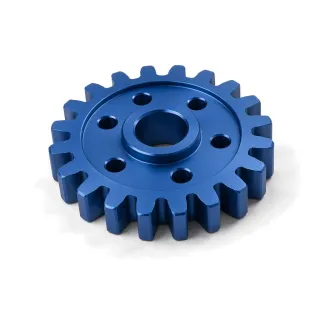 Anodizing Type II Type II sulfuric anodizing converts aluminum into a porous aluminum-oxide coating that can be clear or dyed. | Aluminum DMLS / SLM (with care) | 5–25 | 200–400 | 336 | 80 | Insulating | $$Standard |
 Boric-Sulfuric Acid Anodizing Type IC Boric-sulfuric acid anodizing is a thin aerospace aluminum anodize recognized as MIL-A-8625 Type IC. | Aluminum DMLS / SLM (with care) | 2.5–7.5 | 180–350 | 336 | 80 | Insulating | $$$Premium |
 Chemical Conversion Coating Chem film is a thin chemical conversion coating for aluminum that improves corrosion resistance while retaining useful electrical conductivity. | Aluminum DMLS / SLM (with care) | 0.1–1.5 | — | 168 | 80 | Conductive | $Budget |
 Chromic Acid Anodizing Type I Type I and low-voltage Type IB chromic-acid anodizing form thin, corrosion-resistant oxide on aluminum with less fatigue penalty than thick sulfuric anodize. | Aluminum DMLS / SLM (with care) | 0.5–7.5 | 150–300 | 336 | 80 | Insulating | $$$Premium |
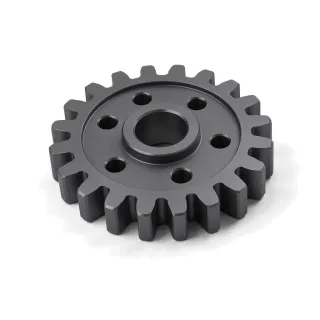 Hard Anodizing Type III Type III hard anodizing forms a thick, dense aluminum-oxide layer for sliding, abrasive, and high-load service. | Aluminum DMLS / SLM (with care) | 25–75 | 350–550 | 336 | 200 | Insulating | $$$Premium |
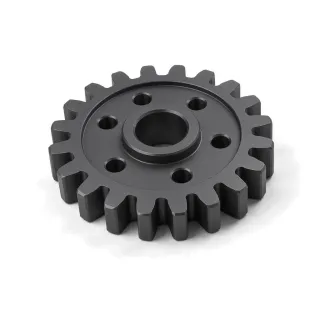 Hard Anodizing Type III With PTFE PTFE hard anodize combines a 25–75 µm Type III oxide with a fluoropolymer impregnation or post-treatment to reduce friction. | Aluminum DMLS / SLM (with care) | 25–75 | 350–550 | 336 | 200 | Insulating | $$$Premium |
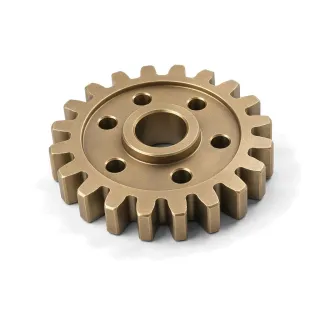 Magnesium Chemical Conversion Coating Magnesium conversion coating reacts with magnesium alloys to improve corrosion resistance and paint adhesion with minimal buildup. | Magnesium Alloy DMLS / SLM (limited) | 0.5–5 | — | — | — | Semi-conductive | $$$Premium |
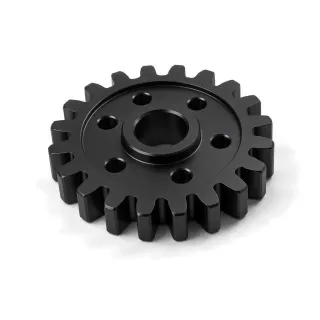 Nitriding and QPQ Nitriding diffuses nitrogen into steel to create a hard wear-resistant case without depositing a conventional coating. | Steel 3 more materials
| 5–20 | 700–1,200 | — | 500 | Unchanged | $$$$High |
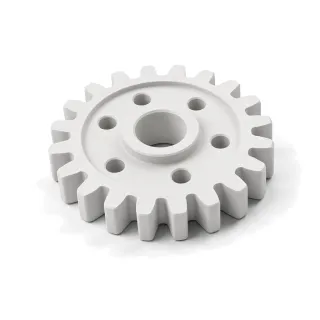 Plasma Electrolytic Oxidation Plasma electrolytic oxidation, also called micro-arc oxidation, creates a thick ceramic oxide on aluminum or magnesium using high-voltage micro-discharges. | AluminumMagnesium Alloy 3 more materials
| 10–150 | 700–1,500 | — | — | Insulating | $$$$High |
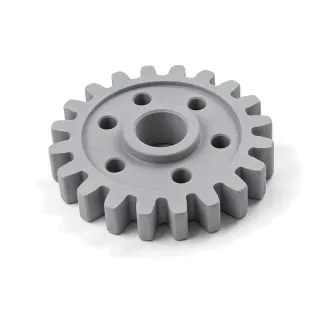 Sherardized Zinc Coating Sherardizing is a thermal-diffusion zinc treatment for steel fasteners and small components, standardized by ASTM A1059. | Steel DMLS / SLM (with care) | 15–75 | 250–400 | 500–1,000 | 250 | Conductive | $$$Premium |
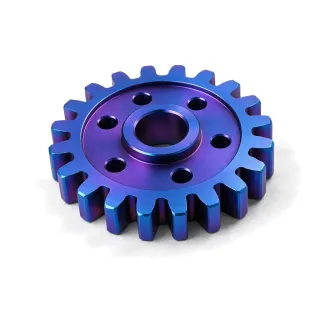 Titanium Color Anodizing Titanium color anodizing grows a transparent oxide whose interference color identifies parts or provides a decorative finish without dyes. | DMLS / SLMTitanium | 0.03–0.2 | — | — | — | Insulating | $$Standard |
Passivation & electropolishing
Cleans and strengthens the natural chromium-oxide film on stainless steel; electropolish also smooths and brightens.
| Finish | Suitable materials | Thickness (µm) | Hardness (HV) | Salt spray (h) | Max temp (°C) | Electrical | Relative cost |
|---|---|---|---|---|---|---|---|
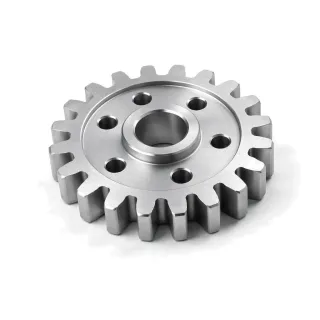 Citric Acid Passivation Citric-acid passivation is a separately searched and specified stainless-steel passivation route that removes free iron without nitric acid. | Stainless Steel DMLS / SLM (with care)Titanium (limited) | No build-up | — | — | — | Unchanged | $Budget |
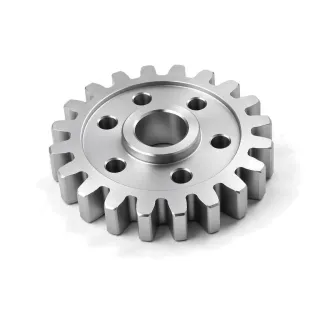 Electropolishing Electropolishing is controlled anodic dissolution that brightens, deburrs, and smooths stainless steel and other qualified alloys. | Stainless Steel 8 more materials
| removes 5–25 | — | — | — | Unchanged | $$$Premium |
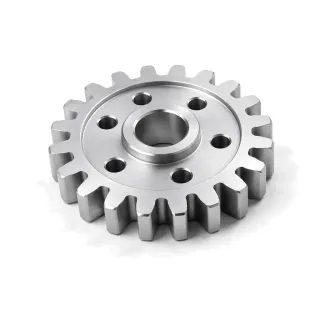 Stainless Steel Passivation Passivation removes free iron and shop contamination from stainless steel so its chromium-rich passive film can reform. | Stainless Steel 3 more materials
| No build-up | — | — | — | Unchanged | $Budget |
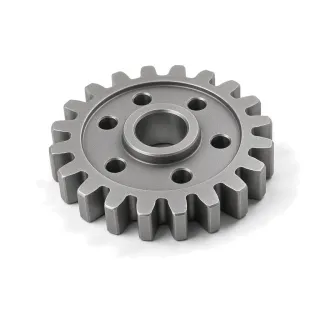 Stainless Steel Pickling Pickling chemically removes weld heat tint, oxide scale, and the chromium-depleted metal beneath it from stainless steel. | Stainless Steel DMLS / SLM (with care)Titanium (limited) | No build-up | — | — | — | Unchanged | $Budget |
Black oxide & phosphate
Low-cost conversion finishes for steel: near-zero build-up, oil-holding, mild corrosion protection, black or grey.
| Finish | Suitable materials | Thickness (µm) | Hardness (HV) | Salt spray (h) | Max temp (°C) | Electrical | Relative cost |
|---|---|---|---|---|---|---|---|
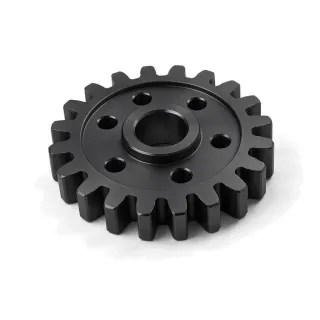 Black Oxide Black oxide converts the surface of ferrous parts to black magnetite for low-reflectance appearance and minimal dimensional change. | Steel DMLS / SLM (with care)Stainless Steel (with care) | 0.5–2 | — | 24–72 | 300 | Semi-conductive | $Budget |
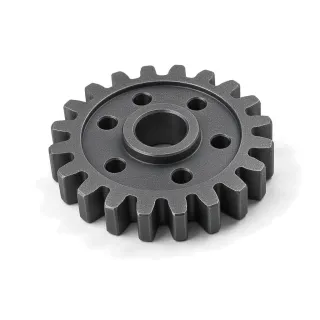 Manganese Phosphate Manganese phosphate is a heavy crystalline conversion coating for steel that retains oil and improves running-in behavior on loaded sliding parts. | Steel DMLS / SLM (with care) | 5–20 | — | 24–72 | — | Semi-conductive | $$Standard |
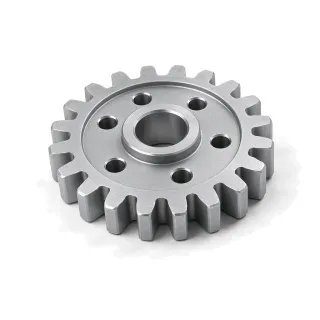 Zinc Phosphate Zinc phosphate forms a crystalline conversion layer on steel, principally as an adhesion and corrosion-resistance base for paint, powder coat, or oil. | Steel DMLS / SLM (with care) | 2–15 | — | 24–72 | — | Semi-conductive | $Budget |
Ranges depend on the substrate and process specification. Open a finish for test conditions and design limits. A dash means no value is listed.
Where anodize & conversion finishes sit
Corrosion protection and surface hardness across the finish library. Click a dot to open its page.
Scores use salt-spray hours and Vickers hardness, both on log scales. Other groups appear as outlines. 10 of the 18 finishes here add no hardness of their own and are not placed.