
Hard Anodizing Type III With PTFE
Anodizing & conversion coatings · Electrolytic bath
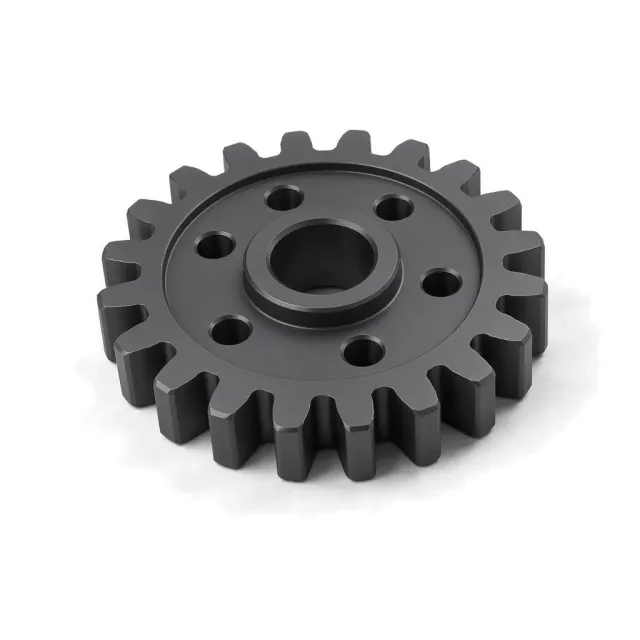
PTFE hard anodize combines a 25–75 µm Type III oxide with a fluoropolymer impregnation or post-treatment to reduce friction.
What is PTFE hard anodize?
It is specified for aluminum pistons, guides, bores, and sliding components that cannot rely on liquid lubricant.
How it works
The aluminum first receives conventional Type III hard anodize in chilled sulfuric acid. Its porous oxide is then impregnated or coated with a PTFE-bearing proprietary treatment and cured according to the processor's system. The hard oxide carries load and resists abrasion; PTFE at and near the surface lowers breakaway friction and reduces sticking. Because MIL-A-8625 controls the anodize but not a universal PTFE formulation, drawings should name the approved process, thickness, sealing condition, and any friction requirement.
Why specify it
- Combines 350–550 HV oxide with dry lubricity
- Uses the same common 25–75 µm Type III thickness range
- Reduces stick-slip on aluminum sliding pairs
- Can eliminate grease in clean or inaccessible mechanisms
Where it falls short
- PTFE benefit diminishes as the exposed polymer wears
- No universal MIL-A-8625 PTFE class exists
- Not suitable for electrical contacts
- Dimensions and edge risks match thick Type III anodize
PTFE hard anodize at a glance
PTFE hard anodize is strongest on corrosion protection (71 of 100) and lubricity (82 of 100), at a premium cost.
Each score is 0–100 against every finish in this catalog. Corrosion comes from salt-spray life (ASTM B117, log scale) and hardness from the finish layer's Vickers or pencil hardness; cosmetic, lubricity and cost are FabDigit's engineering assessment. Economy on the radar is the inverse of cost.
PTFE hard anodize key numbers
Typical values from the governing specifications and shop practice; bars are this finish against the highest value among anodizing & conversion coatings finishes.
- Thickness
- 25–75 µm total hard-anodize system; confirm whether the processor reports oxide only or oxide plus topcoat.
- Hardness
- 350–550 HV — Hardness refers to the underlying Type III oxide, not the soft PTFE-rich surface.
- Corrosion (salt spray)
- 336 h per ASTM B117 for sealed Type III per MIL-A-8625 — Confirm that the selected PTFE treatment also serves as the qualified seal.
- Electrical
- Insulating
- Colours
- natural gray
- black
- Appearance
- Matte gray, charcoal, or black with a low-sheen PTFE-rich surface.
Where PTFE hard anodize sits among all finishes
Surface hardness (Vickers, log scale) against corrosion protection (salt-spray hours, log scale) for every coating FabDigit offers, one cloud per finish group. PTFE hard anodize is highlighted; hover a dot for its name or open the full map.
Specifications for PTFE hard anodize
The documents a drawing cites to define this finish, with the Type / Class rows that apply. Each links to a page explaining the standard, and US Government documents are free to download there.
| Standard | Type / Class | Thickness | Requirement / test | Status |
|---|---|---|---|---|
Anodic Coatings for Aluminum and Aluminum Alloys · DoD | Type I Class 1 | 0.5–7.6 µm | Chromic-acid anodize, non-dyed. · At least 200 mg/ft² unsealed (0.0215 g/dm²). · Coating weight; sealed corrosion test, ASTM B117, 336 h. | Supersedednow MIL-PRF-8625 |
| Type I Class 2 | 0.5–7.6 µm | Chromic-acid anodize, dyed. · At least 200 mg/ft² unsealed (0.0215 g/dm²). · Coating weight; sealed corrosion test, ASTM B117, 336 h; light fastness when specified. | ||
| Type IB Class 1 | 0.5–7.6 µm | Low-voltage chromic-acid anodize, non-dyed. · At least 200 mg/ft² unsealed (0.0215 g/dm²). · Coating weight; sealed corrosion test, ASTM B117, 336 h. | ||
| Type IB Class 2 | 0.5–7.6 µm | Low-voltage chromic-acid anodize, dyed. · At least 200 mg/ft² unsealed (0.0215 g/dm²). · Coating weight; sealed corrosion test, ASTM B117, 336 h; light fastness when specified. | ||
| Type IC Class 1 | 0.5–25.4 µm | Non-chromic alternative to Type I or IB, non-dyed. · 200–700 mg/ft² unsealed (0.0215–0.0753 g/dm²); higher weight only when specified. · Coating weight; sealed corrosion test, ASTM B117, 336 h. | ||
| Type IC Class 2 | 0.5–25.4 µm | Non-chromic alternative to Type I or IB, dyed. · 200–700 mg/ft² unsealed (0.0215–0.0753 g/dm²); higher weight only when specified. · Coating weight; sealed corrosion test, ASTM B117, 336 h; light fastness when specified. | ||
| Type II Class 1 | 2–25 µm | Conventional sulfuric-acid anodize, non-dyed. · At least 1000 mg/ft² unsealed (0.1076 g/dm²). · Coating weight; sealed corrosion test, ASTM B117, 336 h. | ||
| Type II Class 2 | 2–25 µm | Conventional sulfuric-acid anodize, dyed. · At least 1000 mg/ft² unsealed (0.1076 g/dm²). · Coating weight; sealed corrosion test, ASTM B117, 336 h; light fastness when specified. | ||
| Type IIB Class 1 | 0.5–25.4 µm | Thin sulfuric-acid anodize used as a non-chromic alternative to Type I or IB, non-dyed. · 200–1000 mg/ft² unsealed (0.0215–0.1076 g/dm²). · Coating weight; sealed corrosion test, ASTM B117, 336 h. | ||
| Type IIB Class 2 | 0.5–25.4 µm | Thin sulfuric-acid anodize used as a non-chromic alternative to Type I or IB, dyed. · 200–1000 mg/ft² unsealed (0.0215–0.1076 g/dm²). · Coating weight; sealed corrosion test, ASTM B117, 336 h; light fastness when specified. | ||
| Type III Class 1 | 13–114 µm | Hard anodize, non-dyed; thickness must be stated, with 50.8 µm nominal when omitted. · When weight substitutes for thickness: at least 4320 mg/ft² per 0.001 in of unsealed coating (0.465 g/dm² per 25.4 µm). · Thickness or coating weight; abrasion resistance; corrosion test, ASTM B117, 336 h, only when sealed corrosion resistance is specified. | ||
| Type III Class 2 | 13–114 µm | Hard anodize, dyed; thickness must be stated, with 50.8 µm nominal when omitted. · When weight substitutes for thickness: at least 4320 mg/ft² per 0.001 in of unsealed coating (0.465 g/dm² per 25.4 µm). · Thickness or coating weight; abrasion resistance; corrosion test, ASTM B117, 336 h, only when sealed corrosion resistance is specified; light fastness when specified. | ||
Hard Anodic Coating on Aluminum and Aluminum Alloys · SAE · alternative | Standard thickness | 38–64 µm | Default hard anodic coating thickness unless another thickness is specified. · Thickness, coating weight, and abrasion resistance. | Active |
| Specified thickness | — | Purchaser-defined thickness replacing the standard nominal value. · Thickness and applicable performance tests. |
Test and related methods: ASTM B117 (Standard Practice for Operating Salt Spray (Fog) Apparatus).
Drawing call-out
HARD ANODIZE PER MIL-A-8625 TYPE III, 0.0020 IN TOTAL OXIDE THICKNESS, PTFE IMPREGNATED PER APPROVED PROCESS; MASK THREADS AND DATUM APattern: ANODIZE PER MIL-A-8625 TYPE <I|IB|IC|II|IIB|III>, CLASS <1|2>, [COLOR], [THICKNESS FOR TYPE III], [SEAL], [MASKING]
Which materials take PTFE hard anodize?
Verdict per material family, with the grades that behave differently. Each family links to its datasheets in the material library.
| Material family | Verdict | Notes |
|---|---|---|
| Yes | Suitable anodizing-quality aluminum is required.
| |
| With care | Only aluminum DMLS/SLM parts can be processed; steel and titanium builds cannot. | |
| No | Brass is not anodized by this aluminum process. | |
| No | Copper alloys are not anodized by this aluminum process. | |
| No | Fused-filament polymers are incompatible with this process. | |
| No | Magnesium requires a magnesium-specific anodic or conversion process. | |
| No | Polymer powder-bed prints are incompatible with this process. | |
| No | Organic polymers cannot take this inorganic metal-finishing process. | |
| No | Photopolymer prints are incompatible with this process. | |
| No | Polymer powder-bed prints are incompatible with this process. | |
| No | Stainless steel is not anodized by MIL-A-8625 processes. | |
| No | This is an aluminum anodic process; steel does not form this oxide. | |
| No | Titanium uses a different anodizing chemistry. | |
| No | Zinc alloys are not anodized by this aluminum process. |
How PTFE hard anodize is applied, and what it does to the part
- 1Clean / degrease
- 2Etch / desmut
- 3Rack and mask
- 4Type III hard anodize
- 5PTFE impregnate or coat
- 6Cure
- 7Inspect
| Dimensions | Allow about half the oxide thickness outward plus any separately applied PTFE topcoat. |
|---|---|
| Build-up per side | 13–38 µm — Approximate oxide growth; a discrete proprietary topcoat may add further buildup. |
| Masking | Usually needed. Mask threads, electrical contacts, precision fits, and surfaces that must accept adhesive. |
| Electrical | Insulating |
| Temperature limit | 200 °C (392 °F) continuous |
| Appearance | Matte gray, charcoal, or black with a low-sheen PTFE-rich surface. |
| Added lead time | 5–8 working days on top of the bare part |
Design rules for PTFE hard anodize
What to decide on the drawing before the part goes to the finisher.
- Name an approved PTFE process or performance requirement.PTFE hard anodize is not one standardized chemistry.
- Specify whether stated thickness includes the PTFE layer.Processor reporting conventions differ.
- Avoid adhesive bonding on impregnated areas.Low surface energy that reduces friction also impairs adhesion.
- Mask precision fits unless buildup is designed in.A nominal 50 µm oxide adds about 25 µm per side.
PTFE hard anodize versus the alternatives
Finishes engineers weigh against PTFE hard anodize, and when each wins.
| Finish | Corrosion | Hardness | Cosmetic | Cost | Thickness | Choose it when |
|---|---|---|---|---|---|---|
PTFE hard anodize this page | 71 | 61 | 45 | $$$ | 25–75 µm | — |
| 71 | 61 | 50 | $$$ | 25–75 µm | when maximum abrasion performance matters more than low friction |
The radar overlays PTFE hard anodize with Hard Anodizing Type III, its most common alternative — chosen when maximum abrasion performance matters more than low friction. Scores in the table are 0–100 across every finish in the catalog.
Cost, lead time and compliance
Relative cost
Hard Anodizing Type III With PTFE is a premium-cost finish ($$$): more expensive than about 67 % of the finishes FabDigit quotes.
Finishing is priced per part with a lot minimum, from FabDigit's own China-side rates. The exact figure appears on the instant quote once the part is uploaded.
Lead time and compliance
| Added lead time | 5–8 working days |
|---|---|
| RoHS | Conditional |
| Notes | Verify the proprietary fluoropolymer formulation, cure aids, and current PFAS customer requirements. |
What PTFE hard anodize is used for
- Low-friction wear surfaces
- Sliding and mating parts
- Pistons
- Dry-running aluminum bores
PTFE hard anodize — frequently asked
What is PTFE impregnated hard anodize?
It is Type III aluminum oxide whose pores or surface receive a PTFE-bearing treatment. The oxide supplies roughly 350–550 HV hardness while PTFE lowers dry friction.
Is Teflon hard anodize the same as Type III?
It starts with Type III, but the PTFE step is an additional proprietary treatment. MIL-A-8625 does not define a separate Teflon class.
How thick is PTFE hard anodize?
The hard oxide is commonly 25–75 µm, often 50 µm nominal. Ask whether the quoted thickness includes any discrete PTFE topcoat.
Does PTFE hard anodize need lubrication?
It can run dry in suitable light-to-moderate sliding service. High loads, contamination, and long wear life may still require engineered lubrication and pair testing.
Can PTFE hard anodize be used on threads?
Only if pitch-diameter allowance includes about half the oxide thickness per flank plus any topcoat. Precision threads are usually masked.
Other anodizing & conversion coatings finishes
 Anodizing Type IIType II sulfuric anodizing converts aluminum into a porous aluminum-oxide coating that can be clear or dyed.CorrosionHardnessCost$$
 Boric-Sulfuric Acid Anodizing Type ICBoric-sulfuric acid anodizing is a thin aerospace aluminum anodize recognized as MIL-A-8625 Type IC.CorrosionHardnessCost$$$
 Chemical Conversion CoatingChem film is a thin chemical conversion coating for aluminum that improves corrosion resistance while retaining useful electrical conductivity.CorrosionHardnessCost$
 Chromic Acid Anodizing Type IType I and low-voltage Type IB chromic-acid anodizing form thin, corrosion-resistant oxide on aluminum with less fatigue penalty than thick sulfuric anodize.CorrosionHardnessCost$$$
 Magnesium Chemical Conversion CoatingMagnesium conversion coating reacts with magnesium alloys to improve corrosion resistance and paint adhesion with minimal buildup.CorrosionHardnessCost$$$
 Nitriding and QPQNitriding diffuses nitrogen into steel to create a hard wear-resistant case without depositing a conventional coating.CorrosionHardnessCost$$$$
 Plasma Electrolytic OxidationPlasma electrolytic oxidation, also called micro-arc oxidation, creates a thick ceramic oxide on aluminum or magnesium using high-voltage micro-discharges.CorrosionHardnessCost$$$$
 Sherardized Zinc CoatingSherardizing is a thermal-diffusion zinc treatment for steel fasteners and small components, standardized by ASTM A1059.CorrosionHardnessCost$$$
Compare every anodizing & conversion coatings finish side by side →