FabDigit
Battery & Storage

A pack is a supply chain in a steel box.

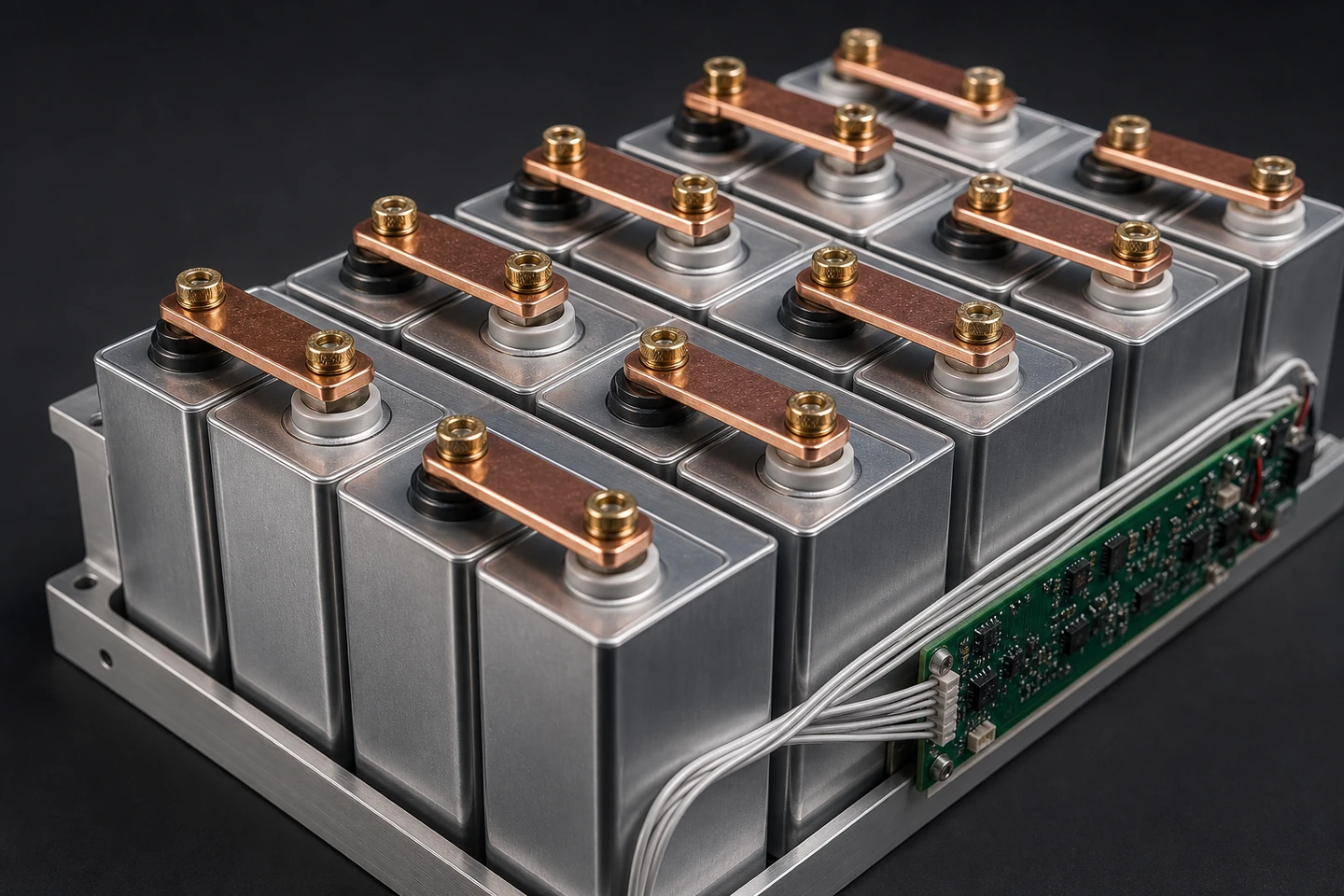
Cell carriers, busbars, BMS PCBs, pack housings, cooling plates, and compression hardware. We build the metal and the boards your battery program is bottlenecked on — and our engineering team will help you spec them right the first time.

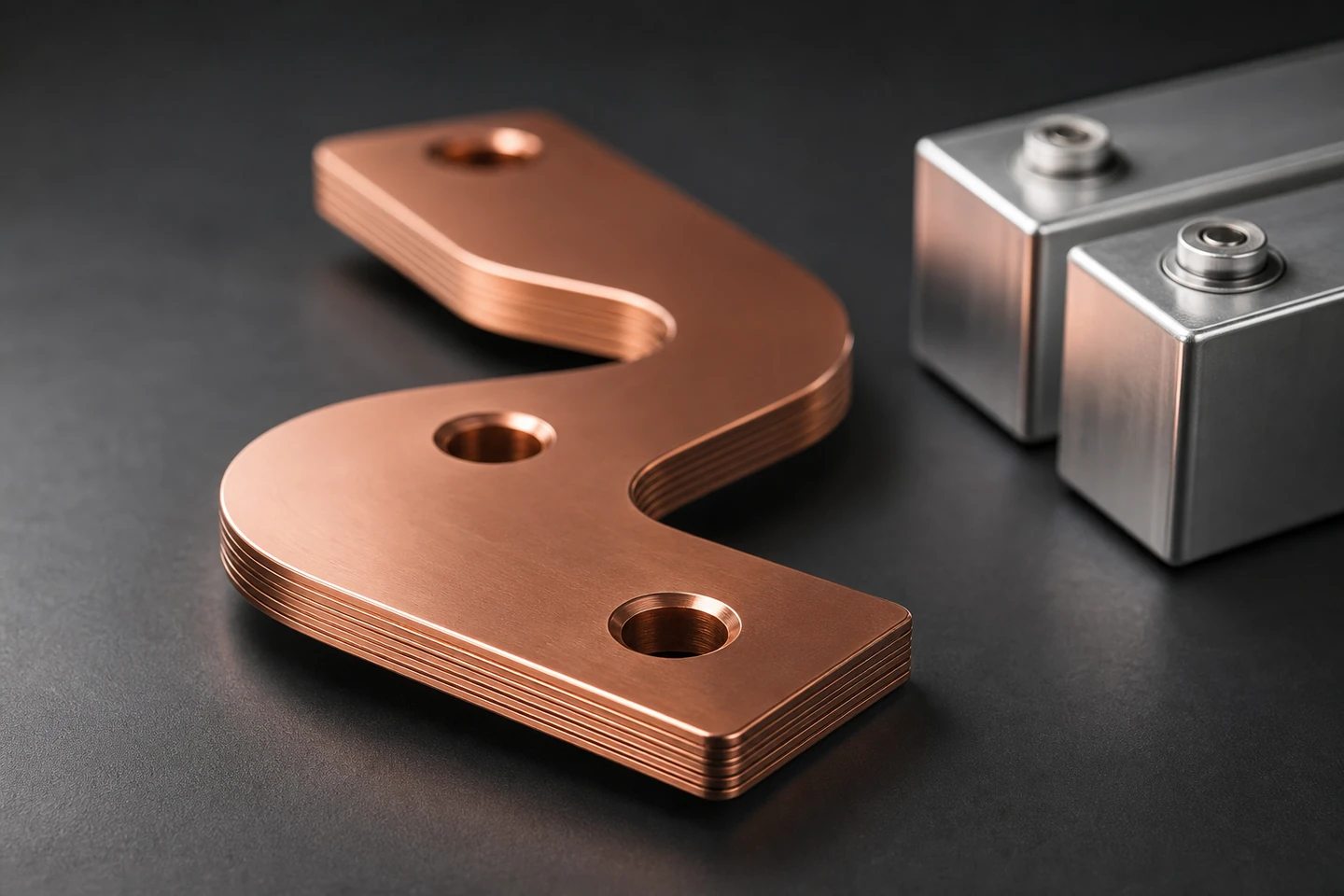
Polished copper laminated busbar on a dark studio surface
What makes this hard

A battery program lives or dies on these three fights.

Cell chemistry is the famous one. The unglamorous fights are where most programs actually fail — pack-level thermal management, busbar metallurgy, and the BMS that sees and signs off on everything.

Energy density wins designs, reliability ships them.

A 5 % gain on Wh/kg sells the pitch deck. A 5 % gain in cell-to-cell uniformity is what stops your field-failure rate. We hold module-level dimensional tolerance so the gain on paper survives onto the road.
Pack thermal management is its own engineering domain.

Coolant chemistry, plate flatness, thermal-pad squish, busbar cross-section, and BMS sensor placement all live in one feedback loop. Treating them as separate-vendor problems is how programs lose six months in qualification.

BMS + busbar topology is the safety contract.

The high-voltage interlock loop, the contactor logic, the cell-level monitor — they all have to agree on the same picture of pack health. We ship boards designed against UN 38.3, IEC 62133, and UL 2580 ahead of formal cert testing.

Capability envelope

What we typically ship to battery customers.

Numbers are working ranges across the battery programs we run in any given quarter. Coatings include treatments most US/EU shops have stepped away from due to environmental regulations — listed plainly so your design team knows what they can spec without surprise lead-time.

Module-level flatness
On cold plates that mate to a pouch / prismatic stack.
±0.025 → ±0.10 mm / 600 mm
Busbar plating uniformity
ENIG or Sn on copper busbar, measured at contact zone.
0.5 – 1.5 µm @ ±0.5 µm
First-article lead time
Pack-level program, BoM frozen → first parts shipped.
18 – 35 days
Production cell throughput
Sustained module-equivalent throughput, rolling weekly.
600 – 2,400 pcs / week
BMS PCB count
Per program, including master + cell-level slaves.
50 – 1,500 pcs
Coatings & finishes
Marked items are restricted or backlogged at most US / EU shops; our domestic partners run them as standard.
Hard anodize, Type III, sealedENIG (Ni 5 µm + Au 0.075 µm)Cr⁶⁺ chemical conversion (Alodine 1200)USCr³⁺ chemical conversion (Iridite NCP)Hot-tin dipEUPowder coat, V-0 flame-retardantParylene C dielectricCataphoretic e-coat (cathodic)
Reference build

Anatomy of an 88 V pouch module.

A representative 24s1p NMC-622 module from a recent passenger-EV program. Every callout maps to a real engineering decision we made on the customer’s drawings.

A pouch-cell battery module with laminated busbars, BMS slave board, compression plates, and cooling pad
01 · Laminated busbar
02 · Compression plate
03 · Cell-holder frame
04 · Cooling plate
05 · BMS slave board
06 · Pressure vent
  1. 01

    Laminated busbar bridge

    Copper strip 0.6 mm thick, ultrasonic-welded to pouch tabs. Laminated to a PEEK insulator before welding; the lamination survives the weld without delamination, audited every lot.

  2. 02

    Module compression plates

    6082-T6 plates CNC-milled flat to ±0.05 mm. Pre-compress the pouch stack to 12 kPa; the tolerance keeps cell-to-cell expansion bounded across 2,000 cycles.

  3. 03

    IM cell-holder frame

    GF-30 PA66 frame, V-0 flame retardant. Holds 24 pouches in series with locating ribs that prevent in-plane drift during truck-mode vibration.

  4. 04

    Direct-cooled aluminum plate

    Brazed aluminum cold plate sized to the module footprint. Coolant path machined into the lid; flatness ±0.05 mm so the thermal pad compresses evenly across all 24 cells.

  5. 05

    Cell-level monitor PCB

    4-layer slave board reading per-cell voltage and two NTC thermistors. Isolated SPI link to the master, ENIG finish, 5-year solder-joint thermal-cycle life.

  6. 06

    Calibrated pressure-vent path

    Single-shot disc burst at 35 kPa, routed to the pack-side smoke manifold. Captured in our DFMEA, tested per cell-vendor abuse protocol.

Part typology

What a battery bill of materials usually contains.

Six archetypes that show up on almost every pack we build. Spec lines are the working range across recent programs.

Cell-holder frame

Pouch / prismatic / 4680 carrier in glass-filled PA66 or PPS. UL 94 V-0.

Material
GF-PA66 / PPS
Process
Injection mold
Tolerance
±0.10 mm
Run size
500 – 50,000

Laminated busbar

Copper or aluminum busbar laminated to a PEEK / PI dielectric, plated for low contact resistance.

Material
C110 Cu / Al-1050
Plating
ENIG, Sn, Ag
Width
8 – 80 mm
Run size
20 – 5,000

Cold plate

Brazed or extruded aluminum plate sized to the module footprint, flatness ±0.05 mm.

Material
6082 / 6061
Process
Extruded + CNC
Flatness
±0.05 mm
Run size
10 – 5,000

Pack tray / housing

Sheet-aluminum or steel pack tray, deep-drawn or laser-cut + welded, leak-tested.

Material
5052 / hot-dip steel
Process
Laser + bend + weld
Tolerance
±0.30 mm
Run size
20 – 2,000

BMS PCB (master / slave)

BMS hardware with cell-level monitor, contactor driver, HV interlock, isolation barrier.

Layers
6 – 12 layers
Isolation
5 kV reinforced
Finish
ENIG / Hard gold
Run size
50 – 5,000

Pack frame / rack

Structural pack frame for stationary storage: welded steel or extruded-aluminum chassis.

Material
Q235 / 6061
Process
Weld + powder coat
Form factor
Sub-rack to walk-in
Run size
10 – 1,000
The pack-architecture brain

Pick a chemistry.
We'll show you the pack.

Every battery program starts with chemistry selection, and that one choice cascades into the cell format, the module topology, the busbar metallurgy, the cooling architecture, and the BMS. Below, the four chemistries we ship most often — and exactly what FabDigit builds for each.

01 · Cell
Format
cylindrical
Nominal V
3.7 V
Capacity
4.8 Ah · 4680
02 · Module
Cell topology
108s4p 4680
Module V
400 V
Busbar
Tabless laser-welded
03 · Pack
Energy
100 kWh
Pack V
400 V
Coolant
Structural pack + serpentine
Engineering data

Three questions battery programs eventually ask.

Industry-typical numbers from recent engagements. Specific commitments live in your quote.

Chart · Cost vs volume

Cost-per-module by process and volume

Aluminum cold-plate cost in particular swings hard with volume. Soft tooling pays back at ~ 500 modules; hard tooling at ~ 5,000.

$0$50$100$150$200$250$300$350$400101001k10kquantity (pcs) · log scaleCNC ≈ extruded @ ~500
CNC cold plateExtruded + finishBrazed assembly
Chart · Material profile

Busbar material trade-offs

Aluminum is cheap and light. Copper is conductive and weldable. Composite is exotic but solves real corrosion problems in marine packs.

ConductivityMS/mWeight (inv.)lower = betterCost (inv.)lower = betterWeldability0–1Plating ease0–1Corrosion res.0–1
C110 CopperAl-1050Cu-clad Al
Chart · Build timeline

A 35-day A-sample module schedule

Freeze-to-A-sample timeline for a 24-cell pouch module. Cell procurement is usually the long pole; we run all the metal in parallel.

d0d7d14d21d28d35BoM + DFM freeze3dCell procurement18dIM tooling (carrier)12dBusbar lamination8dCNC compression plates6dBMS PCBA build12dSheet-metal housing8dModule assy + leak test6dElectrical commissioning5dCustomer A-sample sign-off5d
Program lifecycle

How a pack program moves from chemistry to ship.

Battery programs are slower than AI clusters but tighter than aerospace. Six phases, all parallelisable; we move the slow ones forward early.

Phase 01

Chemistry + topology lock

Cell vendor short-list, format decision (pouch / prismatic / cylindrical), voltage / capacity targets fixed against the use case. Optional consultancy engagement (see /services/lib-consultancy/).

Phase 02

Module + pack DFM

Engineering review on the cell carrier, busbar, and cold-plate drawings. Tooling decisions, plating decisions, abuse-test path all reviewed on a single shared call.

Phase 03

A-sample build

50 – 200 module A-samples for cell characterisation, electrical commissioning, and the first abuse coupon. Reports ship with the parts, not weeks later.

Phase 04

B-sample qualification

Frozen-design qualification run for UN 38.3 / IEC 62133 / UL 2580. Cells and pack-level parts share serialised genealogy so failure analysis is traceable.

Phase 05

Pilot ramp

Production cell stands up. SPC charts on every critical dimension; cell-vendor genealogy locked at the master-data layer. 600 – 2,400 modules / week sustained.

Phase 06

Field + second-life

Field returns route through serialised pack DB. ECNs flow back into production. Second-life teardown / re-cell programs supported as a separate scope of work.

Inside the cell

Where the metal becomes a pack.

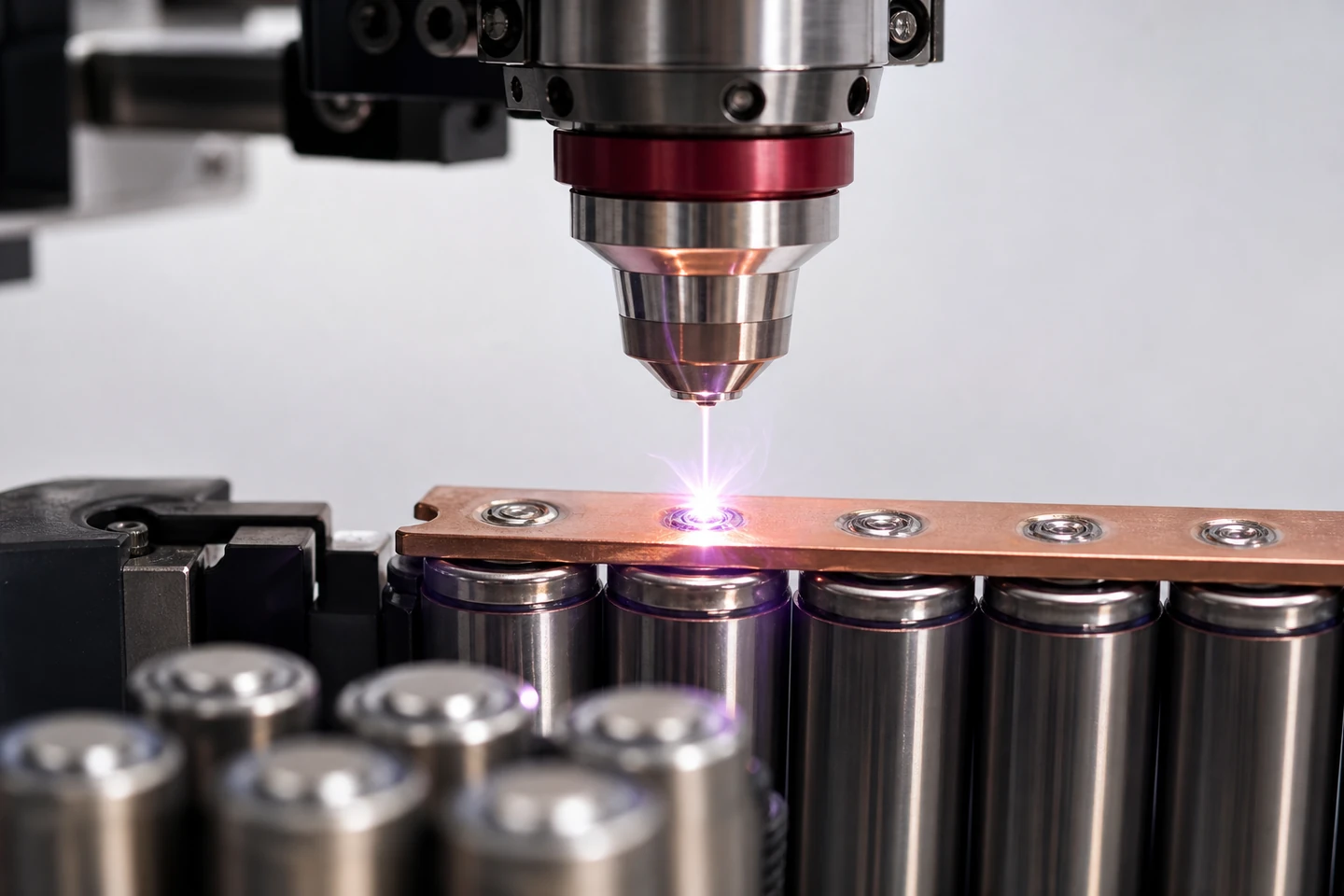
Dedicated laser-welding cell tuned for copper-on-copper pouch tabs and prismatic terminals. Coupon-tested every shift, pulsed-fibre source with closed-loop seam tracking so the weld matches the drawing every time.

Pulsed-fibre laser welding copper busbars to a battery module on a precision fixture
In the field

An 85 kWh pack ramp, cell-to-cell uniformity under 6 mV.

A composite case study assembled from recent battery programs, anonymised. Numbers are real engagement ranges.

Inside a recent program · Mid-volume European EV OEM, B-segment passenger

Held cell-to-cell ΔV under 6 mV across 2,000 cycles by re-treating the busbar program as a precision part.

The customer’s existing pack supplier was hitting 14 mV ΔV at the end of the qualification cycle — outside the BMS contactor logic window. Field replacement projections forced a vendor change with 90 days of runway.

We brought the busbar lamination, the cell carrier IM tool, the compression plate, and the BMS slave board under one cell. Plating thickness was held at 1.2 ± 0.3 µm; busbar resistance variance collapsed by 4×.

B-samples passed UN 38.3 and IEC 62133 on first run. The customer is shipping the platform into B-segment cars in three EU markets.

Industry · Passenger EVGeography · EU + UKProcess · CNC, IM, PCBA, busbar laminationQuantity · 6,000 modules / yr
The coatings moat

Five finishes battery programs lean on — and US shops increasingly can’t run.

Battery hardware is plating-heavy. Many of the historical US plating lines have closed under tightening environmental and OSHA regulation. Our domestic partners still run them daily.

Aluminum bus + housing protection

Cr⁶⁺ chemical conversion (Alodine 1200)

Hexavalent-chromium conversion on aluminum busbars and pack housings. EPA / OSHA backlogged on US lines since 2018; we run it in a closed-loop bay with full neutralisation.

Lead-free replacement spec

Cr³⁺ Iridite NCP (REACH-compliant)

Trivalent-chromium alternative when the program needs a REACH-friendly drawing. Listed alongside Alodine in our coatings catalogue so the buyer can choose.

Low-contact-resistance plating

Hot-tin dip on copper busbars

Selective tin dip on busbar contact zones, audited for 1.2 ± 0.3 µm thickness. Surface energy controlled to avoid solder-wicking failures during module assembly.

Pinhole-free conformal coat

Parylene C dielectric

Vapor-deposited parylene C on BMS PCBs, sensor harnesses, and exposed copper sections facing dielectric coolant loops. Spec to 25 µm uniform.

Pack-tray corrosion baseline

Cataphoretic e-coat

Cathodic e-coat applied before top-coat on hot-dip steel pack trays. 1,000-hour salt-spray rating, finite-element-modelled to avoid sharp-edge thin spots.

External-housing finishing

V-0 flame-retardant powder coat

UL 94 V-0 powder coatings on external pack housings. RAL-match colour matching standard.

Frequently asked

The questions battery programs keep asking us.

  • We don’t. FabDigit is intentionally agnostic on cell vendors so we can give you honest DFM advice independent of any margin on the cell itself. We will help short-list and qualify cell vendors, and we will own the pack-side hardware end-to-end.

  • Yes. We design and manufacture against those standards from day one and ship the design history file to support your formal certification run with a third-party lab. We do not issue the certificates ourselves — that’s the lab’s job and the right side of the conflict-of-interest line.

  • A 5-module A-sample build is normal. Below that, we recommend the consultancy engagement at /services/lib-consultancy/ where a 1 – 3 module mule build is part of the discovery package.

  • Yes — both ultrasonic and laser welding for pouch tabs, and laser welding for prismatic and cylindrical busbars. Process windows are characterised per cell vendor before any production run.

  • We build the compression hardware, stack carrier, and busbar interfaces for solid-state programs. Cells themselves are sourced from your chemistry partner. We have early-stage tooling in place for two solid-state customers as of 2026.

  • We support second-life programs as a separate scope of work — serialised pack tear-down, cell health classification, and re-packaging into stationary or commercial-vehicle architectures. Talk to engineering for a custom scope.

  • We can deliver bring-up firmware, communication-stack scaffolding (CAN / RS485 / Modbus), and SOC / SOH baseline algorithms. Most customers bring their own production firmware; we make sure the hardware lands ready for it.

  • Production from partner cells in Shenzhen / Suzhou / Penang. A US onshore cell is available for export-controlled programs (e.g. defence energy storage). Talk to engineering before submitting drawings on controlled work.

  • Yes. Parylene C / N up to 25 µm uniform, and powder-coat in V-0 formulations for housings. Both are listed in the coatings strip above.

  • For programs over $1 M, yes — embedded engineer for the duration of qualification. We do this with two customers as of 2026.

Pack programs ship on hardware, not slides.

Send the cell datasheet and a pack drawing — or a sketch. Either way, you’ll have a real engineer reviewing within 24 hours and a real quote on a real schedule shortly after.

Battery & Storage — FabDigit | FabDigit