
HVOF Carbide Coating
Thermal spray · Spray applied
HVOF accelerates WC-Co or Cr3C2-NiCr particles in a supersonic combustion jet to make dense 50–500 µm wear coatings.
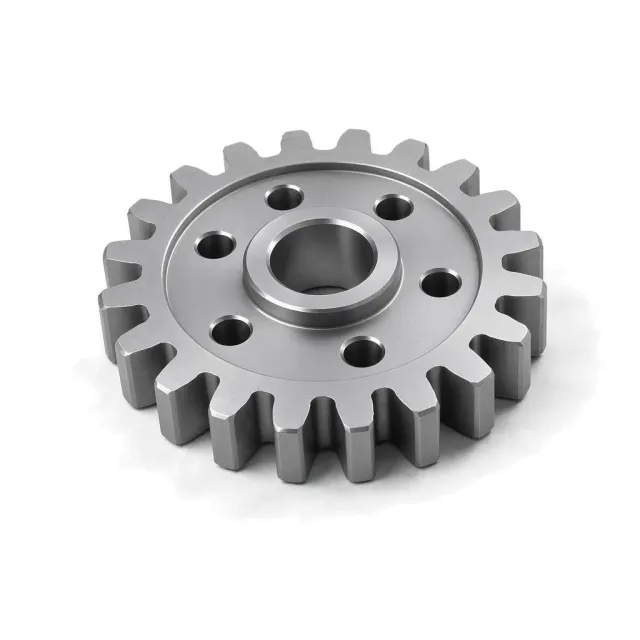
What is HVOF coating?
Aerospace WC systems are commonly qualified to AMS 2447 as hard-chrome replacements.
How it works
Fuel and oxygen burn at high pressure and accelerate heated powder toward a grit-blasted substrate. Particles deform and interlock as dense splats with lower oxide and porosity than many plasma-sprayed deposits. WC-Co suits lower-temperature severe wear; Cr3C2-NiCr retains properties at higher temperatures. Parts are sprayed oversize and diamond-ground to final size.
Why specify it
- Dense carbide wear surface
- 50–500 µm practical build range
- Typical bond strength at least about 70 MPa for qualified systems
- Avoids hexavalent-chrome plating baths
Where it falls short
- Line-of-sight process
- Requires aggressive grit preparation
- Carbide coatings require diamond grinding
- Geometry can shadow or overheat
HVOF coating at a glance
HVOF coating is strongest on corrosion protection (78 of 100) and surface hardness (77 of 100), at a high cost.
Each score is 0–100 against every finish in this catalog. Corrosion comes from salt-spray life (ASTM B117, log scale) and hardness from the finish layer's Vickers or pencil hardness; cosmetic, lubricity and cost are FabDigit's engineering assessment. Economy on the radar is the inverse of cost.
HVOF coating key numbers
Typical values from the governing specifications and shop practice; bars are this finish against the highest value among thermal spray finishes.
- Thickness
- 100–300 µm after grinding
- Hardness
- 1,000–1,400 HV — WC-Co and WC-CoCr typically 1000–1400 HV; Cr3C2-NiCr is often slightly lower. Specify feedstock.
- Electrical
- Conductive
- Colours
- grey
- dark grey
- Appearance
- Dense grey matte as sprayed; smooth metallic grey after grinding.
Where HVOF coating sits among all finishes
Surface hardness (Vickers, log scale) against corrosion protection (salt-spray hours, log scale) for every coating FabDigit offers, one cloud per finish group. HVOF coating is highlighted; hover a dot for its name or open the full map.
Specifications for HVOF coating
The documents a drawing cites to define this finish, with the Type / Class rows that apply. Each links to a page explaining the standard.
Drawing call-out
HVOF SPRAY DESIGNATED JOURNAL WC-10Co-4Cr PER AMS 2447, 250–300 µm FINISHED THICKNESS; DIAMOND GRIND TO Ø50.000 ±0.008 mm, Ra 0.20 µm MAX; TENSILE BOND 70 MPa MINWhich materials take HVOF coating?
Verdict per material family, with the grades that behave differently. Each family links to its datasheets in the material library.
| Material family | Verdict | Notes |
|---|---|---|
| Yes | Compatible with suitable bond system. | |
| Yes | Common with qualified preparation. | |
| Yes | Common for shafts and landing gear. | |
| With care | Possible with low heat input and compatible bond coat. | |
| With care | Control grit, bond coat, and heat input. | |
| Limited | Grit and jet heat readily distort low-melting brass. | |
| Limited | Soft and heat-sensitive; use aggressive cooling and a qualified bond coat only. | |
| No | Grit and spray heat readily ignite or distort magnesium. | |
| No | Conventional HVOF preparation and heat are unsuitable. | |
| No | Melting point is too low for conventional HVOF or plasma spray. |
How HVOF coating is applied, and what it does to the part
- 1Mask
- 2Grit blast
- 3Apply bond coat if specified
- 4HVOF spray carbide
- 5Diamond grind
- 6Superfinish if required
- 7Inspect
| Dimensions | State final thickness after grinding; provide grind stock and avoid feather edges by using runouts. |
|---|---|
| Build-up per side | 50–500 µm — Apply oversize and diamond-grind to final dimension and finish. |
| Masking | Usually needed. Protect threads, seal lands, bores, and non-coated areas from grit and overspray. |
| Electrical | Conductive |
| Temperature limit | 500 °C (932 °F) continuous |
| Appearance | Dense grey matte as sprayed; smooth metallic grey after grinding. |
| Added lead time | 12–25 working days on top of the bare part |
Design rules for HVOF coating
What to decide on the drawing before the part goes to the finisher.
- Specify WC-CoCr or Cr3C2-NiCr.Temperature and corrosion performance differ.
- Add coating runouts.Feather edges chip during grinding and service.
- State finished thickness and grind size.As-sprayed dimensions are not final.
- Define bond test and porosity limits.Process quality cannot be inferred from appearance.
HVOF coating versus the alternatives
Finishes engineers weigh against HVOF coating, and when each wins.
| Finish | Corrosion | Hardness | Cosmetic | Cost | Thickness | Choose it when |
|---|---|---|---|---|---|---|
HVOF coating this page | 78 | 77 | 35 | $$$$ | 50–500 µm | — |
| 60 | 68 | 30 | $$$$ | 50–500 µm | ceramic or thermal-barrier feedstock is required | |
| 40 | 73 | 45 | $$$$ | 10–500 µm | legacy drawing requirements cannot be changed |
The radar overlays HVOF coating with Plasma Spray Coating, its most common alternative — chosen ceramic or thermal-barrier feedstock is required. Scores in the table are 0–100 across every finish in the catalog.
Cost, lead time and compliance
Relative cost
HVOF Carbide Coating is a high-cost finish ($$$$): more expensive than about 96 % of the finishes FabDigit quotes.
Finishing is priced per part with a lot minimum, from FabDigit's own China-side rates. The exact figure appears on the instant quote once the part is uploaded.
Lead time and compliance
| Added lead time | 12–25 working days |
|---|---|
| RoHS | Compliant |
| Notes | HVOF avoids hard-chrome plating baths, but cobalt/nickel/chromium-containing spray dust requires controlled collection. |
What HVOF coating is used for
- Landing-gear journals
- Hydraulic rods
- Pump shafts
- Oil and gas valves
HVOF coating — frequently asked
HVOF vs hard chrome: which is better?
HVOF carbide is typically 50–500 µm and about 1000–1400 HV, and offers high wear resistance without a hexavalent-chrome bath. Hard chrome can be easier on some internal geometries but carries cracking and environmental constraints.
What does AMS 2447 cover?
AMS 2447 is the usual aerospace specification for HVOF tungsten-carbide coatings used as hard-chrome replacements. AMS 2437 is a plasma-spray ceramic specification, not an HVOF carbide document. State alloy, class, revision, and bond-test limits on the drawing.
How thick is HVOF coating?
Typical finished thickness is 50–500 µm, often 100–300 µm. The coating is sprayed oversize and ground back.
Does HVOF coating need grinding?
Yes for precision shafts, seal lands, and bearing surfaces. WC-based coatings usually require diamond grinding followed by optional superfinishing.
HVOF WC-Co vs Cr3C2-NiCr: which should I use?
WC-Co or WC-CoCr is favored for severe wear at moderate temperature. Cr3C2-NiCr retains wear and oxidation resistance at higher temperatures, commonly up to roughly 870 °C.