
Plasma Spray Coating
Thermal spray · Spray applied
Plasma spray propels molten or softened ceramic or metallic powder onto a grit-blasted substrate to build 50–500 µm coatings.
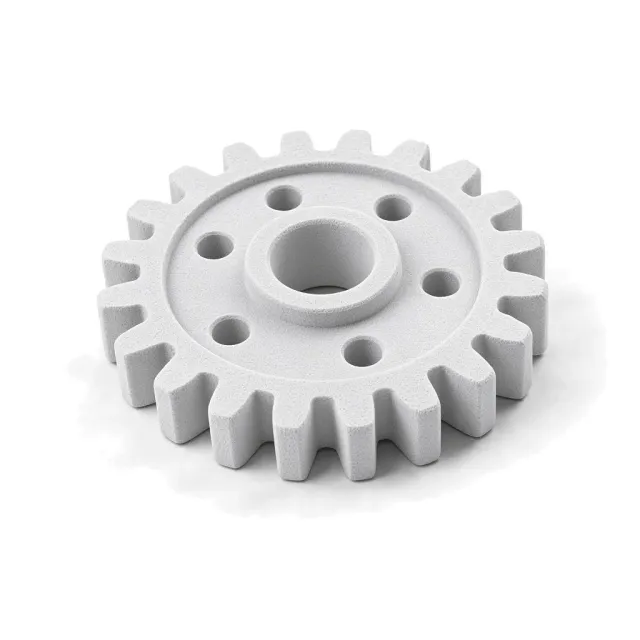
What is Plasma spray?
It is chosen for thermal barriers, electrical insulation, wear, and dimensional restoration.
How it works
An electric arc ionizes process gas into a plasma jet that heats injected powder. Flattened droplets strike a roughened substrate and solidify as overlapping splats, mechanically interlocking with the surface. Bond coats are common beneath ceramics. The coating is usually sprayed oversize, then ground or lapped to final dimension; substrate bulk temperature can remain far below the plasma temperature.
Why specify it
- 50–500 µm build capability
- Ceramic and metallic feedstocks
- Typical tensile bond strength about 20–70 MPa
- Can be ground to final size
Where it falls short
- Lamellar porosity is normal
- Line-of-sight access
- Grit blasting changes surface
- As-sprayed tolerance and roughness are coarse
Plasma spray at a glance
Plasma spray is a middle-of-the-range finish; its best score is surface hardness (68 of 100), at a high cost.
Each score is 0–100 against every finish in this catalog. Corrosion comes from salt-spray life (ASTM B117, log scale) and hardness from the finish layer's Vickers or pencil hardness; cosmetic, lubricity and cost are FabDigit's engineering assessment. Economy on the radar is the inverse of cost.
Plasma spray key numbers
Typical values from the governing specifications and shop practice; bars are this finish against the highest value among thermal spray finishes.
- Thickness
- 100–300 µm; thicker engineered systems require qualification
- Hardness
- 500–900 HV — Alumina and alumina-titania topcoats commonly 500–900 HV as sprayed; zirconia TBCs are more porous and lower.
- Electrical
- Insulating
- Colours
- white
- grey
- black
- feedstock-dependent
- Appearance
- Textured matte as sprayed; smooth ground finish on functional surfaces.
Where Plasma spray sits among all finishes
Surface hardness (Vickers, log scale) against corrosion protection (salt-spray hours, log scale) for every coating FabDigit offers, one cloud per finish group. Plasma spray is highlighted; hover a dot for its name or open the full map.
Specifications for Plasma spray
The documents a drawing cites to define this finish, with the Type / Class rows that apply. Each links to a page explaining the standard.
Drawing call-out
PLASMA SPRAY DESIGNATED SURFACE WITH NiCr BOND COAT 50–100 µm PLUS Al2O3-13TiO2 TOPCOAT 200–300 µm; GRIND TO Ø25.000 ±0.010 mm; BOND STRENGTH 35 MPa MIN PER ASTM C633Which materials take Plasma spray?
Verdict per material family, with the grades that behave differently. Each family links to its datasheets in the material library.
| Material family | Verdict | Notes |
|---|---|---|
| Yes | Standard for thermal-barrier systems. | |
| Yes | Common substrate. | |
| Yes | Common after grit blast and optional bond coat. | |
| With care | Use compatible bond coat and low heat input. | |
| With care | Control grit contamination and heat input. | |
| Limited | Grit and jet heat readily distort low-melting brass. | |
| Limited | Soft and heat-sensitive; use aggressive cooling and a qualified bond coat only. | |
| No | Grit and spray heat readily ignite or distort magnesium. | |
| No | Conventional plasma-spray heat and grit preparation are unsuitable. | |
| No | Melting point is too low for conventional HVOF or plasma spray. |
How Plasma spray is applied, and what it does to the part
- 1Mask
- 2Grit blast
- 3Apply bond coat if required
- 4Plasma spray feedstock
- 5Seal if specified
- 6Grind or lap
- 7Inspect thickness and bond
| Dimensions | Do not tolerance the as-sprayed envelope as a precision surface; leave grinding stock and state final coating thickness after grinding. |
|---|---|
| Build-up per side | 50–500 µm — Spray oversize and grind designated functional surfaces to final dimension. |
| Masking | Usually needed. Mask threads, seal lands, bores, and all non-spray areas against grit and overspray. |
| Electrical | Insulating |
| Temperature limit | 1,000 °C (1,832 °F) continuous |
| Appearance | Textured matte as sprayed; smooth ground finish on functional surfaces. |
| Added lead time | 10–20 working days on top of the bare part |
Design rules for Plasma spray
What to decide on the drawing before the part goes to the finisher.
- Specify feedstock composition.Plasma spray describes a process, not one material.
- State thickness after grinding.Finishing removes part of the sprayed build.
- Provide runouts beyond the finish area.Mask edges otherwise create weak feathered coating.
- Define bond-strength test and minimum.Bond depends on preparation and material system.
Plasma spray versus the alternatives
Finishes engineers weigh against Plasma spray, and when each wins.
| Finish | Corrosion | Hardness | Cosmetic | Cost | Thickness | Choose it when |
|---|---|---|---|---|---|---|
Plasma spray this page | 60 | 68 | 30 | $$$$ | 50–500 µm | — |
| 78 | 77 | 35 | $$$$ | 50–500 µm | a denser carbide wear coating is required |
The radar overlays Plasma spray with HVOF Carbide Coating, its most common alternative — chosen a denser carbide wear coating is required. Scores in the table are 0–100 across every finish in the catalog.
Cost, lead time and compliance
Relative cost
Plasma Spray Coating is a high-cost finish ($$$$): more expensive than about 93 % of the finishes FabDigit quotes.
Finishing is priced per part with a lot minimum, from FabDigit's own China-side rates. The exact figure appears on the instant quote once the part is uploaded.
Lead time and compliance
| Added lead time | 10–20 working days |
|---|---|
| RoHS | Compliant |
| Notes | Compliance depends on feedstock; dust and fume extraction are required. |
What Plasma spray is used for
- Turbine thermal barriers
- Electrical insulation
- Pump sleeves
- Roll restoration
Plasma spray — frequently asked
How thick is plasma spray coating?
Typical engineered coatings are 50–500 µm, often 100–300 µm. Thick builds need staged spraying and stress control.
How strong is plasma spray adhesion?
Tensile bond values often fall around 20–70 MPa when tested by ASTM C633. Feedstock, bond coat, grit profile, and test adhesive control the result.
Does plasma spray need grinding?
Precision wear surfaces are normally sprayed oversize and ground or lapped. As-sprayed texture and thickness variation are too coarse for close fits.
Plasma spray vs HVOF: what is the difference?
Plasma spray handles high-melting ceramics and thermal barriers. HVOF generally produces denser, lower-oxide carbide or metallic wear coatings.
Can aluminum be plasma sprayed?
Yes with controlled grit blasting, bond coat, and heat input. Thin walls need fixturing because local heating and residual stress can distort them.