
Citric Acid Passivation
Passivation & electropolishing · Chemical bath
Citric-acid passivation is a separately searched and specified stainless-steel passivation route that removes free iron without nitric acid.
Reference page — Citric passivation is not in the instant-quote configurator. Upload the part, name the finish in the notes, and an engineer quotes it with the part.
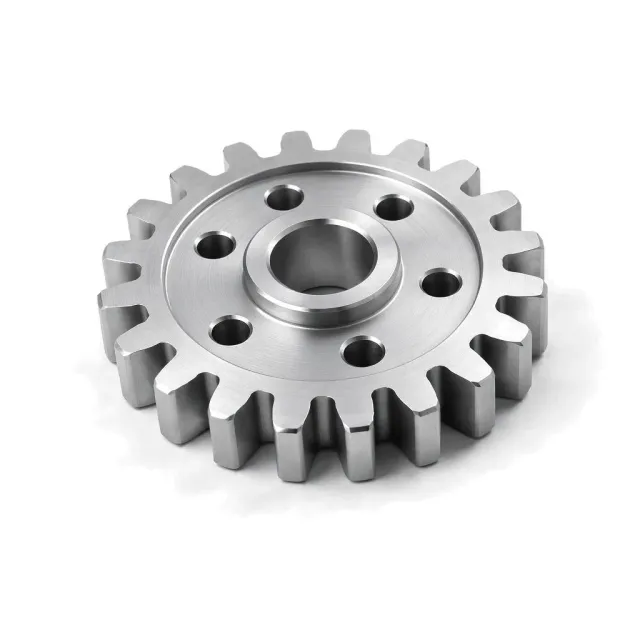
What is Citric passivation?
ASTM A967 citric treatments and AMS 2700 Method 2 are used for medical, food, aerospace, and general precision parts.
How it works
Thoroughly cleaned stainless steel is immersed in a controlled citric-acid solution. Citric acid chelates free iron and iron-rich contamination while preserving the bulk alloy; rinsing and oxygen exposure then allow the nanometer-scale chromium-rich passive film to reform. ASTM A967 defines several citric treatment windows with different concentration, temperature, and time combinations. AMS 2700 Method 2 provides an aerospace route. The process adds no measurable coating and must be followed by an allowed verification test.
Why specify it
- Adds 0 µm measurable buildup
- Avoids nitric-acid fumes and nitrate waste
- ASTM A967 provides multiple citric treatment windows
- Suitable for precision and additively manufactured stainless parts
Where it falls short
- Does not remove weld scale or heavy heat tint
- Requires thorough precleaning to reach free iron
- Not every legacy drawing permits substitution for nitric
- Verification test must suit the stainless grade
Citric passivation at a glance
Citric passivation is a middle-of-the-range finish; its best score is corrosion protection (34 of 100), at a budget cost. It adds little lubricity. Surface hardness is not rated: the finish leaves the part's own surface.
Each score is 0–100 against every finish in this catalog. Corrosion comes from salt-spray life (ASTM B117, log scale) and hardness from the finish layer's Vickers or pencil hardness; cosmetic, lubricity and cost are FabDigit's engineering assessment. Economy on the radar is the inverse of cost.
Citric passivation key numbers
Typical values from the governing specifications and shop practice; bars are this finish against the highest value among passivation & electropolishing finishes.
- Thickness
- 0 µm (0 mil) — No measurable deposited coating; the passive oxide is nanometer-scale.
- Electrical
- Unchanged
- Appearance
- Normally unchanged from the cleaned starting surface.
Specifications for Citric passivation
The documents a drawing cites to define this finish, with the Type / Class rows that apply. Each links to a page explaining the standard.
| Standard | Type / Class | Thickness | Requirement / test | Status |
|---|---|---|---|---|
Standard Specification for Chemical Passivation Treatments for Stainless Steel Parts · ASTM | Nitric 1–5 | — | Five nitric-acid treatment windows differing in concentration, temperature, time, and optional oxidizing salt · One or more specified passivation verification tests | Active |
| Citric 1–5 | — | Five citric-acid treatment windows differing in concentration, temperature, and time · One or more specified passivation verification tests | ||
Passivation of Corrosion Resistant Steels · SAE · alternative | Method 2 | — | Citric-acid passivation using 4–10% anhydrous citric acid with time selected by bath temperature. · Specified acceptance-class corrosion test and water-break-free cleanliness. | Active |
Drawing call-out
PASSIVATE PER ASTM A967, CITRIC 2; VERIFY BY HIGH-HUMIDITY TEST; NO VISIBLE ETCHING, PITTING, OR STAININGPattern: PASSIVATE PER ASTM A967, <NITRIC|CITRIC> <1–5>, TEST <METHOD>
Which materials take Citric passivation?
Verdict per material family, with the grades that behave differently. Each family links to its datasheets in the material library.
| Material family | Verdict | Notes |
|---|---|---|
| Yes | Use a treatment and verification test appropriate to the grade.
| |
| With care | Applicable to stainless DMLS/SLM after complete depowdering and cleaning. | |
| Limited | Titanium uses a different descaling or anodic treatment, not this stainless cycle. | |
| No | This chemistry is for stainless steel, not aluminum. | |
| No | Brass is not treated by stainless passivation or pickling baths. | |
| No | Copper alloys use different cleaning and tarnish-control processes. | |
| No | Fused-filament polymers are incompatible with this process. | |
| No | Magnesium is incompatible with these acids. | |
| No | Polymer powder-bed prints are incompatible with this process. | |
| No | Organic polymers cannot take this inorganic metal-finishing process. | |
| No | Photopolymer prints are incompatible with this process. | |
| No | Polymer powder-bed prints are incompatible with this process. | |
| No | Citric stainless passivation is not a protective process for carbon steel. | |
| No | Zinc alloys dissolve in these acids. |
How Citric passivation is applied, and what it does to the part
- 1Alkaline clean
- 2Rinse
- 3Citric-acid passivation
- 4Dry
- 5Verification test
| Dimensions | Citric passivation deposits no measurable film and normally leaves threads and fits unchanged. |
|---|---|
| Build-up per side | 0 µm — No practical dimensional change. |
| Masking | Rarely needed. Mask incompatible inserts and trapped assemblies; stainless precision features normally need no masking. |
| Electrical | Unchanged |
| Appearance | Normally unchanged from the cleaned starting surface. |
| Added lead time | 2–4 working days on top of the bare part |
Design rules for Citric passivation
What to decide on the drawing before the part goes to the finisher.
- Name the ASTM A967 citric treatment or AMS 2700 Method 2.Citric concentration, temperature, and time are method-specific.
- Select an allowed verification test.A clean appearance does not prove free-iron removal.
- Remove heat tint before passivation.Citric acid is not a pickling treatment.
- Prevent carbon-steel contact after treatment.Handling can immediately recontaminate the passive surface.
Citric passivation versus the alternatives
Finishes engineers weigh against Citric passivation, and when each wins.
| Finish | Corrosion | Hardness | Cosmetic | Cost | Thickness | Choose it when |
|---|---|---|---|---|---|---|
Citric passivation this page | 34 | — | 18 | $ | 0 µm | — |
| 34 | — | 18 | $ | 0 µm | when either nitric or citric processing may be selected | |
| 45 | — | 82 | $$$ | removes 5–25 µm | when smoothing is required | |
| 28 | — | 20 | $ | 0 µm | when heat tint must first be removed |
The radar overlays Citric passivation with Stainless Steel Passivation, its most common alternative — chosen when either nitric or citric processing may be selected. Scores in the table are 0–100 across every finish in the catalog.
Cost, lead time and compliance
Relative cost
Citric Acid Passivation is a budget-cost finish ($): cheaper than about 90 % of the finishes FabDigit quotes.
Finishing is priced per part with a lot minimum, from FabDigit's own China-side rates cross-checked against US job-shop pricing. The exact figure appears on the instant quote once the part is uploaded.
Lead time and compliance
| Added lead time | 2–4 working days |
|---|---|
| RoHS | Compliant |
| Notes | Citric processing avoids hexavalent chromium and nitric acid; cleaners and wastewater still require normal controls. |
What Citric passivation is used for
- Medical instruments
- Food-contact stainless parts
- Precision machined fittings
- Stainless AM components
Citric passivation — frequently asked
What is citric acid passivation?
It removes free iron from stainless steel using citric acid, then lets the natural chromium-rich passive film reform. It adds no measurable coating thickness.
Citric vs nitric passivation: which should I specify?
Both can satisfy ASTM A967 or AMS 2700 when the drawing allows them. Citric avoids nitric fumes, but legacy aerospace approvals may still mandate a specific nitric method.
Does citric passivation remove rust?
It removes free-iron contamination and light associated staining after proper cleaning. Heavy rust, weld scale, or heat tint needs separate mechanical cleaning or pickling.
Does citric passivation change dimensions?
No measurable buildup is expected; the deposited thickness is 0 µm. It is routinely used on precision threads and fits.
How is citric passivation tested?
ASTM A967 allows specified verification methods such as water immersion, high humidity, copper sulfate, ferroxyl, or salt spray under applicable restrictions. State the chosen test on critical drawings.