
Silver Plating
Electroplating & electroless plating · Electrolytic bath
Silver plating provides the highest electrical and thermal conductivity of common plated metals.
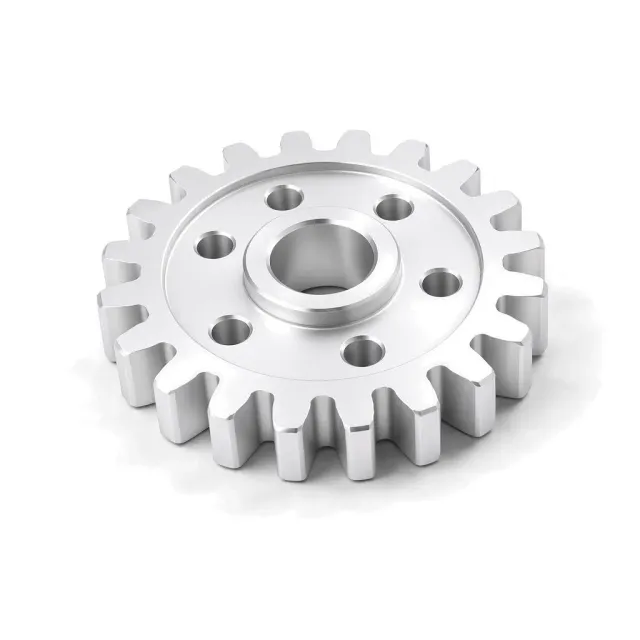
What is Silver plate?
ASTM B700 covers engineering electrodeposited silver on conductive substrates.
How it works
Activated parts are cathodically plated from a silver electrolyte, commonly over a copper or nickel strike. Current distribution controls local thickness, so contacts, edges, and recesses need rack and anode planning. Antitarnish treatments may follow, but they must not compromise contact resistance or solderability. Silver remains conductive after surface tarnish, although appearance and low-level contact behavior can change. Deposit hardness can be adjusted for sliding contacts, while high-purity soft silver is retained where conductivity dominates.
Why specify it
- Excellent electrical and thermal conductivity
- Typical 5–20 µm engineering thickness
- Good solderability and high-current contact performance
- Low contact resistance
Where it falls short
- Tarnishes in sulfur-bearing atmospheres
- Migrates under electrical bias in moist contamination
- Soft deposit wears without adequate thickness
- Silver cost and theft controls increase processing cost
Silver plate at a glance
Silver plate is strongest on cosmetic quality (72 of 100), at a high cost.
Each score is 0–100 against every finish in this catalog. Corrosion comes from salt-spray life (ASTM B117, log scale) and hardness from the finish layer's Vickers or pencil hardness; cosmetic, lubricity and cost are FabDigit's engineering assessment. Economy on the radar is the inverse of cost.
Silver plate key numbers
Typical values from the governing specifications and shop practice; bars are this finish against the highest value among electroplating & electroless plating finishes.
- Thickness
- 5–10 µm for general contacts; 10–20 µm for wear or high-current service
- Hardness
- 60–200 HV — Pure silver is soft; hardened silver deposits vary by alloy and process.
- Electrical
- Conductive
- Colours
- silver
- Appearance
- Bright white metallic when fresh; darkens or yellows with sulfur tarnish.
Where Silver plate sits among all finishes
Surface hardness (Vickers, log scale) against corrosion protection (salt-spray hours, log scale) for every coating FabDigit offers, one cloud per finish group. Silver plate is highlighted; hover a dot for its name or open the full map.
Specifications for Silver plate
The documents a drawing cites to define this finish, with the Type / Class rows that apply. Each links to a page explaining the standard.
| Standard | Type / Class | Thickness | Requirement / test | Status |
|---|---|---|---|---|
Standard Specification for Electrodeposited Coatings of Silver for Engineering Use · ASTM | Types 1–3 | — | Minimum silver purity 99.9%, 99.0%, and 98.0%, respectively. · Silver purity. | Active |
| Grades A–D | — | A matte, B bath-bright, C polished bright, D semibright. · Visual appearance. | ||
| Class N | — | No supplementary tarnish-resistant treatment. · Appearance and agreed performance. | ||
| Class S | — | Chromate tarnish-resistant treatment; not suitable for food service. · Tarnish treatment and agreed performance. | ||
| Class T | — | Non-chromate tarnish-resistant treatment. · Tarnish treatment and agreed performance. |
Drawing call-out
SILVER PLATE PER ASTM B700, TYPE I, GRADE A, 0.0005 IN MIN ON CONTACT SURFACES; NICKEL UNDERPLATE 0.0002 IN MIN; NO ANTITARNISHPattern: SILVER PLATE PER ASTM B700, TYPE <1|2|3>, GRADE <A|B|C|D>, CLASS <N|S|T>, <THICKNESS>, UNDERPLATE <SYSTEM>
Which materials take Silver plate?
Verdict per material family, with the grades that behave differently. Each family links to its datasheets in the material library.
| Material family | Verdict | Notes |
|---|---|---|
| Yes | Common decorative and electrical substrate after cleaning. | |
| Yes | Primary electrical substrate, commonly with nickel barrier. | |
| Yes | Plateable after proper activation. | |
| With care | Requires zincate and underplate sequence. | |
| With care | Metal AM parts can be plated after density, powder, and porosity review. | |
| With care | Requires activation and strike. | |
| With care | Requires copper or nickel underplating. | |
| With care | Die castings need a protective strike before acid baths. | |
| Limited | Highly reactive; needs a qualified pretreatment and is rarely plated this way. | |
| Limited | Only plateable resins after etch, catalyst, and electroless metallization. | |
| Limited | Only if the resin is qualified for metallization; most SLA parts are not. | |
| Limited | Possible only with specialized activation; not a routine job-shop sequence. | |
| No | Fused-filament polymers are not a standard plating substrate. | |
| No | Porous nylon powder-bed parts are not a standard plating substrate. | |
| No | Porous nylon powder-bed parts are not a standard plating substrate. |
How Silver plate is applied, and what it does to the part
- 1Clean
- 2Activate
- 3Apply copper or nickel underplate
- 4Silver plate
- 5Rinse
- 6Optional antitarnish
- 7Thickness and adhesion test
| Dimensions | Specify minimum local silver on contact zones and maximum buildup on mating edges. |
|---|---|
| Build-up per side | 5–20 µm — Electrolytic current distribution produces heavier edges and thinner recesses. |
| Masking | Usually needed. Mask noncontact areas to control precious-metal use and all fits that cannot accept buildup. |
| Electrical | Conductive |
| Appearance | Bright white metallic when fresh; darkens or yellows with sulfur tarnish. |
| Added lead time | 4–8 working days on top of the bare part |
Design rules for Silver plate
What to decide on the drawing before the part goes to the finisher.
- Limit plating to significant contact surfaces.Silver cost scales directly with coated area and thickness.
- Specify underplate.Nickel or copper controls diffusion and adhesion.
- State antitarnish permission.Post-treatments may change contact or solder behavior.
- Avoid sulfur-bearing packaging.Sulfur compounds rapidly tarnish silver.
Silver plate versus the alternatives
Finishes engineers weigh against Silver plate, and when each wins.
| Finish | Corrosion | Hardness | Cosmetic | Cost | Thickness | Choose it when |
|---|---|---|---|---|---|---|
Silver plate this page | 55 | 39 | 72 | $$$$ | 5–20 µm | — |
| 68 | 39 | 92 | $$$$ | 0.5–5 µm | when tarnish-free low-level signal reliability is required | |
| 34 | 0 | 45 | $$ | 3–15 µm | when solderability at lower cost governs |
The radar overlays Silver plate with Gold Plating, its most common alternative — chosen when tarnish-free low-level signal reliability is required. Scores in the table are 0–100 across every finish in the catalog.
Cost, lead time and compliance
Relative cost
Silver Plating is a high-cost finish ($$$$): more expensive than about 88 % of the finishes FabDigit quotes.
Finishing is priced per part with a lot minimum, from FabDigit's own China-side rates cross-checked against US job-shop pricing. The exact figure appears on the instant quote once the part is uploaded.
Lead time and compliance
| Added lead time | 4–8 working days |
|---|---|
| RoHS | Compliant |
| Notes | Silver itself is RoHS compatible; cyanide-bearing legacy bath chemistry requires strict industrial controls. |
What Silver plate is used for
- RF waveguides
- Switchgear contacts
- Busbars
- Aerospace contacts
- Battery terminals
Silver plate — frequently asked
silver plating thickness for electrical contacts
General contacts often use 5–10 µm, while wear or high-current service may use 10–20 µm. Specify minimum local thickness on the actual contact area.
does silver plating tarnish
Yes, sulfur compounds form dark silver sulfide. The layer remains electrically conductive, but low-level contact resistance and appearance can suffer.
silver plating vs gold plating
Silver has superior bulk conductivity and is economical for high-current contacts at 5–20 µm. Gold resists tarnish better and is favored for low-level signals, but it costs more and is normally much thinner.
can silver plate aluminum
Yes, but aluminum needs zincate or another qualified activation plus underplates before silver. Direct plating without this sequence is prone to blistering and galvanic attack.
is silver plating solderable
Fresh silver is readily solderable and common on terminals and busbars. Control tarnish, storage, and any antitarnish film because these can change wetting.
Other electroplating & electroless plating finishes
 Black Nickel PlatingBlack nickel is a thin dark decorative electrodeposit, commonly applied over nickel, copper, brass, or zinc.CorrosionHardnessCost$$$
 Brass PlatingBrass plating co-deposits copper and zinc to give steel, zinc die castings, or copper alloys a yellow decorative surface.CorrosionHardnessCost$$$
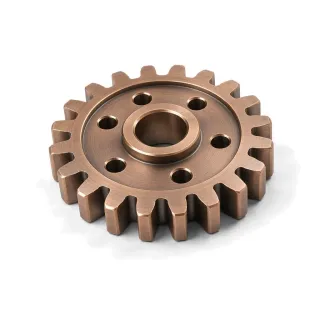 Bronze PlatingBronze plating deposits a copper-tin or related copper alloy for warm decorative color, antiquing, or selected functional bearing surfaces.CorrosionHardnessCost$$$
 Cadmium PlatingCadmium is a sacrificial, lubricious coating retained mainly for aerospace, defense, and legacy hardware.CorrosionHardnessCost$$$$
 Copper PlatingCopper plating is a conductive, ductile undercoat used for leveling, adhesion, shielding, and build-up.CorrosionHardnessCost$$
 Decorative Nickel-Chrome PlatingDecorative chrome is a multilayer system: copper when needed, one or more nickel layers, and a very thin chromium topcoat.CorrosionHardnessCost$$$
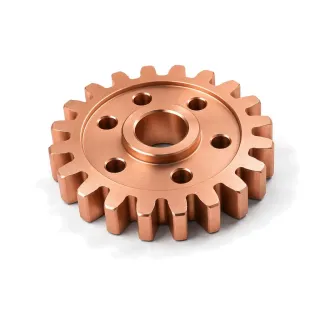 Electroless Copper PlatingElectroless copper chemically deposits a conductive seed layer on catalyzed plastics and inside printed-circuit through-holes.CorrosionHardnessCost$$$
 Electroless Nickel PlatingElectroless nickel is an autocatalytic nickel-phosphorus coating with nearly uniform thickness on complex geometry.CorrosionHardnessCost$$$
Compare every electroplating & electroless plating finish side by side →