
Electroless Nickel Plating
Electroplating & electroless plating · Electroless (autocatalytic)
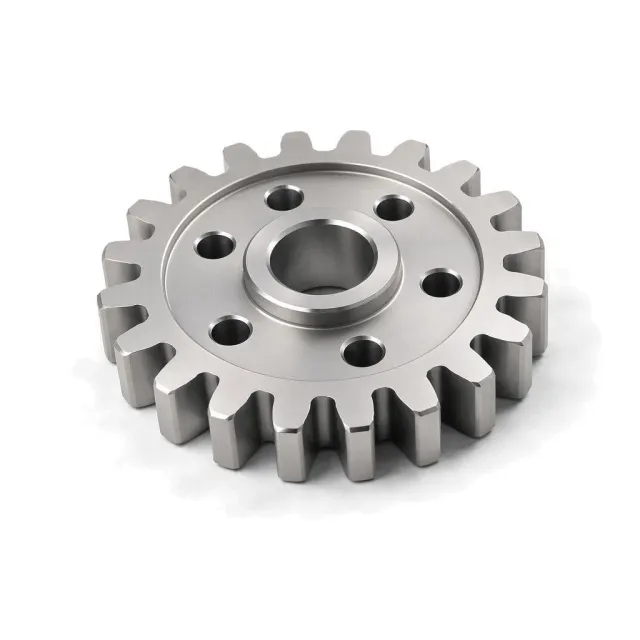
Electroless nickel is an autocatalytic nickel-phosphorus coating with nearly uniform thickness on complex geometry.
What is Electroless nickel?
Engineers specify it for corrosion protection, wear, dimensional control, and salvage of precision metal parts.
How it works
After cleaning and activation, parts enter a heated aqueous bath containing nickel ions and sodium hypophosphite. The reducing agent deposits nickel and phosphorus without external current, and the fresh deposit catalyzes continued growth. Because current density does not control deposition, recesses and outside edges receive similar thickness when solution exchange is adequate. High-phosphorus deposits favor corrosion resistance and are nonmagnetic as plated; mid-phosphorus balances hardness and corrosion; low-phosphorus deposits are harder and more wear resistant but less corrosion resistant.
Why specify it
- Uniform 5–75 µm buildup on complex shapes
- About 450–550 HV as plated; suitable heat treatment can approach 1000 HV
- High-phosphorus classes provide strong barrier corrosion resistance
- Coats metal additive-manufactured geometry without electrical contact
Where it falls short
- Blind passages still require bath circulation and drainage
- Heat treatment can distort parts and reduce corrosion performance
- Aluminum needs zincate or equivalent activation
- Not sacrificial on steel; pores or edge damage can drive local corrosion
Electroless nickel at a glance
Electroless nickel is strongest on corrosion protection (70 of 100), at a premium cost.
Each score is 0–100 against every finish in this catalog. Corrosion comes from salt-spray life (ASTM B117, log scale) and hardness from the finish layer's Vickers or pencil hardness; cosmetic, lubricity and cost are FabDigit's engineering assessment. Economy on the radar is the inverse of cost.
Electroless nickel key numbers
Typical values from the governing specifications and shop practice; bars are this finish against the highest value among electroplating & electroless plating finishes.
- Thickness
- 10–25 µm for dimensional work; 25–50 µm for wear or corrosion; ASTM B733 SC4 allows up to 75 µm.
- Hardness
- 450–1,000 HV — Common deposits are about 450–550 HV as plated; controlled heat treatment can produce approximately 900–1000 HV.
- Corrosion (salt spray)
- 100–1,000 h per ASTM B117 to red rust on steel; ≈ 100 h at 12 µm, ≈ 1,000 h at 25 µm high-phosphorus (typical) — ASTM B733 sets no salt-spray hours — porosity governs. Phosphorus class, thickness and heat treatment move the figure by an order of magnitude.
- Electrical
- Conductive
- Colours
- silver
- Appearance
- Uniform semi-bright to bright silver-gray; high-phosphorus deposits may be slightly less bright.
Where Electroless nickel sits among all finishes
Surface hardness (Vickers, log scale) against corrosion protection (salt-spray hours, log scale) for every coating FabDigit offers, one cloud per finish group. Electroless nickel is highlighted; hover a dot for its name or open the full map.
Specifications for Electroless nickel
The documents a drawing cites to define this finish, with the Type / Class rows that apply. Each links to a page explaining the standard.
| Standard | Type / Class | Thickness | Requirement / test | Status |
|---|---|---|---|---|
Standard Specification for Autocatalytic (Electroless) Nickel-Phosphorus Coatings on Metal · ASTM | SC0 | — | No minimum thickness specified · Thickness as agreed | Active |
| SC1 | ≥ 5 µm | Light service · Thickness and adhesion | ||
| SC2 | ≥ 13 µm | Mild service · Thickness and adhesion | ||
| SC3 | ≥ 25 µm | Severe service · Thickness, adhesion, and agreed performance tests | ||
| SC4 | ≥ 75 µm | Very severe service · Thickness, adhesion, and agreed performance tests | ||
| Type 1 | — | Low-phosphorus nickel deposit · Phosphorus content | ||
| Type 2 | — | Medium-low-phosphorus nickel deposit · Phosphorus content | ||
| Type 3 | — | Medium-phosphorus nickel deposit · Phosphorus content | ||
| Type 4 | — | High-phosphorus nickel deposit · Phosphorus content | ||
| Type 5 | — | Very-high-phosphorus nickel deposit · Phosphorus content | ||
| Classes 1–6 | — | As-deposited or specified heat-treatment condition selected for substrate, adhesion, hardness, or dimensional stability · Heat-treatment records and applicable adhesion or hardness test | ||
Plating, Electroless Nickel-Phosphorous · SAE · alternative | Class 1 | — | No post-plating thermal treatment except required hydrogen-embrittlement relief. · Default substrate minimum: ferrous 38.1 µm; aluminum 25.4 µm; copper, nickel, cobalt, titanium, and beryllium 12.7 µm. · Thickness, adhesion, corrosion resistance where applicable, deposit composition when specified, and embrittlement control. | Active |
| Class 2 | — | Thermally treated at 450–800 °F (232–427 °C) to harden the deposit. · Same substrate-linked thickness defaults unless otherwise specified. · Deposit hardness of at least 800 HK100, thickness, adhesion, and applicable corrosion and embrittlement tests. | ||
| Class 3 | — | Thermally treated at 375 ± 15 °F (191 ± 8 °C) for 1–1.5 h to improve adhesion on non-heat-treatable aluminum and beryllium alloys. · Same substrate-linked thickness defaults unless otherwise specified. · Thickness and adhesion after the specified thermal treatment. | ||
| Class 4 | — | Thermally treated at 250 ± 10 °F (121 ± 6 °C) for 1–1.5 h to improve adhesion on heat-treatable aluminum. · Same substrate-linked thickness defaults unless otherwise specified. · Thickness and adhesion after the specified thermal treatment. |
Drawing call-out
ELECTROLESS NICKEL PLATE PER ASTM B733, SC2, TYPE V, 0.0005–0.0008 IN THICK; MASK THREADS; NO POST-PLATE HEAT TREATMENTPattern: ELECTROLESS NICKEL PER ASTM B733, TYPE <1–5>, SC<0–4>, CLASS <1–6>
Which materials take Electroless nickel?
Verdict per material family, with the grades that behave differently. Each family links to its datasheets in the material library.
| Material family | Verdict | Notes |
|---|---|---|
| Yes | Readily plated after cleaning and activation. | |
| Yes | Generally plateable after cleaning and activation. | |
| Yes | Requires activation to prevent passive-film adhesion failure. | |
| Yes | Common engineering substrate; pretreatment and porosity control are critical.
| |
| With care | Normally requires zincate activation.
| |
| With care | Porosity must be sealed or controlled before immersion processing. | |
| With care | Requires specialized activation; adhesion must be qualified. | |
| With care | Needs a protective strike and porosity control. | |
| Limited | Possible with qualified pretreatment but not a routine cycle. | |
| Limited | Only after etch, catalysis, and a conductive seed on plateable resins. | |
| Limited | Only qualified metallization resins. | |
| No | Not a standard electroless-nickel substrate. | |
| No | Porous nylon is not a standard EN substrate. | |
| No | Porous nylon is not a standard EN substrate. |
How Electroless nickel is applied, and what it does to the part
- 1Clean and degrease
- 2Acid activate
- 3Zincate aluminum if applicable
- 4Autocatalytic nickel-phosphorus deposit
- 5Rinse
- 6Optional heat treatment
- 7Inspect thickness and adhesion
| Dimensions | Add the full specified thickness per coated side; unlike electrolytic nickel, edge buildup is generally close to flat-surface buildup. |
|---|---|
| Build-up per side | 5–75 µm — Deposit grows outward by approximately the specified coating thickness on every exposed surface. |
| Masking | Usually needed. Mask threads, bearing fits, sealing lands, and holes whose final size cannot accept full-thickness buildup. |
| Electrical | Conductive |
| Temperature limit | 250 °C (482 °F) continuous |
| Appearance | Uniform semi-bright to bright silver-gray; high-phosphorus deposits may be slightly less bright. |
| Added lead time | 3–7 working days on top of the bare part |
Design rules for Electroless nickel
What to decide on the drawing before the part goes to the finisher.
- Specify phosphorus class and thickness.Low, mid, and high phosphorus deposits trade hardness against corrosion resistance.
- Mask precision threads and fits.The full coating thickness builds on each exposed side.
- Provide drain and circulation paths.Stagnant solution can produce thin or rough deposits in blind cavities.
- State any post-plate heat treatment.Temperature changes hardness, adhesion, magnetism, and corrosion behavior.
Electroless nickel versus the alternatives
Finishes engineers weigh against Electroless nickel, and when each wins.
| Finish | Corrosion | Hardness | Cosmetic | Cost | Thickness | Choose it when |
|---|---|---|---|---|---|---|
Electroless nickel this page | 70 | 68 | 55 | $$$ | 5–75 µm | — |
| 51 | 55 | 78 | $$ | 5–25 µm | when bright decorative appearance or rapid edge buildup is preferred | |
| 72 | 57 | 45 | $$$$ | 10–25 µm | when lower friction is required |
The radar overlays Electroless nickel with Electrolytic Nickel Plating, its most common alternative — chosen when bright decorative appearance or rapid edge buildup is preferred. Scores in the table are 0–100 across every finish in the catalog.
Cost, lead time and compliance
Relative cost
Electroless Nickel Plating is a premium-cost finish ($$$): more expensive than about 70 % of the finishes FabDigit quotes.
Finishing is priced per part with a lot minimum, from FabDigit's own China-side rates cross-checked against US job-shop pricing. The exact figure appears on the instant quote once the part is uploaded.
Lead time and compliance
| Added lead time | 3–7 working days |
|---|---|
| RoHS | Compliant |
| Notes | Nickel is restricted in some skin-contact applications and bath chemistry requires controlled waste treatment. |
What Electroless nickel is used for
- Precision pump impellers
- Plastic injection molds
- Industrial valves
- Complex sensors
- Metal additive-manufactured parts
Electroless nickel — frequently asked
electroless nickel vs electrolytic nickel
Electroless nickel deposits nearly the same 5–75 µm thickness on edges and recesses because it uses chemical reduction. Electrolytic nickel is less uniform and builds fastest at high-current-density edges, but it can deliver a brighter decorative surface.
how hard is electroless nickel plating
Typical nickel-phosphorus is about 450–550 HV as plated. A suitable heat treatment can raise it to roughly 900–1000 HV, although corrosion performance may decline.
high phosphorus vs mid phosphorus electroless nickel
High-phosphorus EN is commonly selected for barrier corrosion resistance and is normally nonmagnetic as plated. Mid-phosphorus balances corrosion and hardness, while low-phosphorus EN is harder and more wear focused.
can you electroless nickel plate aluminum
Yes, but aluminum normally needs controlled cleaning, etching, desmutting, and zincate activation before nickel deposition. The drawing should identify the alloy and critical fits because 10–25 µm per side is common, with ASTM B733 allowing up to 75 µm.
does electroless nickel build up threads
Yes; every exposed thread flank receives approximately the specified deposit thickness. Internal threads and precision gauges are usually masked or machined oversize to accept 5–75 µm per surface.
Other electroplating & electroless plating finishes
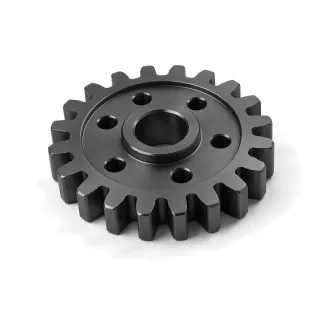 Black Nickel PlatingBlack nickel is a thin dark decorative electrodeposit, commonly applied over nickel, copper, brass, or zinc.CorrosionHardnessCost$$$
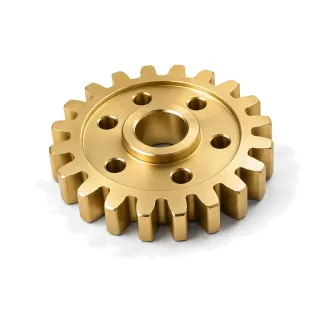 Brass PlatingBrass plating co-deposits copper and zinc to give steel, zinc die castings, or copper alloys a yellow decorative surface.CorrosionHardnessCost$$$
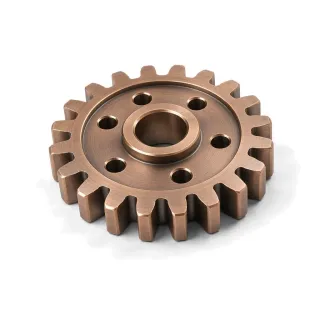 Bronze PlatingBronze plating deposits a copper-tin or related copper alloy for warm decorative color, antiquing, or selected functional bearing surfaces.CorrosionHardnessCost$$$
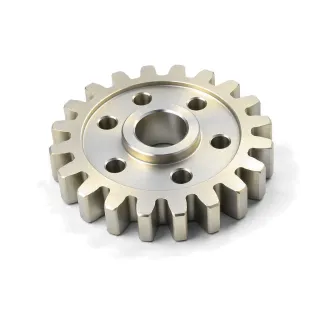 Cadmium PlatingCadmium is a sacrificial, lubricious coating retained mainly for aerospace, defense, and legacy hardware.CorrosionHardnessCost$$$$
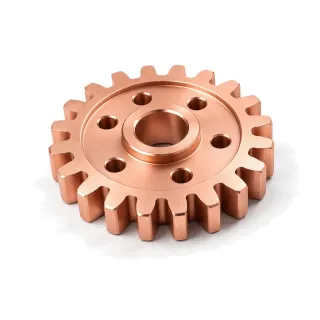 Copper PlatingCopper plating is a conductive, ductile undercoat used for leveling, adhesion, shielding, and build-up.CorrosionHardnessCost$$
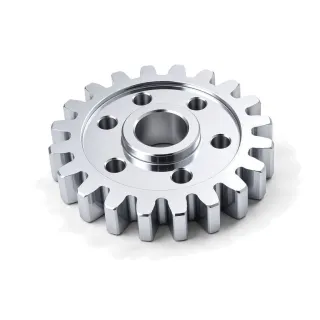 Decorative Nickel-Chrome PlatingDecorative chrome is a multilayer system: copper when needed, one or more nickel layers, and a very thin chromium topcoat.CorrosionHardnessCost$$$
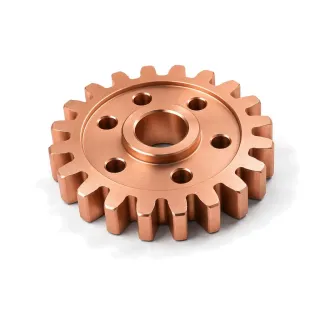 Electroless Copper PlatingElectroless copper chemically deposits a conductive seed layer on catalyzed plastics and inside printed-circuit through-holes.CorrosionHardnessCost$$$
 Gold PlatingGold plating supplies tarnish-free, low-resistance contact surfaces and decorative color.CorrosionHardnessCost$$$$
Compare every electroplating & electroless plating finish side by side →