
Diamond-Like Carbon Coating
PVD hard coatings · Vacuum deposition
DLC is a family of black amorphous-carbon coatings used for very low friction and severe sliding wear.
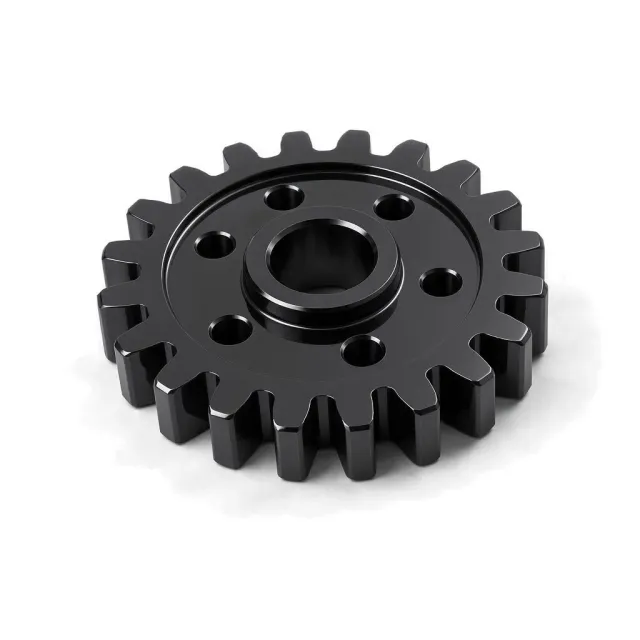
What is DLC?
Typical grades span about 2000–5000 HV, friction about 0.05–0.15, and 1–3 µm thickness.
How it works
PVD or plasma-enhanced vapor deposition forms an sp2/sp3-bonded amorphous-carbon film, usually over metallic adhesion and stress-management layers. The hard carbon surface resists wear while low shear lowers friction. Hydrogenated grades commonly need deposition and service temperatures compatible with about 300–350 °C limits; substrate hardness and polished finish remain essential.
Why specify it
- About 2000–5000 HV hardness
- Dry friction commonly 0.05–0.15
- Only 1–3 µm thick
- Useful for medical, mould, and engine wear
Where it falls short
- DLC grades are not interchangeable
- Typical hydrogenated grades limited to 300–350 °C
- High internal stress challenges sharp edges
- Needs hard smooth support
DLC at a glance
DLC is strongest on surface hardness (93 of 100), cosmetic quality (72 of 100) and lubricity (96 of 100), at a high cost.
Each score is 0–100 against every finish in this catalog. Corrosion comes from salt-spray life (ASTM B117, log scale) and hardness from the finish layer's Vickers or pencil hardness; cosmetic, lubricity and cost are FabDigit's engineering assessment. Economy on the radar is the inverse of cost.
DLC key numbers
Typical values from the governing specifications and shop practice; bars are this finish against the highest value among pvd hard coatings finishes.
- Thickness
- 1.5–3 µm
- Hardness
- 2,000–5,000 HV — Broad family range; ta-C can differ from hydrogenated DLC.
- Electrical
- Semi-conductive
- Colours
- black
- anthracite
- Appearance
- Smooth black to anthracite, from matte to glossy according to substrate polish.
Where DLC sits among all finishes
Surface hardness (Vickers, log scale) against corrosion protection (salt-spray hours, log scale) for every coating FabDigit offers, one cloud per finish group. DLC is highlighted; hover a dot for its name or open the full map.
Specifications for DLC
The documents a drawing cites to define this finish, with the Type / Class rows that apply. Each links to a page explaining the standard.
Drawing call-out
APPLY DLC (a-C:H) TO DESIGNATED SLIDING SURFACES, 2–3 µm TOTAL THICKNESS, HARDNESS 2000 HV MIN, DRY FRICTION 0.15 MAX AGAINST POLISHED STEEL; MAX SERVICE 300 °C; MASK FITSWhich materials take DLC?
Verdict per material family, with the grades that behave differently. Each family links to its datasheets in the material library.
| Material family | Verdict | Notes |
|---|---|---|
| Yes | Suitable with adhesion layers on hardened or work-hardened stainless. | |
| Yes | Hardened polished steel is preferred. | |
| Yes | Common tribological and medical substrate after a qualified adhesion system. | |
| Limited | Low-temperature cycle and adequate support hardness are required. | |
| Limited | Soft zinc-bearing alloy; decorative PVD is possible, not a wear-tool substrate. | |
| Limited | Soft copper alloys do not support a hard nitride; decorative films need a qualified adhesion layer. | |
| No | Melting point and reactivity exclude conventional PVD tool-coating cycles. | |
| No | Ordinary functional DLC requires a conductive, load-bearing substrate. | |
| No | Melting point is below typical PVD process temperature. |
How DLC is applied, and what it does to the part
- 1Polish and clean
- 2Ion etch
- 3Deposit adhesion and stress-control layers
- 4Deposit DLC
- 5Inspect adhesion, thickness, and tribology
| Dimensions | A 2 µm DLC film adds about 2 µm per side and 4 µm to an outside diameter. |
|---|---|
| Build-up per side | 1–3 µm — Allow full film thickness per coated side. |
| Masking | Usually needed. Mask fits, threads, electrical contacts, and bonding surfaces. |
| Electrical | Semi-conductive |
| Temperature limit | 350 °C (662 °F) continuous |
| Appearance | Smooth black to anthracite, from matte to glossy according to substrate polish. |
| Added lead time | 7–14 working days on top of the bare part |
Design rules for DLC
What to decide on the drawing before the part goes to the finisher.
- Name the DLC family.a-C:H and ta-C have different properties.
- Use a hard polished substrate.DLC follows roughness and cannot bridge substrate deformation.
- Avoid unsupported sharp edges.Internal stress can promote chipping.
- Define counterface and lubrication.Friction values are system-specific.
DLC versus the alternatives
Finishes engineers weigh against DLC, and when each wins.
| Finish | Corrosion | Hardness | Cosmetic | Cost | Thickness | Choose it when |
|---|---|---|---|---|---|---|
DLC this page | 55 | 93 | 72 | $$$$ | 1–3 µm | — |
| 48 | 77 | 50 | $$$$ | 1–5 µm | a tougher tungsten-doped carbon system is preferred | |
| 20 | 26 | 35 | $$$$ | 1–3 µm | lowest friction in high vacuum is primary |
The radar overlays DLC with Tungsten Carbide Carbon PVD, its most common alternative — chosen a tougher tungsten-doped carbon system is preferred. Scores in the table are 0–100 across every finish in the catalog.
Cost, lead time and compliance
Relative cost
Diamond-Like Carbon Coating is a high-cost finish ($$$$): more expensive than about 98 % of the finishes FabDigit quotes.
Finishing is priced per part with a lot minimum, from FabDigit's own China-side rates cross-checked against US job-shop pricing. The exact figure appears on the instant quote once the part is uploaded.
Lead time and compliance
| Added lead time | 7–14 working days |
|---|---|
| RoHS | Compliant |
| Notes | Carbon films are generally RoHS-compliant; medical use requires process-specific biocompatibility evidence. |
What DLC is used for
- Engine valve train parts
- Medical instruments
- Precision bearings
- Injection mould components
DLC — frequently asked
How thick is DLC coating?
DLC is commonly 1–3 µm thick, often 1.5–3 µm. A 2 µm film adds 4 µm to a fully coated outside diameter.
How hard is DLC coating?
Typical engineering DLC spans about 2000–5000 HV. Exact hardness depends on whether it is hydrogenated DLC, ta-C, or a doped architecture.
What is the friction coefficient of DLC?
Dry values commonly fall around 0.05–0.15 against a suitable polished counterface. Load, humidity, lubricant, and DLC type must be stated.
What temperature can DLC withstand?
Many hydrogenated grades are limited to about 300–350 °C. Specialized hydrogen-free grades may differ and require supplier data.
Can aluminum be DLC coated?
Yes with low-temperature deposition and an adhesion system, but soft aluminum may not support the hard film. Hard anodize or a hardened interlayer may be needed.
Other pvd hard coatings finishes
 Aluminum Chromium Nitride PVDAlCrN is a dark grey PVD coating for high-temperature cutting, forming, moulding, and die casting tooling.CorrosionHardnessCost$$$$
 Aluminum Titanium Nitride PVDAlTiN is a high-aluminum nitride PVD coating for dry, high-speed machining of hardened steels.CorrosionHardnessCost$$$$
 Chromium Nitride PVDCrN is a silver-grey, tough PVD coating used on plastic moulds, forming tools, medical instruments, and anti-galling components.CorrosionHardnessCost$$$$
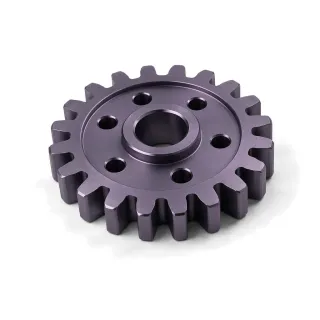 Titanium Aluminum Nitride PVDTiAlN is a violet-black PVD coating for high-speed and dry cutting.CorrosionHardnessCost$$$$
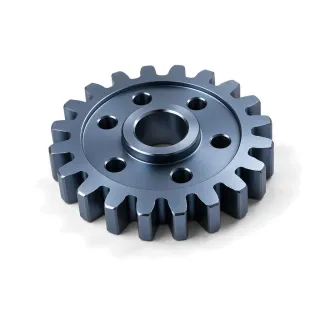 Titanium Carbonitride PVDTiCN is a blue-grey PVD tool coating with about 3000 HV hardness and lower friction than TiN.CorrosionHardnessCost$$$$
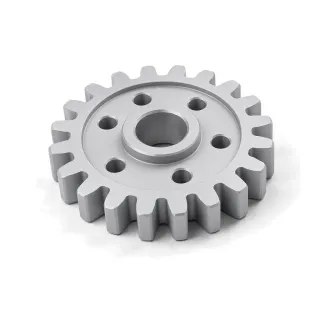 Titanium Diboride PVDTiB2 is a hard grey PVD coating chosen mainly to resist aluminum adhesion on cutting and forming tools.CorrosionHardnessCost$$$$
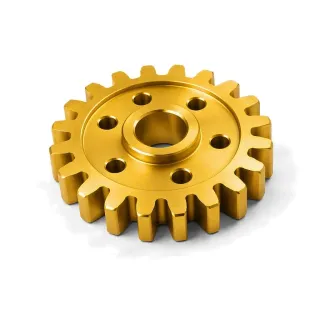 Titanium Nitride PVDTiN is a gold, hard ceramic PVD coating for cutting tools, moulds, medical instruments, and decorative stainless hardware.CorrosionHardnessCost$$$$
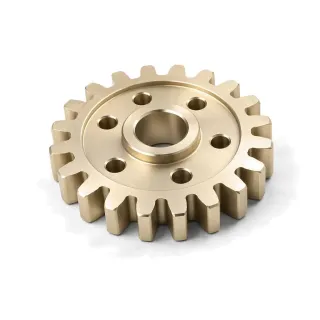 Zirconium Nitride PVDZrN is a light-gold PVD coating used for decorative stainless products and for wear on non-ferrous cutting tools.CorrosionHardnessCost$$$$