
Bronze Plating
Electroplating & electroless plating · Electrolytic bath
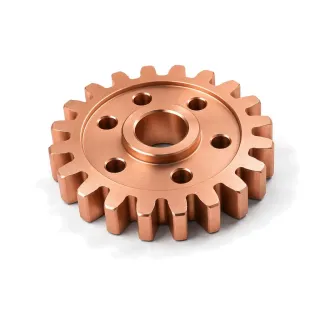
Bronze plating deposits a copper-tin or related copper alloy for warm decorative color, antiquing, or selected functional bearing surfaces.
Reference page — Bronze plate is not in the instant-quote configurator. Upload the part, name the finish in the notes, and an engineer quotes it with the part.
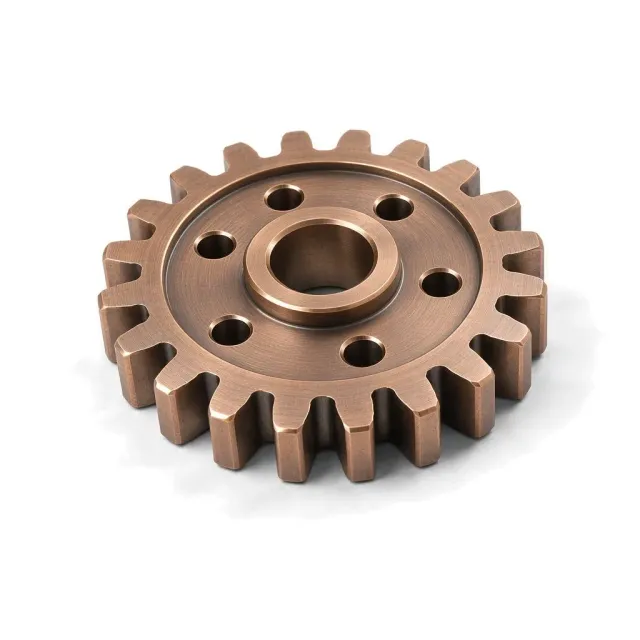
What is Bronze plate?
Decorative systems normally use an underplate and clearcoat.
How it works
The activated workpiece is cathodically plated from an electrolyte containing copper and tin, or a qualified multi-metal white-bronze chemistry. Alloy ratio, additives, and current density control color and hardness. Copper or nickel underlayers provide leveling and corrosion resistance. Recesses plate more slowly than edges, and decorative bronze is commonly brushed or antiqued before sealing with lacquer. Functional bearing bronze uses different bath control, composition, thickness, and acceptance criteria from this decorative finish.
Why specify it
- Warm metallic bronze appearance
- Typical 2–10 µm decorative deposit
- Can be antiqued and brushed
- Some white-bronze systems replace nickel in decorative stacks
Where it falls short
- Alloy and color are process specific
- Bare bronze tarnishes
- Thin decorative deposits are not bearing overlays
- Recess color may differ from edges
Bronze plate at a glance
Bronze plate is strongest on cosmetic quality (88 of 100), at a premium cost.
Each score is 0–100 against every finish in this catalog. Corrosion comes from salt-spray life (ASTM B117, log scale) and hardness from the finish layer's Vickers or pencil hardness; cosmetic, lubricity and cost are FabDigit's engineering assessment. Economy on the radar is the inverse of cost.
Bronze plate key numbers
Typical values from the governing specifications and shop practice; bars are this finish against the highest value among electroplating & electroless plating finishes.
- Thickness
- 2–5 µm for decorative bronze; up to 10 µm for antiqued or heavier coverage
- Hardness
- 120–350 HV — Strongly dependent on copper-tin ratio and proprietary alloy.
- Electrical
- Conductive
- Colours
- red bronze
- brown bronze
- white bronze
- antique bronze
- Appearance
- Warm red-brown to pale white bronze, bright, satin, or antiqued.
Where Bronze plate sits among all finishes
Surface hardness (Vickers, log scale) against corrosion protection (salt-spray hours, log scale) for every coating FabDigit offers, one cloud per finish group. Bronze plate is highlighted; hover a dot for its name or open the full map.
Specifications for Bronze plate
The documents a drawing cites to define this finish, with the Type / Class rows that apply. Each links to a page explaining the standard.
Drawing call-out
TIN-BRONZE PLATE, 5 µm MIN OVER 10 µm MIN COPPER UNDERPLATE; SATIN ANTIQUE-BRONZE COLOR TO APPROVED SAMPLE; CLEAR LACQUERWhich materials take Bronze plate?
Verdict per material family, with the grades that behave differently. Each family links to its datasheets in the material library.
| Material family | Verdict | Notes |
|---|---|---|
| Yes | Common decorative and electrical substrate after cleaning. | |
| Yes | Compatible decorative substrate. | |
| Yes | Use copper/nickel underplate. | |
| With care | Requires zincate and underplating. | |
| With care | Metal AM parts can be plated after density, powder, and porosity review. | |
| With care | Needs activation and a nickel or other strike over the passive film. | |
| With care | Requires strike and leveling layers. | |
| Limited | Highly reactive; needs a qualified pretreatment and is rarely plated this way. | |
| Limited | Only plateable resins after etch, catalyst, and electroless metallization. | |
| Limited | Only if the resin is qualified for metallization; most SLA parts are not. | |
| Limited | Possible only with specialized activation; not a routine job-shop sequence. | |
| No | Fused-filament polymers are not a standard plating substrate. | |
| No | Porous nylon powder-bed parts are not a standard plating substrate. | |
| No | Porous nylon powder-bed parts are not a standard plating substrate. |
How Bronze plate is applied, and what it does to the part
- 1Polish
- 2Clean
- 3Underplate
- 4Bronze alloy plate
- 5Rinse
- 6Brush or antique
- 7Clearcoat
- 8Color inspection
| Dimensions | Include underplate and clearcoat in total buildup; 2–10 µm refers only to the decorative bronze layer. |
|---|---|
| Build-up per side | 7–25 µm — Includes typical underplate plus bronze; functional bearing bronze uses a different thickness regime. |
| Masking | Usually needed. Mask precision interfaces, electrical contacts under lacquer, and visible rack-contact zones. |
| Electrical | Conductive |
| Appearance | Warm red-brown to pale white bronze, bright, satin, or antiqued. |
| Added lead time | 5–10 working days on top of the bare part |
Design rules for Bronze plate
What to decide on the drawing before the part goes to the finisher.
- Identify alloy family.Tin-bronze and white-bronze deposits are not interchangeable.
- Approve color and texture samples.Alloy ratio and antiquing control the visual result.
- Specify underplate and clearcoat.They control leveling, corrosion, tarnish, and skin contact.
- Do not use decorative data for bearings.Functional bearing overlays require separate composition and thickness engineering.
Bronze plate versus the alternatives
Finishes engineers weigh against Bronze plate, and when each wins.
| Finish | Corrosion | Hardness | Cosmetic | Cost | Thickness | Choose it when |
|---|---|---|---|---|---|---|
Bronze plate this page | 40 | 49 | 88 | $$$ | 2–10 µm | — |
| 35 | 44 | 88 | $$$ | 2–10 µm | when a brighter yellow-gold appearance is wanted | |
| 51 | 55 | 78 | $$ | 5–25 µm | when a standard silver barrier finish is required |
The radar overlays Bronze plate with Brass Plating, its most common alternative — chosen when a brighter yellow-gold appearance is wanted. Scores in the table are 0–100 across every finish in the catalog.
Cost, lead time and compliance
Relative cost
Bronze Plating is a premium-cost finish ($$$): more expensive than about 58 % of the finishes FabDigit quotes.
Finishing is priced per part with a lot minimum, from FabDigit's own China-side rates. The exact figure appears on the instant quote once the part is uploaded.
Lead time and compliance
| Added lead time | 5–10 working days |
|---|---|
| RoHS | Compliant |
| Notes | Verify alloy constituents and clearcoat; do not assume every white-bronze process is nickel-free or allergen compliant. |
What Bronze plate is used for
- Architectural hardware
- Lighting fixtures
- Decorative controls
- Furniture trim
Bronze plate — frequently asked
what is bronze plating
Bronze plating usually electrodeposits a copper-tin alloy in a 2–10 µm decorative layer. It is commonly applied over copper or nickel and sealed against tarnish.
bronze plating vs brass plating
Bronze is generally copper-tin and gives a red-brown or pale white tone. Brass is copper-zinc and gives a brighter yellow color; both usually need a clearcoat.
does bronze plating tarnish
Yes, unsealed copper-alloy deposits oxidize and darken. Decorative parts are commonly lacquered after brushing or antiquing.
can bronze plate steel
Yes, after cleaning and a copper or nickel underplate. The 2–10 µm bronze layer alone should not be treated as the steel corrosion barrier.
is white bronze nickel free
Some proprietary copper-tin-zinc white-bronze systems are marketed as nickel-free, but composition is process specific. Obtain a supplier declaration rather than infer compliance from color.
Other electroplating & electroless plating finishes
 Black Nickel PlatingBlack nickel is a thin dark decorative electrodeposit, commonly applied over nickel, copper, brass, or zinc.CorrosionHardnessCost$$$
 Cadmium PlatingCadmium is a sacrificial, lubricious coating retained mainly for aerospace, defense, and legacy hardware.CorrosionHardnessCost$$$$
 Copper PlatingCopper plating is a conductive, ductile undercoat used for leveling, adhesion, shielding, and build-up.CorrosionHardnessCost$$
 Decorative Nickel-Chrome PlatingDecorative chrome is a multilayer system: copper when needed, one or more nickel layers, and a very thin chromium topcoat.CorrosionHardnessCost$$$
 Electroless Copper PlatingElectroless copper chemically deposits a conductive seed layer on catalyzed plastics and inside printed-circuit through-holes.CorrosionHardnessCost$$$
 Electroless Nickel PlatingElectroless nickel is an autocatalytic nickel-phosphorus coating with nearly uniform thickness on complex geometry.CorrosionHardnessCost$$$
 Gold PlatingGold plating supplies tarnish-free, low-resistance contact surfaces and decorative color.CorrosionHardnessCost$$$$
 Hard Chrome PlatingHard chrome is a thick engineering chromium deposit for wear, low friction, and dimensional restoration.CorrosionHardnessCost$$$$
Compare every electroplating & electroless plating finish side by side →