
Electrophoretic Coating
Paint, powder & polymer coatings · Electrolytic bath
E-coating deposits a waterborne organic film on an electrically conductive part by electrophoresis.
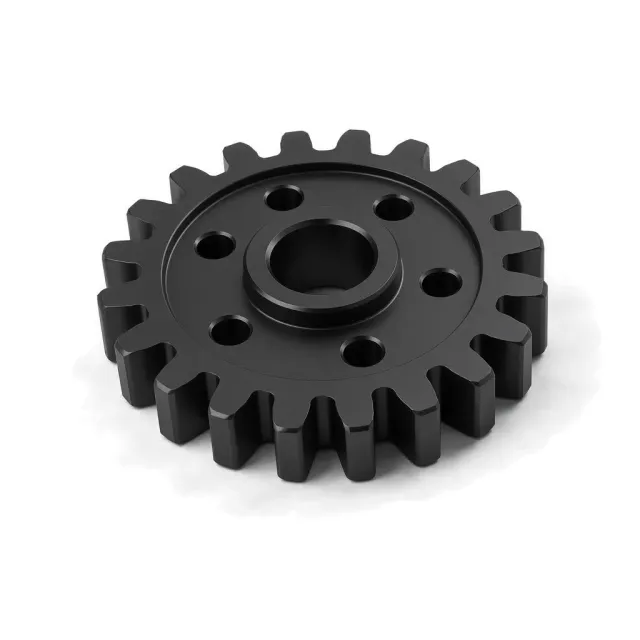
What is E-coat?
It is used as a uniform corrosion-resistant primer with excellent throwing power into recesses and complex assemblies.
How it works
The cleaned and pretreated workpiece is immersed in a waterborne coating bath and connected as an electrode, most commonly as the cathode. Direct current drives charged resin particles toward the surface, where they deposit and become electrically resistive, helping the film self-limit. Bath circulation and voltage provide coverage in cavities that spray methods struggle to reach. The part is rinsed to recover drag-out and then baked to crosslink the deposited resin.
Why specify it
- Typical film thickness is 15–35 µm
- Excellent throwing power reaches recesses and complex frames
- Self-limiting deposition produces comparatively uniform film
- Works well as a corrosion-resistant primer under powder or liquid topcoat
Where it falls short
- Only electrically conductive, fully immersible parts can be coated
- Closed cavities need drain and vent paths
- Bare sharp edges can remain weaker than broad faces
- Baking can damage heat-sensitive inserts and assemblies
E-coat at a glance
E-coat is strongest on corrosion protection (83 of 100), at a standard cost.
Each score is 0–100 against every finish in this catalog. Corrosion comes from salt-spray life (ASTM B117, log scale) and hardness from the finish layer's Vickers or pencil hardness; cosmetic, lubricity and cost are FabDigit's engineering assessment. Economy on the radar is the inverse of cost.
E-coat key numbers
Typical values from the governing specifications and shop practice; bars are this finish against the highest value among paint, powder & polymer coatings finishes.
- Thickness
- 15–35 µm for cathodic epoxy e-coat
- Hardness
- 2H–4H pencil hardness (ASTM D3363) — cathodic epoxy e-coat
- Corrosion (salt spray)
- 500–1,000 h per ASTM B117 on pretreated steel, typical automotive cathodic-epoxy systems — Hours depend on pretreatment, edge geometry, and the named specification; this is a common qualified-system band, not a universal ASTM minimum.
- Electrical
- Insulating
- Colours
- black
- gray
- white
- Appearance
- Uniform, smooth, and usually low- to medium-gloss; often used as a primer rather than a final cosmetic surface.
Where E-coat sits among all finishes
Surface hardness (Vickers, log scale) against corrosion protection (salt-spray hours, log scale) for every coating FabDigit offers, one cloud per finish group. E-coat is highlighted; hover a dot for its name or open the full map.
Specifications for E-coat
The documents a drawing cites to define this finish, with the Type / Class rows that apply. Each links to a page explaining the standard.
Drawing call-out
CATHODIC E-COAT, BLACK, 20–30 µm DFT; MASK THREADS, ELECTRICAL CONTACTS, AND DATUM TARGETS; PROVIDE COMPLETE DRAINAGEWhich materials take E-coat?
Verdict per material family, with the grades that behave differently. Each family links to its datasheets in the material library.
| Material family | Verdict | Notes |
|---|---|---|
| Yes | Requires compatible pretreatment and bath controls. | |
| Yes | Primary high-volume substrate after suitable pretreatment. | |
| With care | Possible; zinc and copper bleed can stain the film. | |
| With care | Possible; pretreatment and bake staining must be validated. | |
| With care | Metal AM parts can be e-coated after powder removal; internal passages need drain paths. | |
| With care | Use a validated magnesium pretreatment and corrosion system. | |
| With care | Conductive and immersible, but adhesion needs abrasion and a compatible pretreatment. | |
| With care | Conductive, but pretreatment and adhesion need qualification. | |
| With care | Pretreatment, outgassing, and bake response require validation. | |
| No | Nonconductive polymers cannot be e-coated without a conductive layer. | |
| No | Nonconductive polymers cannot be e-coated without a conductive layer. | |
| No | Conventional electrophoretic deposition requires an electrically conductive substrate. | |
| No | Nonconductive polymers cannot be e-coated without a conductive layer. | |
| No | Nonconductive polymers cannot be e-coated without a conductive layer. |
How E-coat is applied, and what it does to the part
- 1Clean
- 2Pretreat
- 3Rinse
- 4Electrocoat by immersion
- 5Ultrafiltrate rinse
- 6Drain
- 7Bake cure
- 8Inspect
| Dimensions | Allow 15–35 µm on all immersed conductive faces, including recesses and internal passages reached by the bath. |
|---|---|
| Build-up per side | 15–35 µm — Deposited film adds approximately its dry-film thickness to every wetted conductive surface. |
| Masking | Usually needed. Mask electrical contacts, grounding points, close fits, threads, sealing lands, and surfaces that must not receive immersion coating. |
| Electrical | Insulating |
| Temperature limit | 150 °C (302 °F) continuous |
| Appearance | Uniform, smooth, and usually low- to medium-gloss; often used as a primer rather than a final cosmetic surface. |
| Added lead time | 4–8 working days on top of the bare part |
Design rules for E-coat
What to decide on the drawing before the part goes to the finisher.
- Provide vents at cavity high points and drains at low points.Air pockets and trapped bath prevent complete coating.
- Avoid sealed overlapping joints.Entrapped chemistry can bleed during cure.
- Define rack contact locations.The part must conduct current and the contact leaves a witness.
- Mask functional threads and contacts.The 15–35 µm insulating film reaches recesses unusually well.
E-coat versus the alternatives
Finishes engineers weigh against E-coat, and when each wins.
| Finish | Corrosion | Hardness | Cosmetic | Cost | Thickness | Choose it when |
|---|---|---|---|---|---|---|
E-coat this page | 83 | 15 | 55 | $$ | 15–35 µm | — |
| 83 | 14 | 85 | $$ | 50–150 µm | when thicker decorative topcoat performance is needed | |
| 83 | 15 | 55 | $$$ | 50–200 µm | when immersion processing is impractical |
The radar overlays E-coat with Powder Coating, its most common alternative — chosen when thicker decorative topcoat performance is needed. Scores in the table are 0–100 across every finish in the catalog.
Cost, lead time and compliance
Relative cost
Electrophoretic Coating is a standard-cost finish ($$): cheaper than about 60 % of the finishes FabDigit quotes.
Finishing is priced per part with a lot minimum, from FabDigit's own China-side rates cross-checked against US job-shop pricing. The exact figure appears on the instant quote once the part is uploaded.
Lead time and compliance
| Added lead time | 4–8 working days |
|---|---|
| RoHS | Compliant |
| Notes | Waterborne bath and rinse recovery reduce coating loss; confirm the exact pretreatment and pigment system. |
What E-coat is used for
- Automotive frames
- Complex welded brackets
- Appliance bases
- Underbody components
- Primer for powder-coated assemblies
E-coat — frequently asked
e-coat vs powder coat
E-coat is typically 15–35 µm and reaches recesses by immersion and electric field. Powder coat is commonly 50–150 µm, provides broader decorative options, but suffers more Faraday-cage difficulty in deep pockets.
how thick is e-coat
Cathodic epoxy e-coat is commonly specified at 15–35 µm. The exact range must match the supplier's bath and corrosion-performance requirement.
does e-coat cover inside cavities
Yes, it has excellent throwing power compared with spray coatings. Cavities still need electrical continuity, bath access, venting, and drainage.
can e-coat be used as a final finish
It can be the final black functional finish, but it is often used as a corrosion-resistant primer. A powder or liquid topcoat adds color, weathering, and cosmetic durability.
does e-coat affect threads
Yes. Its throwing power means even recessed threads may receive 15–35 µm of insulating film. Mask functional threads unless fit allowance and electrical behavior are intentional.
Other paint, powder & polymer coatings finishes
 Anti-Fingerprint Oleophobic CoatingAnti-fingerprint oleophobic coating lowers surface energy so skin oils spread less, fingerprints appear lighter, and cleaning is easier.CorrosionHardnessCost$$$
 CerakoteCerakote is a trademarked ceramic-polymer thin-film coating supplied in product-specific air-cure and oven-cure series.CorrosionHardnessCost$$$
 Primer CoatingPrimer coating is an intermediate film that promotes adhesion, seals porosity, levels minor defects, or improves corrosion protection before paint.CorrosionHardnessCost$$
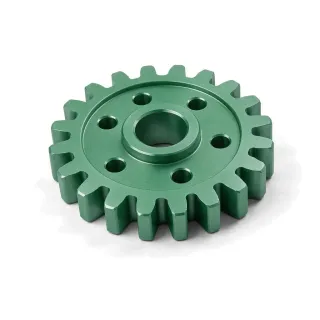 PTFE Dry-Film CoatingPTFE dry-film coating is a fluoropolymer-based low-friction, non-stick coating for metal components.CorrosionHardnessCost$$$
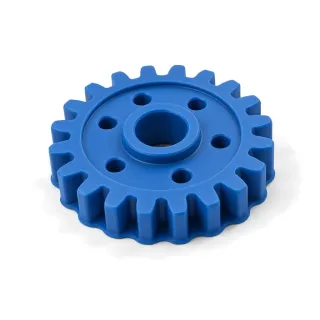 Rubberized Dip CoatingRubberized dip coating forms a thick flexible grip or protective skin on metal handles and similar parts.CorrosionHardnessCost$$
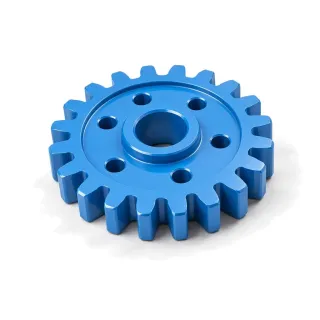 Wet PaintingWet painting atomizes a liquid resin, pigment, and solvent or water system onto prepared metal or plastic.CorrosionHardnessCost$$
Compare every paint, powder & polymer coatings finish side by side →