
Titanium Aluminum Nitride PVD
PVD hard coatings · Vacuum deposition
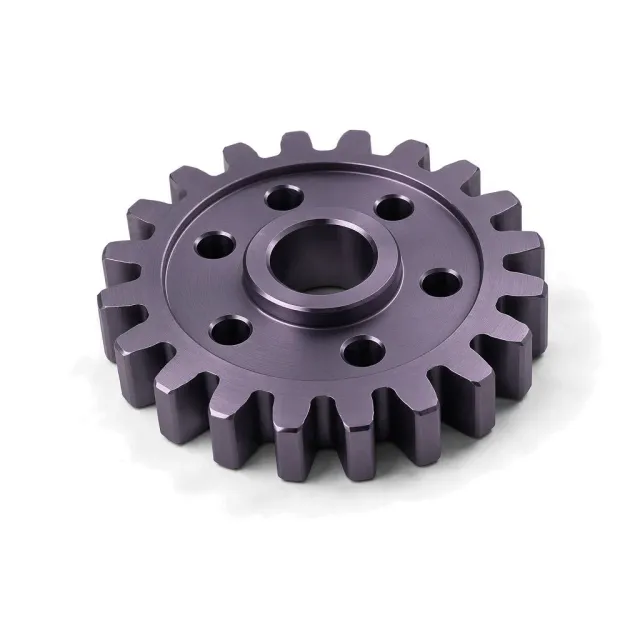
TiAlN is a violet-black PVD coating for high-speed and dry cutting.
What is TiAlN PVD?
Around 3300 HV hardness and an alumina-rich protective scale support service to about 800 °C.
How it works
Titanium and aluminum targets are reactively evaporated or sputtered in nitrogen onto a cleaned, hardened, conductive substrate. During hot cutting, aluminum at the surface forms a protective aluminum-oxide scale. Deposition commonly runs about 200–500 °C; substrate tempering temperature and aluminum aging response must be checked before coating.
Why specify it
- About 3300 HV hardness
- Useful to about 800 °C
- Strong hot-wear performance
- Only 1–5 µm thick
Where it falls short
- Less suitable for cutting aluminum because of chemical affinity
- Requires hardened support
- Line-of-sight coverage
- Standard cycles can damage aluminum temper
TiAlN PVD at a glance
TiAlN PVD is strongest on surface hardness (93 of 100), at a high cost.
Each score is 0–100 against every finish in this catalog. Corrosion comes from salt-spray life (ASTM B117, log scale) and hardness from the finish layer's Vickers or pencil hardness; cosmetic, lubricity and cost are FabDigit's engineering assessment. Economy on the radar is the inverse of cost.
TiAlN PVD key numbers
Typical values from the governing specifications and shop practice; bars are this finish against the highest value among pvd hard coatings finishes.
- Thickness
- 2–4 µm
- Hardness
- 3,000–3,500 HV — Approximately 3300 HV typical.
- Electrical
- Semi-conductive
- Colours
- violet-black
- dark grey
- Appearance
- Violet-black to dark grey, usually satin on prepared tools.
Where TiAlN PVD sits among all finishes
Surface hardness (Vickers, log scale) against corrosion protection (salt-spray hours, log scale) for every coating FabDigit offers, one cloud per finish group. TiAlN PVD is highlighted; hover a dot for its name or open the full map.
Specifications for TiAlN PVD
The documents a drawing cites to define this finish, with the Type / Class rows that apply. Each links to a page explaining the standard.
Drawing call-out
PVD COAT DESIGNATED SURFACES TiAlN, 2–4 µm THICK, VIOLET-BLACK; MAX PROCESS TEMPERATURE 450 °C; MASK FITSWhich materials take TiAlN PVD?
Verdict per material family, with the grades that behave differently. Each family links to its datasheets in the material library.
| Material family | Verdict | Notes |
|---|---|---|
| Yes | Hardened tool steels are standard. | |
| Yes | Widely used on carbide tooling. | |
| With care | Use a qualified adhesion system. | |
| With care | Possible with a qualified adhesion layer and a cycle that avoids excessive interstitial pickup. | |
| Limited | Low-temperature cycle only. | |
| Limited | Soft zinc-bearing alloy; decorative PVD is possible, not a wear-tool substrate. | |
| Limited | Soft copper alloys do not support a hard nitride; decorative films need a qualified adhesion layer. | |
| No | Melting point and reactivity exclude conventional PVD tool-coating cycles. | |
| No | Not suitable for ordinary tool-coating PVD. | |
| No | Melting point is below typical PVD process temperature. |
How TiAlN PVD is applied, and what it does to the part
- 1Clean
- 2Ion etch
- 3Adhesion layer
- 4Reactive TiAlN deposition
- 5Cool and inspect
| Dimensions | Allow approximately +1–4 µm per side; specify pre-coat size for close diameters. |
|---|---|
| Build-up per side | 1–4 µm — Allow +1–4 µm per coated side. |
| Masking | Usually needed. Mask precision fits, threads, and electrical contacts. |
| Electrical | Semi-conductive |
| Temperature limit | 800 °C (1,472 °F) continuous |
| Appearance | Violet-black to dark grey, usually satin on prepared tools. |
| Added lead time | 5–10 working days on top of the bare part |
Design rules for TiAlN PVD
What to decide on the drawing before the part goes to the finisher.
- Use on pre-hardened tool steel or carbide.Substrate support controls load capacity.
- Avoid as the first choice for aluminum cutting.Aluminum-containing coatings can promote adhesion.
- Set a maximum coating temperature.PVD heat can re-temper the part.
- Compensate precision fits by coating thickness.A coated diameter gains twice the film thickness.
TiAlN PVD versus the alternatives
Finishes engineers weigh against TiAlN PVD, and when each wins.
| Finish | Corrosion | Hardness | Cosmetic | Cost | Thickness | Choose it when |
|---|---|---|---|---|---|---|
TiAlN PVD this page | 50 | 93 | 62 | $$$$ | 1–5 µm | — |
| 52 | 94 | 50 | $$$$ | 1–5 µm | higher aluminum content and hotter service are needed | |
| 40 | 94 | 42 | $$$$ | 1–5 µm | machining aluminum |
The radar overlays TiAlN PVD with Aluminum Titanium Nitride PVD, its most common alternative — chosen higher aluminum content and hotter service are needed. Scores in the table are 0–100 across every finish in the catalog.
Cost, lead time and compliance
Relative cost
Titanium Aluminum Nitride PVD is a high-cost finish ($$$$): more expensive than about 86 % of the finishes FabDigit quotes.
Finishing is priced per part with a lot minimum, from FabDigit's own China-side rates. The exact figure appears on the instant quote once the part is uploaded.
Lead time and compliance
| Added lead time | 5–10 working days |
|---|---|
| RoHS | Compliant |
| Notes | The deposited nitride is generally RoHS-compliant. |
What TiAlN PVD is used for
- High-speed end mills
- Dry machining inserts
- Hardened-steel cutting
- Hot-wear tooling
TiAlN PVD — frequently asked
TiN vs TiAlN: what is the difference?
TiN is about 2300 HV and useful near 600 °C; TiAlN is about 3300 HV and useful near 800 °C. TiAlN is usually better for hot dry cutting.
How thick is TiAlN coating?
Most TiAlN PVD films are 1–5 µm, commonly 2–4 µm. Add the specified thickness to every coated side.
Can TiAlN cut aluminum?
It can, but it is usually not preferred because aluminum in the coating can encourage workpiece adhesion. TiB2 or DLC is often chosen for non-ferrous cutting.
Can aluminum parts receive TiAlN PVD?
Only under a qualified low-temperature cycle. Normal 200–500 °C PVD processing can alter an aluminum temper.
What temperature can TiAlN withstand?
A typical upper working temperature is about 800 °C. Actual tool-edge temperature and oxidation life depend on coating architecture and cutting conditions.
Other pvd hard coatings finishes
 Aluminum Chromium Nitride PVDAlCrN is a dark grey PVD coating for high-temperature cutting, forming, moulding, and die casting tooling.CorrosionHardnessCost$$$$
 Chromium Nitride PVDCrN is a silver-grey, tough PVD coating used on plastic moulds, forming tools, medical instruments, and anti-galling components.CorrosionHardnessCost$$$$
 Diamond-Like Carbon CoatingDLC is a family of black amorphous-carbon coatings used for very low friction and severe sliding wear.CorrosionHardnessCost$$$$
 Molybdenum Disulfide PVDMoS2 is a soft, dark-grey solid-lubricant coating selected for dry and vacuum mechanisms.CorrosionHardnessCost$$$$
 Titanium Carbonitride PVDTiCN is a blue-grey PVD tool coating with about 3000 HV hardness and lower friction than TiN.CorrosionHardnessCost$$$$
 Titanium Nitride PVDTiN is a gold, hard ceramic PVD coating for cutting tools, moulds, medical instruments, and decorative stainless hardware.CorrosionHardnessCost$$$$
 Tungsten Carbide Carbon PVDWC/C is a tungsten-containing hydrogenated amorphous-carbon coating, often written a-C:H:W, for sliding and rolling components.CorrosionHardnessCost$$$$
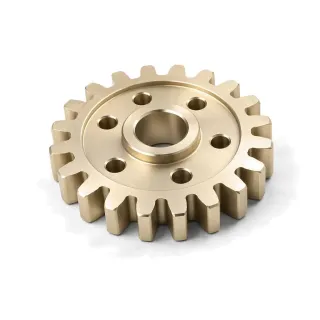 Zirconium Nitride PVDZrN is a light-gold PVD coating used for decorative stainless products and for wear on non-ferrous cutting tools.CorrosionHardnessCost$$$$