
Electropolishing
Passivation & electropolishing · Electrolytic bath
Electropolishing is controlled anodic dissolution that brightens, deburrs, and smooths stainless steel and other qualified alloys.
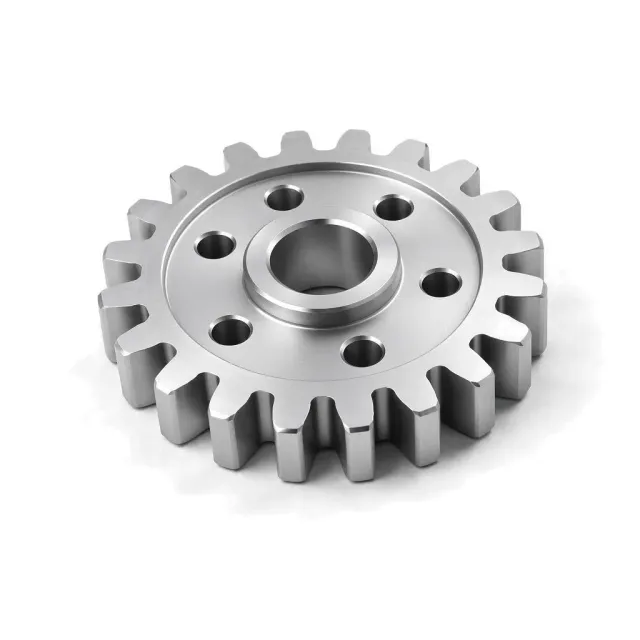
What is Electropolishing?
ASTM B912 is widely specified for stainless components in sanitary, semiconductor, medical, and vacuum service.
How it works
The workpiece is made anodic in a concentrated acid electrolyte while current removes metal from microscopic peaks faster than from valleys. A viscous diffusion layer controls dissolution, reducing roughness and rounding very small burrs without mechanical media. Typical stock removal is 5–25 µm per surface, but geometry and current density cause variation. On stainless steel, iron is preferentially removed and the cleaned surface repassivates after rinsing, leaving a chromium-enriched, bright surface.
Why specify it
- Removes about 5–25 µm per surface
- Reduces microscopic peaks and cleanability traps
- Deburrs very small edges without embedded abrasive
- Passivates stainless while producing a bright finish
Where it falls short
- Cannot flatten waviness or remove deep scratches
- Rounds sharp edges and changes precision dimensions
- Current distribution causes extra removal at edges
- Inclusions, welds, and mixed metallurgy can polish unevenly
Electropolishing at a glance
Electropolishing is strongest on cosmetic quality (82 of 100), at a premium cost. Surface hardness is not rated: the finish leaves the part's own surface.
Each score is 0–100 against every finish in this catalog. Corrosion comes from salt-spray life (ASTM B117, log scale) and hardness from the finish layer's Vickers or pencil hardness; cosmetic, lubricity and cost are FabDigit's engineering assessment. Economy on the radar is the inverse of cost.
Electropolishing key numbers
Typical values from the governing specifications and shop practice; bars are this finish against the highest value among passivation & electropolishing finishes.
- Thickness
- Removes approximately 5–25 µm per treated surface; this is negative buildup, not a coating.
- Electrical
- Unchanged
- Appearance
- Bright satin to reflective; underlying scratches and orange peel can remain visible.
Specifications for Electropolishing
The documents a drawing cites to define this finish, with the Type / Class rows that apply. Each links to a page explaining the standard.
| Standard | Type / Class | Thickness | Requirement / test | Status |
|---|---|---|---|---|
Standard Specification for Passivation of Stainless Steels Using Electropolishing · ASTM | — | — | — | Active |
Test and related methods: ASTM A380 (Standard Practice for Cleaning, Descaling, and Passivation of Stainless Steel Parts, Equipment, and Systems), ASTM A967 (Standard Specification for Chemical Passivation Treatments for Stainless Steel Parts).
Drawing call-out
ELECTROPOLISH STAINLESS STEEL PER ASTM B912; REMOVE 0.0002–0.0005 IN PER SURFACE; FINAL Ra 0.4 µm MAX; MASK THREADSPattern: ELECTROPOLISH AND PASSIVATE STAINLESS STEEL PER ASTM B912, REMOVE <RANGE>, FINISH <Ra>, VERIFY BY <TEST>
Which materials take Electropolishing?
Verdict per material family, with the grades that behave differently. Each family links to its datasheets in the material library.
| Material family | Verdict | Notes |
|---|---|---|
| Yes | The principal substrate under ASTM B912.
| |
| With care | Medical alloys require validated alloy-specific processing. | |
| With care | Stainless or nickel-alloy AM parts after complete depowdering; recessed passages polish unevenly. | |
| With care | Possible with alloy-specific electrolyte and qualification. | |
| Limited | Specialized aluminum electropolishing differs from stainless processing. | |
| Limited | Requires a copper-alloy electrolyte, not the stainless ASTM B912 process. | |
| Limited | Possible with a different electrolyte; ASTM B912 does not apply. | |
| Limited | Carbon steel can be electropolished in a different electrolyte; ASTM B912 does not apply. | |
| Limited | Requires titanium-specific electrolyte and validation. | |
| No | Polymers cannot be electropolished. | |
| No | Magnesium is incompatible with these electropolishing baths. | |
| No | Polymers cannot be electropolished. | |
| No | Electropolishing is an anodic metal-removal process. | |
| No | Polymers cannot be electropolished. | |
| No | Polymers cannot be electropolished. | |
| No | Zinc alloys dissolve rather than polish controllably. |
How Electropolishing is applied, and what it does to the part
- 1Clean / degrease
- 2Rack and mask
- 3Electropolish
- 4Rinse
- 5Neutralize
- 6Final rinse
- 7Dry and verify
| Dimensions | Expect 5–25 µm removal per surface and roughly 10–50 µm increase in a treated bore diameter. |
|---|---|
| Build-up per side | removes 5–25 µm — Material removal varies with current density, time, shielding, and geometry. |
| Masking | Usually needed. Mask threads, sealing dimensions, sharp datum edges, and dissimilar-metal inserts that cannot tolerate 5–25 µm removal. |
| Electrical | Unchanged |
| Appearance | Bright satin to reflective; underlying scratches and orange peel can remain visible. |
| Added lead time | 3–6 working days on top of the bare part |
Design rules for Electropolishing
What to decide on the drawing before the part goes to the finisher.
- Dimension the part before and after the specified removal.Electropolishing removes 5–25 µm from every exposed surface.
- State a measurable final Ra where smoothness matters.The word bright does not control roughness.
- Provide robust rack-contact locations.High current requires reliable contact and leaves witness marks.
- Avoid trapped electrolyte volumes.Blind cavities need drainage and thorough rinsing.
Electropolishing versus the alternatives
Finishes engineers weigh against Electropolishing, and when each wins.
| Finish | Corrosion | Hardness | Cosmetic | Cost | Thickness | Choose it when |
|---|---|---|---|---|---|---|
Electropolishing this page | 45 | — | 82 | $$$ | removes 5–25 µm | — |
| 34 | — | 18 | $ | 0 µm | when only corrosion resistance is required and appearance is secondary | |
| 28 | — | 20 | $ | 0 µm | when scale removal is the goal, not a bright finish | |
| 10 | — | 95 | $$$$ | 0 µm | when a mechanical mirror is acceptable and stock removal must be minimal |
The radar overlays Electropolishing with Stainless Steel Passivation, its most common alternative — chosen when only corrosion resistance is required and appearance is secondary. Scores in the table are 0–100 across every finish in the catalog.
Cost, lead time and compliance
Relative cost
Electropolishing is a premium-cost finish ($$$): more expensive than about 59 % of the finishes FabDigit quotes.
Finishing is priced per part with a lot minimum, from FabDigit's own China-side rates cross-checked against US job-shop pricing. The exact figure appears on the instant quote once the part is uploaded.
Lead time and compliance
| Added lead time | 3–6 working days |
|---|---|
| RoHS | Compliant |
| Notes | The finished surface is generally RoHS compliant; concentrated process acids require controlled handling and treatment. |
What Electropolishing is used for
- High-purity fluid systems
- Semiconductor vacuum parts
- Medical instruments and implants
- Decorative stainless hardware
Electropolishing — frequently asked
How much material does electropolishing remove?
Typical removal is about 5–25 µm per treated surface. A bore can therefore grow roughly 10–50 µm in diameter.
Does electropolishing passivate stainless steel?
Yes, it removes iron and leaves a chromium-enriched surface that repassivates after rinsing. ASTM B912 specifically covers electropolishing stainless steel.
Can electropolishing remove scratches?
It reduces microscopic peaks but does not erase deep tool marks or waviness. A 50 µm-deep scratch cannot be removed economically by a process intended to remove 5–25 µm.
Does electropolishing improve surface roughness?
It commonly lowers Ra when the starting surface and alloy are suitable. Specify the required final Ra, such as 0.4 µm maximum, because appearance alone does not guarantee it.
Can you electropolish 3D printed stainless steel?
Yes, after complete powder removal and suitable support finishing. It smooths accessible peaks but cannot uniformly reach shielded internal passages.
Other passivation & electropolishing finishes
Compare every passivation & electropolishing finish side by side →