FabDigit
AI & Data Center

AI compute lives in the heat budget.

Cold plates, manifolds, busbars, racks, and PCBs for AI training clusters and high-density data centers. From your first 20-unit prototype run to a 1,000-unit production cell — built to your watt-per-square-centimeter, not ours.

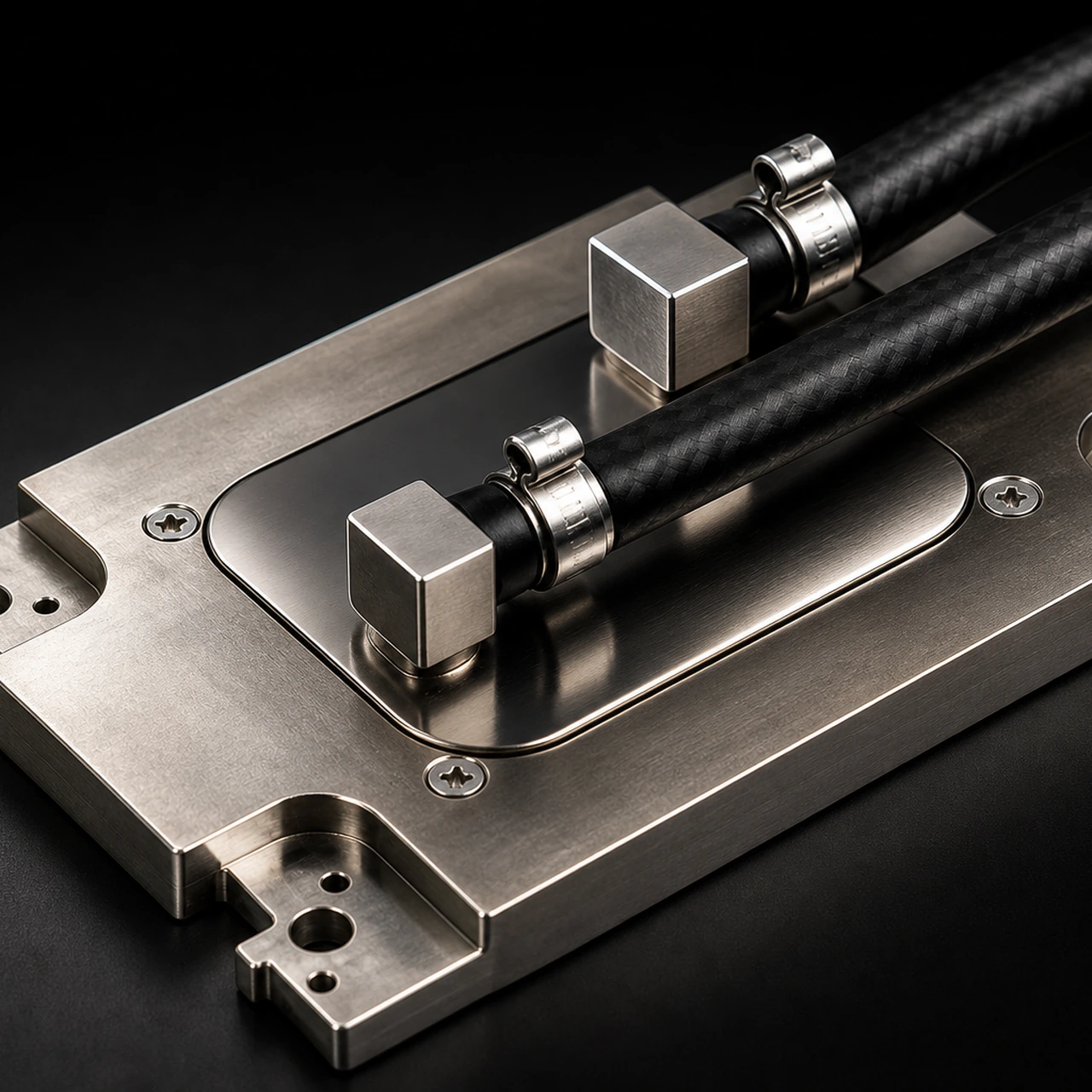
Brushed-nickel cold plate with carbon-fibre coolant hoses on a dark studio background
What makes this hard

Three engineering realities AI compute keeps colliding with.

Every AI program we ship eventually hits the same three walls. The teams that solve them build clusters that scale. The teams that don’t end up rebuilding their stack 18 months later.

Thermal density is a manufacturing problem.

GPUs went from 250 W to 700 W to 1.4 kW in three product cycles. Cold plates that worked at 250 W leak, deflect, or simply choke at 1.4 kW. The fix isn’t a thicker plate — it’s tighter micro-channels, flatter mating surfaces, better gasket geometry, and a manufacturer that holds the tolerance every part.
800 V → 415 V → 12 V is a metallurgy problem.

Modern racks step three voltages down through laminated busbars, copper manifolds, and ENIG-plated PDU buses. Conductor cross-section has to be exact; surface plating has to be uniform; insulating layers have to survive thermal cycling. We treat each layer as a precision part.

Time-to-deploy is the moat.

A cluster that ships in eight months wins. A cluster that ships in sixteen months is two GPU generations behind. We hold a 2–3 week first-article schedule on cold plates and busbars, and a 6–10 week rolling production cell once your design freezes.

Capability map

Six factories, one project manager, one drawing pack.

Most AI clusters need parts from four or five different processes. You shouldn’t need four or five vendors. Every part below ships from a FabDigit-managed cell, on a single quote, against a single drawing pack.

Capability envelope

What we typically ship — and where the moat sits.

Numbers below are the working range across the AI / DC programs we run in any given quarter. Specific commitments live in your quote. The coatings row is the part most US/EU vendors skip — listed plainly so you know what you can spec into a drawing without losing sleep.

Mechanical tolerance
On critical features — die-mating faces, manifold bores.
±0.005 → ±0.025 mm
ISO 2768-f, IT5 attainable
First-article lead time
CAD-frozen → first parts on a flight.
10 – 21 days
Prototype run size
Cold plate / manifold proto cells.
10 – 80 pcs
Production cell size
Rolling per-week throughput, sustained.
400 – 1,200 pcs / week
Surface roughness
Die-mating face of a copper cold plate.
Ra 0.2 – 0.8 µm
Diamond-turned available on request
Coatings & finishes
Marked items are restricted or backlogged at most US / EU shops; our domestic partners run them as standard.
Hard anodize (Type III)ENIG, hard goldPowder coat — RAL matchBlack oxideChemical conversion (Alodine 1200)USHexavalent chromateUSDielectric parylene coatingBrush-nickel, immersion tin
Reference build

What’s inside a direct-to-chip cold plate.

The build below is representative, not the final spec on any one program. Every callout maps to a conversation we have with the customer’s engineering team — material, geometry, and tolerance get pinned down against your CFD and your rack-side hardware, not a stock drawing.

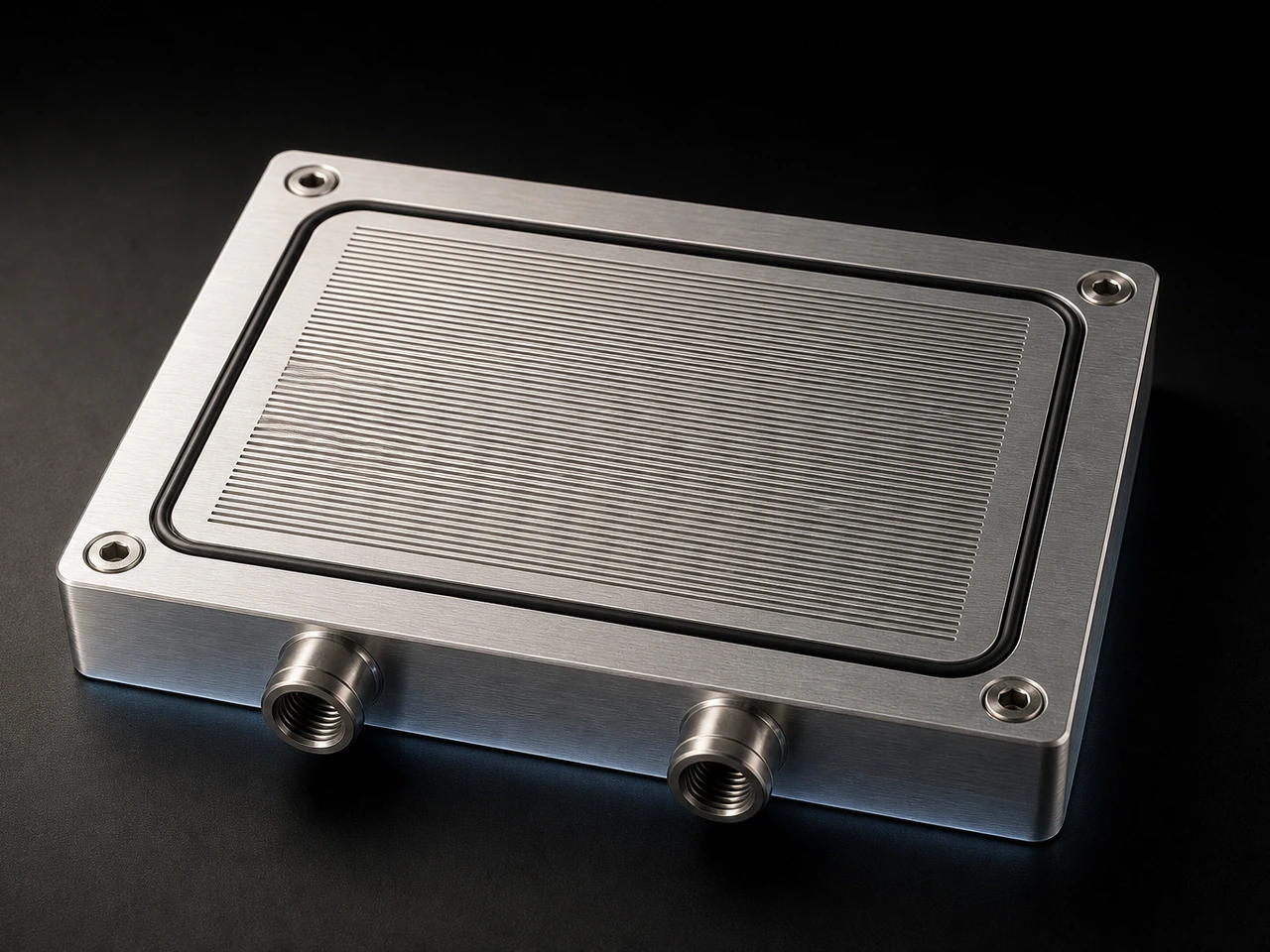
Aluminum direct-to-chip cold plate with two threaded coolant ports, a captured EPDM o-ring around the channel field, and four corner mounting screws, photographed on a dark studio surface
01 · Inlet
02 · Outlet
03 · Channels
04 · O-ring
  1. 01

    Coolant inlet

    CNC-machined threaded inlet on an aluminum boss, deburred and gauge- checked before assembly. Thread size, boss diameter, and port orientation are tuned to each customer’s rack-side fluid routing — usually a toolpath edit, not new tooling.

  2. 02

    Coolant outlet

    Matched outlet alongside the inlet. An optional thermocouple boss is fitted when the customer’s BMC wants outlet-water temperature back as a discrete signal — otherwise we keep the geometry simple.

  3. 03

    Die-mating channel field

    The part that actually does the cooling — sub-millimetre fin pitch and depth, machined with small-diameter coated end mills. Pitch, depth, and tooling are set per program against your CFD and die footprint, not pre-baked.

  4. 04

    Gasket groove

    Captured EPDM o-ring in a CNC-cut groove around the channel field. Groove geometry and compression target are agreed during DFM with your seal vendor; we don’t release for production without a sample cycle on the customer’s torque pattern.

Part typology

What an AI / DC bill of materials usually looks like.

These six archetypes show up on almost every cluster build we run. The spec lines below each card are the working range — your part will be tighter, not looser, than what’s written here.

Liquid cold plate

Direct-to-chip plate, copper or aluminum micro-channel, gasketed, with optional integrated leak-sense pocket.

Material
C110 Cu / 6082-T6
Process
3-axis + 4-axis CNC
Tolerance
±0.025 mm
Run size
10 – 5,000 pcs

Liquid manifold

Multi-port manifold connecting up to 16 cold plates, machined aluminum or printed in PEEK for early prototypes.

Material
6082-T6 / PEEK
Process
CNC or SLS
Port count
4 – 16 ports
Run size
5 – 500 pcs

Laminated busbar

800 V / 415 V copper busbars, tin or ENIG plated, laminated with PEEK or epoxy-glass for insulation.

Material
C110 Cu / ETP
Plating
Sn, ENIG, hard gold
Width
10 – 80 mm
Run size
20 – 2,000 pcs

Server rack frame

19" / 21" OCP-style rack, formed from 1.5 – 2.5 mm sheet steel, powder-coated. RDHx-ready variants for rear-door heat exchangers.

Material
Sheet steel / aluminum
Process
Laser + form + weld
Form factor
19" / 21" OCP
Run size
20 – 800 pcs

PDU enclosure

Sheet-aluminum PDU enclosure with EMI gasketing, finger-jointed lid, and integrated bus interface.

Material
5052 / 5754 alloy
Finish
Anodize Type II / III
Tolerance
±0.15 mm sheet
Run size
50 – 1,500 pcs

Sensor / monitor PCB

Leak-sense, flow, and temperature monitor boards. 4–12 layer stack-ups, ENIG or hard-gold edge contacts.

Layers
4 – 12 layers
Min trace
4 mil / 4 mil
Surface
ENIG / Hard gold
Run size
100 – 10,000 pcs
The thermal-density brain

Pick a cooling solution.
We'll show you what gets built.

Every AI program lives or dies on the heat budget. Below is the same decision matrix our engineers walk customers through on day one — the four real cooling regimes, their spec envelopes, and the parts each one depends on us delivering.

Power densityW/cm²Rack densitykW/rackCAPEXlower = betterOPEXlower = betterRetrofittable0–1Dielectric safe0–1
Direct-to-chip liquid

Cold plates pressed against CPU/GPU dies, fluid loop runs through the rack.

Per-rack envelope40 – 140 kW
CoolantPG25 dielectric, 30 – 45 °C
Typical retrofitCustom plates per silicon

Parts FabDigit ships for this regime

Cold plateManifoldBusbarSensor PCB
Engineering data

Three questions every AI build eventually asks.

The charts below are the working answers we walk customers through on the second engineering call. Numbers are industry-typical, not per-program commitments.

Chart · Cost vs volume

Cost-per-cold-plate by process and volume

At low volumes CNC wins on lead time and revision agility. As volume scales, hybrid-cast aluminum collapses unit cost — but locks the geometry.

$0$50$100$150$200$250$300$350$4001101001k10kquantity (pcs) · log scaleCNC ≈ cast @ ~200 pcs
3-axis CNCVacuum cast + finishSkive-fin extruded
Chart · Material profile

Cold-plate material trade-offs

Two real candidate metals for AI cold plates. Aluminum wins on cost and weight; copper wins on thermal conductivity and longevity.

Thermal conductivityW/m·KMachinability0–1Weight (inverted)lower = betterCost (inverted)lower = betterGalvanic stabilitywith copper busPlating ease0–1
C110 Copper6082-T6 AluminumAl–SiC composite
Chart · Build timeline

A 21-day cold-plate first-article schedule

Pilot path for a single revision of a custom cold plate, freeze-to-ship. The build is parallel where it can be, never serial when it doesn't have to be.

d0d5d10d15d21DFM review + drawing freeze2dStock procurement2dToolpath + fixtures2dFirst-article CNC5dGasket + EPDM cut3dPlating / surface finish3dCMM + leak + flow QC3dPackaging + air freight5dCustomer FAI sign-off2d
Program lifecycle

How a cluster build actually moves from PDF to pallet.

AI programs are notorious for compressed schedules. The six phases below are how we keep one moving without dropping any of them.

Phase 01

CAD intake & DFM

Drawings + STEP land in our quote portal. A mechanical engineer reviews them within 24 hours, flagging tolerance, plating, and tooling decisions that should change before the quote is finalised.

Phase 02

Quote + prototype kick-off

Quote out the door in 2 – 4 days. The first prototype is on a machine within 5 days of PO; the first part is in your hands within 10 – 21 days.

Phase 03

First-article qualification

CMM, profilometer, leak test, flow test, IR drop, dielectric test — whichever apply. Reports ship with the parts; your QC team sees the evidence before they sign the receiving inspection.

Phase 04

Soft tooling + pilot run

For parts that scale, we cut the soft tooling (fixtures, profile tools, anodise racks) and run a 50 – 200 pc pilot. You see real process-capability numbers before committing to a full cell.

Phase 05

Production cell ramp

400 – 1,200 pcs / week sustained throughput inside a single cell, with daily SPC charts and a named cell lead you can reach by WhatsApp. Pricing curve is committed on a 12-month rolling basis.

Phase 06

Field support & revision

Field returns route into our engineering queue. ECNs are graded, cost-impacted, and slotted into the next production lot — no silent change orders, no scope creep.

Inside the cell

Where copper becomes a cold plate.

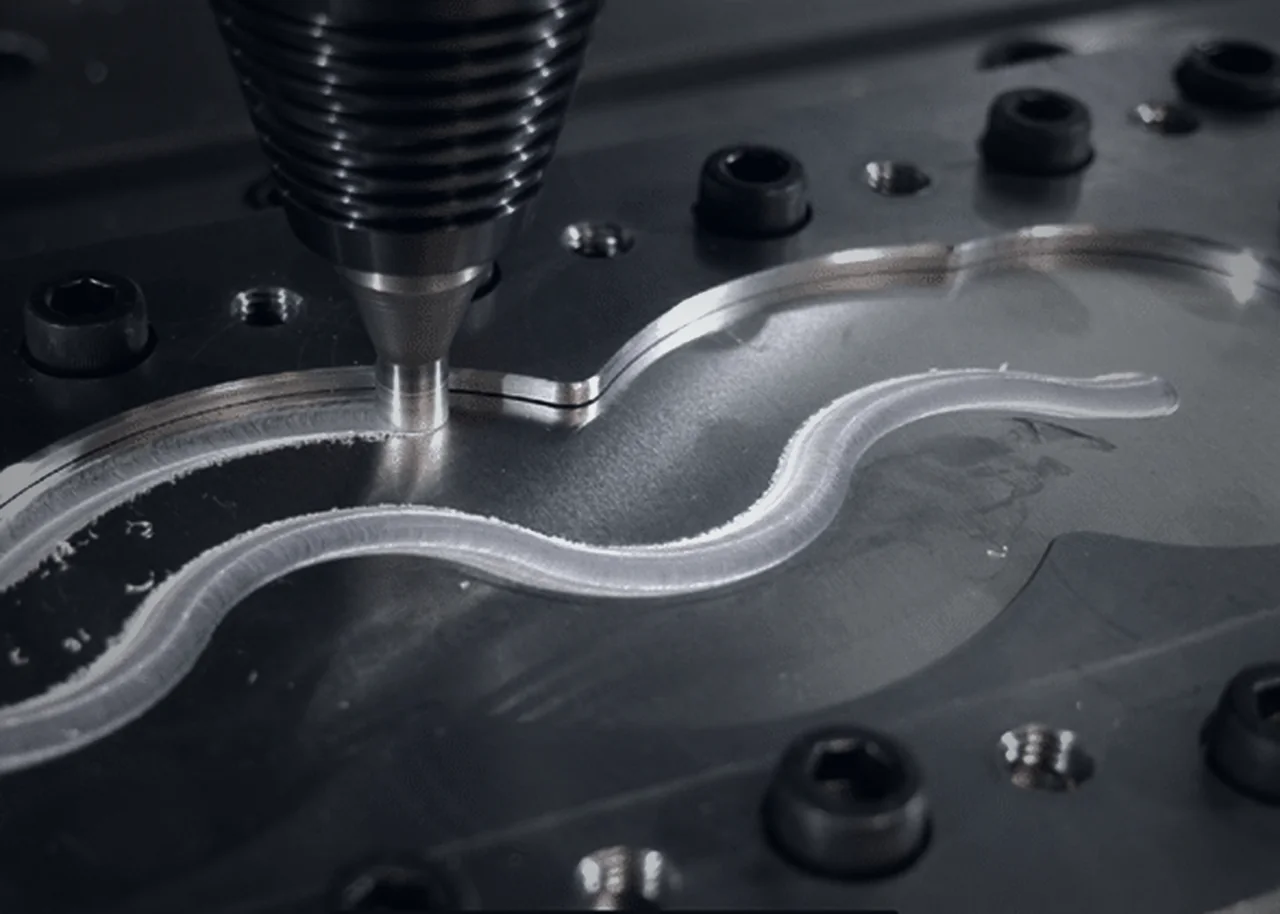
Custom CNC cells dedicated to copper and aluminum cold-plate work, run in lights-out mode for the long programs and operator-attended for first articles. Climate-controlled to ±1 °C so the second pass on a long plate doesn’t drift.

CNC machining a copper cold plate inside a climate-controlled cell
In the field

A 200-cold-plate program, freeze-to-ship in 21 days.

A composite of recent programs, anonymised to protect customer IP. Numbers are real ranges from the engagements they’re drawn from.

Inside a recent program · Series-B AI training-cluster startup, USA

Cut a cluster ramp from 16 weeks to 21 days by collapsing five vendors into one cell.

The customer landed an exclusive on a next-generation GPU and needed 200 custom liquid cold plates, 50 laminated busbars, and 20 sheet-aluminum PDU enclosures to fit them — in three weeks.

The legacy vendor stack quoted 16 weeks. We absorbed the program into a single cell: CNC, sheet-metal, plating, and PCB assembly all ran in parallel on a shared drawing pack. Engineering audited the gasket geometry on day one and asked for a 0.1 mm groove change that saved three rework cycles downstream.

First articles hit the customer’s lab on day 11. Pilot run of 50 units shipped on day 16. The balance of 150 units landed on day 21, two days inside the original ask. The customer’s next cluster is already on our PO desk.

Industry · AI trainingGeography · USAProcess · CNC, sheet metal, plating, PCBAQuantity · 200 cold plates, 50 busbars, 20 PDU
The coatings moat

Five finishes most US shops can no longer run.

Environmental and OSHA regulations have closed dozens of US-side plating lines over the past decade. Our domestic partners still run them daily. Below is the short list of treatments that show up on AI / DC drawings and where you can spec them without losing a month of lead time.

Conductive corrosion protection

Alodine 1200 (Cr⁶⁺ chemical conversion)

Hexavalent-chromium conversion coating used widely on aluminum chassis and busbar terminations. EPA / OSHA backlogged on US plating lines since 2018; we run it inside a closed-loop bay with full neutralisation.

Surface hardness 60+ Rockwell C

Hard anodize, Type III, sealed

Deep Type III on aluminum cold plates for abrasive seal seats, military-grade RDHx frames, and rack rails. Available black-dye sealed up to 75 µm thickness.

Pinhole-free conformal dielectric

Dielectric parylene C / N

Vapor-deposited parylene on PCB monitor boards and exposed busbar regions facing dielectric fluid loops. Spec to 25 µm uniform without solvent contamination.

Selective contact plating

Brush-nickel + immersion-tin selective

Masked, low-emission selective plating on busbar contact zones. Run on a per-part fixture, audited each lot for thickness uniformity to ±0.5 µm.

Aesthetic + corrosion in one step

Powder coat — RAL match, low-VOC

In-house powder lines that can match RAL or custom colour books, low-VOC formulations rated for IEC 60068-2 salt-spray, 500 hours minimum.

Low-glare rack hardware

Black-oxide on hardened steel

Black oxide on M3 – M12 steel fasteners and rack hardware. Pairs with the powder-coat finish on rack frames so head fasteners disappear visually inside the cage.

Frequently asked

The questions AI / DC teams keep asking us.

  • FabDigit operates dual delivery pipelines — a global cell for commercial AI / DC work, and a US-onshore cell for export-controlled builds. ITAR / EAR projects are accepted on a per-program basis after a documented intake review. Talk to engineering about your control posture before you send drawings.

  • Yes. OFHC C101 and high-conductivity C110 are standard stock. Diamond- turned finishes (down to Ra 0.05 µm) are available on the die-mating face for programs that need it; expect a 3 – 5 day adder over the stock micro-channel finish (Ra 0.2 – 0.8 µm).

  • The cold-plate IP that matters — gasket geometry, port positions, die footprint — is captured as parametric variables in our CAM chain. A GPU swap typically reflows in 24 – 72 hours of engineering, a fresh first article in 5 – 10 days, and a parts re-pricing memo before any production runs.

  • The cold plates that survive a 2-phase immersion bath, yes. The tank itself is currently outside our scope — but we’ll happily partner with your tank vendor on cold-plate compatibility, dielectric fluid coupons, and ECN coordination so the two halves of the system actually fit.

  • On commercial programs we guarantee a 12-month rolling price band with a documented re-quote trigger (typically a ±8 % copper-spot move, or ±15 % FX move). The band is part of your master service agreement, not a footnote in the quote.

  • Yes — same-day mutual NDA via DocuSign, signed by a corporate officer. Many of our AI customers ship under code-named program identifiers on our side until the cluster is publicly announced.

  • Standard package for a cold-plate program: CMM dimensional, profilo- meter, helium leak test at 25 PSI, flow curve (15 – 60 LPM), and a gasket-compression photometric. Reports ship physically and as a PDF / CSV bundle that drops straight into your ERP receiving record.

  • We’ll quote a 1-piece prototype. The economics of CNC, sheet metal, and PCBA support small runs cleanly. Below 5 pieces we sometimes recommend SLS or DMLS for the proto and a re-quote on production — DFM is honest, not a sales pitch.

  • Global production runs out of partner cells in Shenzhen, Suzhou, and Penang. A US-onshore cell handles export-controlled work and rapid first-article turns. Travel-ready engineering visits are routine — our engineers are on flights every other week.

  • Every drawing pack is version-tracked in our portal. ECNs are impact-scored (cost / lead-time / risk) within 24 hours, slotted into the next lot break, and shipped against the new revision automatically. We never silently substitute parts.

Ship the cluster, not the apology.

Send drawings, or send a sketch. Either way you’ll have a real engineer reviewing them within 24 hours and a real quote on a real schedule shortly after.

AI & Data Center — FabDigit | FabDigit