CVD Alumina
CVD coatings · Chemical bath
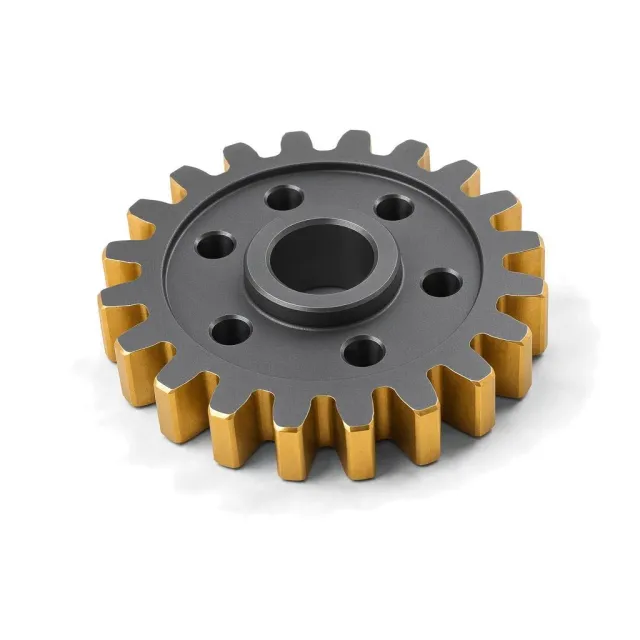
CVD alumina is an electrically insulating ceramic layer used as a thermal and oxidation barrier on carbide cutting inserts.
What is CVD alumina?
It is commonly 5–20 µm within multilayer systems deposited around 900–1050 °C.
How it works
Aluminum-bearing and oxidizing gases react at high temperature to grow dense aluminum oxide on a compatible underlayer, commonly TiCN on cemented carbide. Alumina has low thermal conductivity and chemical stability at cutting temperatures. Conventional CVD temperature excludes aluminum, polymers, and most finished steels.
Why specify it
- Strong hot chemical stability
- Thermal barrier for carbide inserts
- About 1800–2200 HV hardness
- 5–20 µm conformal layer
Where it falls short
- Brittle in interrupted cutting
- Electrically insulating
- 900–1050 °C process
- Requires compatible nucleation layer
CVD alumina at a glance
CVD alumina is strongest on corrosion protection (70 of 100) and surface hardness (85 of 100), at a high cost.
Each score is 0–100 against every finish in this catalog. Corrosion comes from salt-spray life (ASTM B117, log scale) and hardness from the finish layer's Vickers or pencil hardness; cosmetic, lubricity and cost are FabDigit's engineering assessment. Economy on the radar is the inverse of cost.
CVD alumina key numbers
Typical values from the governing specifications and shop practice; bars are this finish against the highest value among cvd coatings finishes.
- Thickness
- 5–12 µm within an insert stack
- Hardness
- 1,800–2,200 HV — Typical CVD alumina indentation range.
- Electrical
- Insulating
- Colours
- black
- dark grey
- Appearance
- Dark grey to black in cutting-tool grades, often with a coloured top identification layer.
Where CVD alumina sits among all finishes
Surface hardness (Vickers, log scale) against corrosion protection (salt-spray hours, log scale) for every coating FabDigit offers, one cloud per finish group. CVD alumina is highlighted; hover a dot for its name or open the full map.
Specifications for CVD alumina
The documents a drawing cites to define this finish, with the Type / Class rows that apply. Each links to a page explaining the standard.
Drawing call-out
CVD COAT CARBIDE INSERT Al2O3 OVER TiCN BOND LAYER, Al2O3 5–10 µm THICK, TOTAL COATING 10–18 µm; PROCESS 900–1050 °CWhich materials take CVD alumina?
Verdict per material family, with the grades that behave differently. Each family links to its datasheets in the material library.
| Material family | Verdict | Notes |
|---|---|---|
| Yes | Cemented carbide with a compatible underlayer is standard. | |
| No | Process temperature is incompatible. | |
| No | Process temperature is far above the melting and softening range of brass. | |
| No | Process temperature anneals or melts copper alloys. | |
| No | Process temperature is incompatible with magnesium alloys. | |
| No | Process temperature is incompatible. | |
| No | The 900–1050 °C cycle destroys typical stainless tempers and corrosion performance. | |
| No | Alumina CVD is specified on carbide inserts, not finished steels. | |
| No | CVD temperature produces severe alpha case and property loss. | |
| No | Process temperature is incompatible with zinc alloys. |
How CVD alumina is applied, and what it does to the part
- 1Prepare carbide and underlayer
- 2Heat reactor
- 3Nucleate alumina
- 4Grow Al2O3 layer
- 5Cool and edge-treat
| Dimensions | Include 5–20 µm alumina plus all underlayers in edge and chipbreaker geometry. |
|---|---|
| Build-up per side | 5–20 µm — Allow full layer thickness on exposed sides; total stack may be thicker. |
| Masking | Usually needed. Fixture or mask surfaces that cannot accept an insulating ceramic layer. |
| Electrical | Insulating |
| Temperature limit | 1,000 °C (1,832 °F) continuous |
| Appearance | Dark grey to black in cutting-tool grades, often with a coloured top identification layer. |
| Added lead time | 7–14 working days on top of the bare part |
Design rules for CVD alumina
What to decide on the drawing before the part goes to the finisher.
- Use cemented carbide support.The substrate must tolerate high temperature and support brittle alumina.
- Avoid fragile sharp edges.Thick alumina can chip in interrupted cuts.
- Specify the complete layer stack.Alumina normally depends on an underlayer.
- Account for electrical insulation.The surface no longer conducts reliably.
CVD alumina versus the alternatives
Finishes engineers weigh against CVD alumina, and when each wins.
| Finish | Corrosion | Hardness | Cosmetic | Cost | Thickness | Choose it when |
|---|---|---|---|---|---|---|
CVD alumina this page | 70 | 85 | 35 | $$$$ | 5–20 µm | — |
| 62 | 88 | 45 | $$$$ | 5–20 µm | a complete TiCN/Al2O3/TiN system is required | |
| 58 | 93 | 52 | $$$$ | 1–5 µm | lower process temperature and sharper edges are required |
The radar overlays CVD alumina with Multilayer CVD Tool Coating, its most common alternative — chosen a complete TiCN/Al2O3/TiN system is required. Scores in the table are 0–100 across every finish in the catalog.
Cost, lead time and compliance
Relative cost
CVD Alumina is a high-cost finish ($$$$): more expensive than about 97 % of the finishes FabDigit quotes.
Finishing is priced per part with a lot minimum, from FabDigit's own China-side rates. The exact figure appears on the instant quote once the part is uploaded.
Lead time and compliance
| Added lead time | 7–14 working days |
|---|---|
| RoHS | Compliant |
| Notes | Alumina is generally RoHS-compliant; CVD gases require controlled exhaust treatment. |
What CVD alumina is used for
- Steel-turning inserts
- Cast-iron inserts
- High-speed finishing inserts
- Thermal-barrier tool layers
CVD alumina — frequently asked
Why is alumina used on carbide inserts?
Alumina is chemically stable and thermally insulating at hot cutting edges. A 5–12 µm layer reduces heat flow into the carbide.
How thick is CVD alumina?
Catalog systems commonly use 5–20 µm, with about 5–12 µm typical inside a multilayer stack. Total stack thickness includes TiCN and any top layer.
Is CVD alumina electrically conductive?
No; aluminum oxide is electrically insulating. Do not rely on coated surfaces for grounding.
PVD vs CVD alumina: why use CVD?
Conventional CVD gives conformal, dense layers at about 900–1050 °C. The tradeoff is a thicker film and a substrate restricted mainly to carbide.
Can alumina CVD coat aluminum?
No for conventional tool CVD because 900–1050 °C is far above aluminum's safe processing range. Lower-temperature specialty processes are separate technologies.