
Primer Coating
Paint, powder & polymer coatings · Spray applied
Primer coating is an intermediate film that promotes adhesion, seals porosity, levels minor defects, or improves corrosion protection before paint.
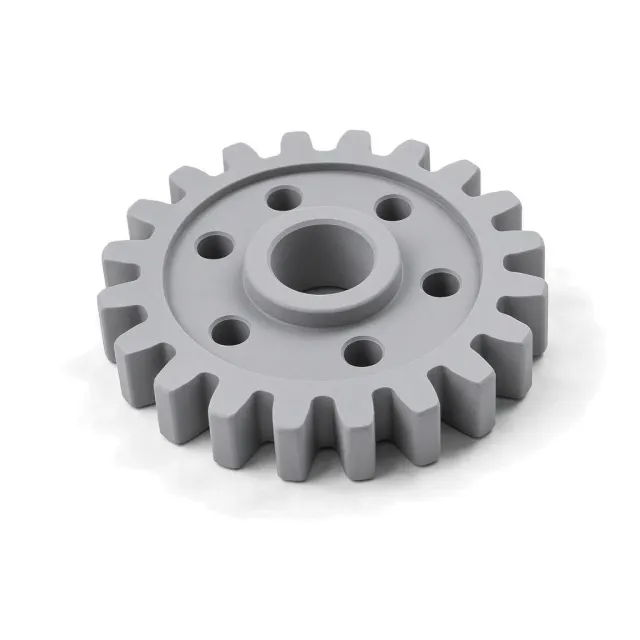
What is Primer?
On 3D-printed parts it creates a consistent surface for sanding and color coating.
How it works
The cleaned printed part is dried and abraded, then coated with a resin selected to bond both the substrate and the next layer. High-build primers contain solids that fill shallow texture and can be sanded; adhesion primers use chemistry or surface activation to bond difficult polymers. Multiple thin coats reduce solvent trapping in porous prints. Primer is not normally the final weathering surface and must remain within its specified recoat window.
Why specify it
- Seals porous SLS, MJF, and filled printed surfaces
- Improves adhesion between polymer and topcoat
- Provides a uniform base color
- Sanding primer reduces visible layer texture
Where it falls short
- Primer does not remove major layer lines or dimensional defects
- Excess build rounds edges and fills text
- Trapped solvent can blister under topcoat
- An exposed primer is usually not a durable final finish
Primer at a glance
Primer is a middle-of-the-range finish; its best score is cosmetic quality (35 of 100), at a standard cost. It adds little lubricity. Surface hardness is not rated: the finish leaves the part's own surface.
Each score is 0–100 against every finish in this catalog. Corrosion comes from salt-spray life (ASTM B117, log scale) and hardness from the finish layer's Vickers or pencil hardness; cosmetic, lubricity and cost are FabDigit's engineering assessment. Economy on the radar is the inverse of cost.
Primer key numbers
Typical values from the governing specifications and shop practice; bars are this finish against the highest value among paint, powder & polymer coatings finishes.
- Thickness
- 15–50 µm after sanding for a sprayed cosmetic primer; high-build systems may require a separate specification
- Electrical
- Insulating
- Colours
- gray
- white
- black
- beige
- Appearance
- Uniform matte base intended for sanding or overcoating, not final cosmetic service.
Specifications for Primer
The documents a drawing cites to define this finish, with the Type / Class rows that apply. Each links to a page explaining the standard.
Drawing call-out
SANDABLE EPOXY PRIMER, GREY, 20–40 µm DFT AFTER SANDING; TOPCOAT WITHIN MANUFACTURER RECOAT WINDOW; MASK THREADS, TEXT, AND DATUM FEATURESWhich materials take Primer?
Verdict per material family, with the grades that behave differently. Each family links to its datasheets in the material library.
| Material family | Verdict | Notes |
|---|---|---|
| Yes | Common metal primer substrate after degrease and conversion or etch pretreatment. | |
| Yes | Primer can seal exposed fibers and filler after preparation. | |
| Yes | Metal AM parts are primed after powder removal and any sealing. | |
| Yes | Clean blasting residue before priming. | |
| Yes | Choose adhesion chemistry for the exact resin. | |
| Yes | Fully post-cure and remove uncured resin before primer. | |
| Yes | Porous nylon usually needs controlled sealing and thin coats. | |
| Yes | Standard corrosion-inhibiting primer substrate after blast or phosphate. | |
| With care | Needs a stain-blocking primer. | |
| With care | Tarnish isolation and adhesion must be validated. | |
| With care | Layer lines require mechanical preparation; solvent compatibility varies. | |
| With care | Prime promptly over a qualified conversion coating. | |
| With care | Needs abrasion and an adhesion-promoting primer. | |
| With care | Mechanical profile and a compatible primer are required. | |
| With care | Use a zinc-compatible primer; outgassing can blister. |
How Primer is applied, and what it does to the part
- 1Clean and dry
- 2Abrade
- 3Activate if required
- 4Mask
- 5Spray thin coats
- 6Flash
- 7Cure
- 8Sand
- 9Clean
- 10Apply topcoat within recoat requirements
| Dimensions | Net 15–50 µm film can soften small lettering and reduce clearance; high-build filling operations require separate dimensional allowance. |
|---|---|
| Build-up per side | 15–50 µm — Net buildup is the cured thickness remaining after sanding. |
| Masking | Usually needed. Mask threads, fits, fine text, vents, contacts, optical areas, and adhesive interfaces. |
| Electrical | Insulating |
| Appearance | Uniform matte base intended for sanding or overcoating, not final cosmetic service. |
| Added lead time | 2–5 working days on top of the bare part |
Design rules for Primer
What to decide on the drawing before the part goes to the finisher.
- Name the topcoat together with the primer.Intercoat adhesion depends on chemistry and recoat window.
- Define thickness after sanding.Applied primer and retained primer are not the same buildup.
- Keep high-build primer out of small holes and text.Filler rapidly obscures fine geometry.
- Dry porous prints completely before priming.Moisture and solvent trapped in pores cause bubbles and delayed failure.
Primer versus the alternatives
Finishes engineers weigh against Primer, and when each wins.
| Finish | Corrosion | Hardness | Cosmetic | Cost | Thickness | Choose it when |
|---|---|---|---|---|---|---|
Primer this page | 25 | — | 35 | $$ | 15–50 µm | — |
| 20 | 12 | 85 | $$ | 15–50 µm | when the substrate is already cosmetic and only transparent protection is needed | |
| 59 | 10 | 90 | $$ | 20–80 µm | when a complete primer-and-color system should be specified together |
The radar overlays Primer with Clear Coating, its most common alternative — chosen when the substrate is already cosmetic and only transparent protection is needed. Scores in the table are 0–100 across every finish in the catalog.
Cost, lead time and compliance
Relative cost
Primer Coating is a standard-cost finish ($$): cheaper than about 78 % of the finishes FabDigit quotes.
Finishing is priced per part with a lot minimum, from FabDigit's own China-side rates. The exact figure appears on the instant quote once the part is uploaded.
Lead time and compliance
| Added lead time | 2–5 working days |
|---|---|
| RoHS | Compliant |
| Notes | Confirm pigment, solvent, and curing-agent compliance for the selected primer. |
What Primer is used for
- Painted prototypes
- SLS nylon models
- MJF housings
- SLA display models
- Composite-filled prints
Primer — frequently asked
do 3D prints need primer before painting
Often yes, especially porous SLS or MJF parts and sanded SLA models. Primer seals the surface, exposes defects, and gives the topcoat a consistent base.
how thick is primer coating
A cosmetic sprayed primer may leave about 15–50 µm after sanding. High-build filler primers can be thicker and need their own dimensional specification.
does primer hide layer lines
It fills only shallow texture. Pronounced layer lines require sanding or another smoothing process before the final 15–50 µm primer layer.
can primer be used as a final coat
Usually no. Primer is optimized for adhesion and filling, not ultraviolet stability, stain resistance, or final appearance.
why does paint peel off primer
Likely causes include contamination, incompatible chemistries, missed recoat window, inadequate cure, or sanding dust. Qualify the complete primer and topcoat system on the actual substrate.
Other paint, powder & polymer coatings finishes
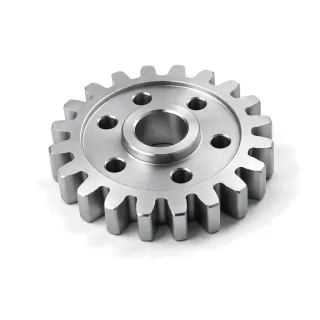 Anti-Fingerprint Oleophobic CoatingAnti-fingerprint oleophobic coating lowers surface energy so skin oils spread less, fingerprints appear lighter, and cleaning is easier.CorrosionHardnessCost$$$
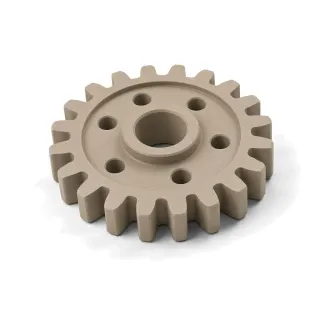 CerakoteCerakote is a trademarked ceramic-polymer thin-film coating supplied in product-specific air-cure and oven-cure series.CorrosionHardnessCost$$$
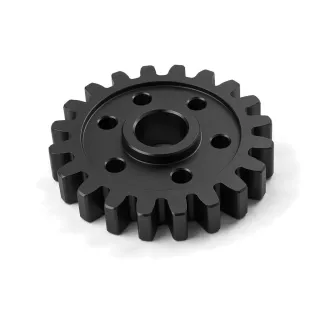 Electrophoretic CoatingE-coating deposits a waterborne organic film on an electrically conductive part by electrophoresis.CorrosionHardnessCost$$
 Epoxy CoatingEpoxy coating is a crosslinked protective film valued for adhesion, chemical resistance, and barrier protection.CorrosionHardnessCost$$$
 Powder CoatingPowder coating electrostatically deposits dry thermoset powder on conductive parts and melts it into a continuous film.CorrosionHardnessCost$$
 PTFE Dry-Film CoatingPTFE dry-film coating is a fluoropolymer-based low-friction, non-stick coating for metal components.CorrosionHardnessCost$$$
 Rubberized Dip CoatingRubberized dip coating forms a thick flexible grip or protective skin on metal handles and similar parts.CorrosionHardnessCost$$
Compare every paint, powder & polymer coatings finish side by side →