
Rubberized Dip Coating
Paint, powder & polymer coatings · Dip / immersion
Rubberized dip coating forms a thick flexible grip or protective skin on metal handles and similar parts.
Reference page — Rubber dip is not in the instant-quote configurator. Upload the part, name the finish in the notes, and an engineer quotes it with the part.
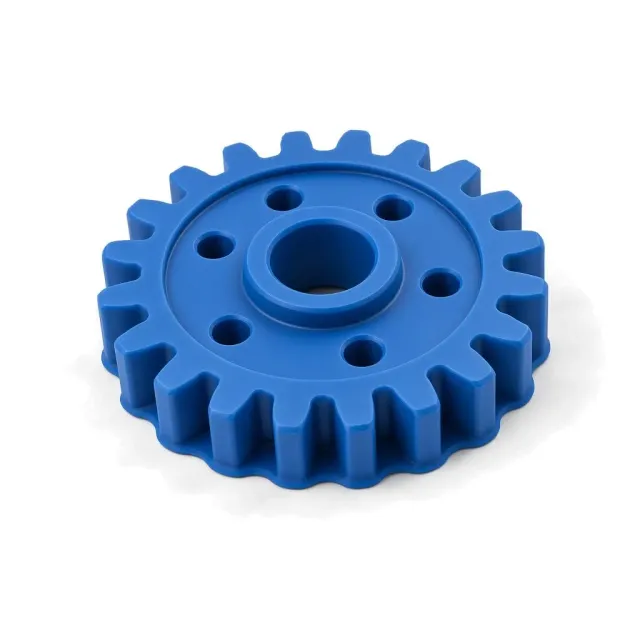
What is Rubber dip?
Plastisol and air-dry rubber-class products provide electrical insulation, cushioning, grip, and color but use different primers and cure routes.
How it works
The cleaned metal is masked and commonly primed, then lowered into a liquid plastisol or rubber-class coating at controlled speed. Withdrawal rate, viscosity, dwell, part temperature, and repeated dips determine thickness and edge shape. Plastisol typically gels and fuses during heating, while air-dry products lose solvent and form an elastomeric film. The part hangs during cure, so gravity can produce a thicker lower edge or drip unless geometry and process are controlled.
Why specify it
- Creates a resilient non-slip grip
- Provides cushioning and impact damping
- Can add electrical insulation when the exact system is qualified
- Covers complex handle shapes without overmolding tooling
Where it falls short
- Thickness and drip shape are less precise than sprayed films
- Cuts can propagate and peel the flexible skin
- Heat, oil, fuel, and ultraviolet resistance are product-specific
- Internal threads and close features can fill completely
Rubber dip at a glance
Rubber dip is a middle-of-the-range finish; its best score is cosmetic quality (55 of 100), at a standard cost. It adds little lubricity. Surface hardness is not rated: the finish leaves the part's own surface.
Each score is 0–100 against every finish in this catalog. Corrosion comes from salt-spray life (ASTM B117, log scale) and hardness from the finish layer's Vickers or pencil hardness; cosmetic, lubricity and cost are FabDigit's engineering assessment. Economy on the radar is the inverse of cost.
Rubber dip key numbers
Typical values from the governing specifications and shop practice; bars are this finish against the highest value among paint, powder & polymer coatings finishes.
- Thickness
- 250–2000 µm for plastisol handle dips (about 10–80 mil); air-dry rubber films can be thinner and must be named separately.
- Electrical
- Insulating
- Colours
- black
- red
- blue
- yellow
- custom product color
- Appearance
- Thick smooth or lightly textured flexible skin with a visible termination line and possible lower-edge bead.
Specifications for Rubber dip
The documents a drawing cites to define this finish, with the Type / Class rows that apply. Each links to a page explaining the standard.
Drawing call-out
RUBBERIZED DIP COATING, BLACK, SHORE HARDNESS AND COATED ENVELOPE PER APPROVED PRODUCT SPECIFICATION; DIP LINE 75 ±2 mm FROM HANDLE END; MASK THREADS, PIVOT, AND IDENTIFICATIONWhich materials take Rubber dip?
Verdict per material family, with the grades that behave differently. Each family links to its datasheets in the material library.
| Material family | Verdict | Notes |
|---|---|---|
| Yes | Pretreat and prime for adhesion. | |
| Yes | Metal AM handles and tools can be dip-coated after finishing. | |
| Yes | Common handle substrate after cleaning and primer. | |
| With care | Primer and heat cycle require validation. | |
| With care | Primer and heat cycle require validation. | |
| With care | Requires abrasion and compatible primer. | |
| With care | Adhesion primer and preheat must be qualified. | |
| With care | Preheat and outgassing must be controlled. | |
| Limited | Preheat and primer chemistry can attack magnesium. | |
| Limited | Possible as a grip over sealed nylon; heat can warp the print. | |
| Limited | Solvent, preheat, cure, and adhesion can damage the base polymer. | |
| Limited | Possible as a grip over sealed nylon; heat can warp the print. | |
| No | Preheat and fusion cycles damage most FDM polymers. | |
| No | Preheat and fusion cycles damage photopolymers. |
How Rubber dip is applied, and what it does to the part
- 1Degrease
- 2Abrade or pretreat
- 3Prime
- 4Mask and define dip line
- 5Preheat if required
- 6Dip
- 7Withdraw at controlled rate
- 8Gel or flash
- 9Cure
- 10Trim and inspect
| Dimensions | Do not assign a generic buildup; define the coated envelope, dip line, and acceptable lower-edge bead using the chosen product process. |
|---|---|
| Build-up per side | 250–2,000 µm — Substantial dip-cycle buildup; drips and the withdrawal line add local extra thickness. |
| Masking | Usually needed. Define the dip line and mask threads, pivots, jaws, contacts, cutting edges, identification, and assembly interfaces. |
| Electrical | Insulating |
| Appearance | Thick smooth or lightly textured flexible skin with a visible termination line and possible lower-edge bead. |
| Added lead time | 4–10 working days on top of the bare part |
Design rules for Rubber dip
What to decide on the drawing before the part goes to the finisher.
- Dimension the dip line from a stable datum.The coating termination is a visible and functional feature.
- Provide a hanging orientation and hidden rack point.Gravity controls bead and drip location.
- Round substrate edges before dipping.Sharp edges cut flexible film from underneath.
- Specify the exact product and exposure fluids.Plastisol and rubber-class films differ in oil, heat, and ultraviolet resistance.
Rubber dip versus the alternatives
Finishes engineers weigh against Rubber dip, and when each wins.
| Finish | Corrosion | Hardness | Cosmetic | Cost | Thickness | Choose it when |
|---|---|---|---|---|---|---|
Rubber dip this page | 45 | — | 55 | $$ | 250–2,000 µm | — |
| 20 | 5 | 85 | $$$ | 20–40 µm | when a thin cosmetic tactile film is needed | |
| 83 | 14 | 85 | $$ | 50–150 µm | when a hard colored metal finish is preferred |
The radar overlays Rubber dip with Soft-Touch Coating, its most common alternative — chosen when a thin cosmetic tactile film is needed. Scores in the table are 0–100 across every finish in the catalog.
Cost, lead time and compliance
Relative cost
Rubberized Dip Coating is a standard-cost finish ($$): cheaper than about 60 % of the finishes FabDigit quotes.
Finishing is priced per part with a lot minimum, from FabDigit's own China-side rates. The exact figure appears on the instant quote once the part is uploaded.
Lead time and compliance
| Added lead time | 4–10 working days |
|---|---|
| RoHS | Compliant |
| Notes | Confirm exact PVC, plasticizer, solvent, pigment, and restricted-substance status for the selected product. |
What Rubber dip is used for
- Tool handles
- Lever grips
- Wire racks
- Clamps
- Protective end regions
Rubber dip — frequently asked
what is rubberized dip coating
It is a thick flexible liquid coating applied by dipping, then air dried or heat fused depending on chemistry. It is commonly used for tool-handle grip, cushioning, and protection.
plastisol dip coating vs rubber coating
Plastisol is commonly a PVC dispersion that gels and fuses with heat, while rubberized air-dry products form film by solvent loss or another cure. Their hardness, temperature, chemical resistance, and processing are not interchangeable.
how thick is tool handle dip coating
There is no safe class-wide value because viscosity, preheat, dwell, withdrawal rate, and repeated dips control a comparatively thick film. Specify the chosen product and coated envelope.
can dip coating insulate electricity
A qualified intact system can provide electrical insulation, but a generic rubberized dip is not an electrical safety rating. Thickness, pinholes, edges, voltage test, and aging must all be specified.
does rubber dip coating peel
It can peel after a cut, poor primer adhesion, fluid attack, or flexing at the termination edge. Rounded edges, compatible primer, and a protected dip line improve durability.
Other paint, powder & polymer coatings finishes
 Anti-Fingerprint Oleophobic CoatingAnti-fingerprint oleophobic coating lowers surface energy so skin oils spread less, fingerprints appear lighter, and cleaning is easier.CorrosionHardnessCost$$$
 CerakoteCerakote is a trademarked ceramic-polymer thin-film coating supplied in product-specific air-cure and oven-cure series.CorrosionHardnessCost$$$
 Electrophoretic CoatingE-coating deposits a waterborne organic film on an electrically conductive part by electrophoresis.CorrosionHardnessCost$$
 Epoxy CoatingEpoxy coating is a crosslinked protective film valued for adhesion, chemical resistance, and barrier protection.CorrosionHardnessCost$$$
 Primer CoatingPrimer coating is an intermediate film that promotes adhesion, seals porosity, levels minor defects, or improves corrosion protection before paint.CorrosionHardnessCost$$
 PTFE Dry-Film CoatingPTFE dry-film coating is a fluoropolymer-based low-friction, non-stick coating for metal components.CorrosionHardnessCost$$$
 Wet PaintingWet painting atomizes a liquid resin, pigment, and solvent or water system onto prepared metal or plastic.CorrosionHardnessCost$$
Compare every paint, powder & polymer coatings finish side by side →