
Plating & metallizing · finish comparison
Electroless Nickel Plating vs Electrolytic Nickel Plating
Electroless Nickel Plating and Electrolytic Nickel Plating are both electroplating & electroless plating finishes; electroless nickel resists corrosion better (100–1,000 h vs 48–200 h salt spray).
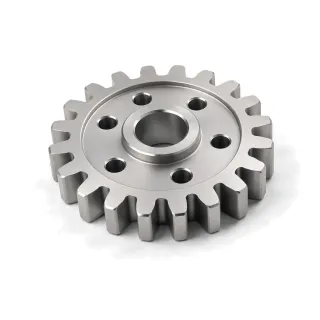
Electroless Nickel Plating
Electroplating & electroless plating · $$$ · instant quote
Electroless nickel is an autocatalytic nickel-phosphorus coating with nearly uniform thickness on complex geometry.
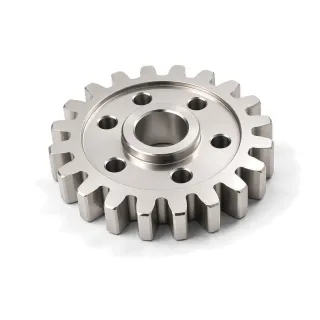
Electrolytic Nickel Plating
Electroplating & electroless plating · $$ · instant quote
Electrolytic nickel provides a bright decorative surface, corrosion barrier, wear layer, or undercoat for chromium and precious metals.
When to choose which
Choose Electroless nickel
Choose Electroless nickel when uniform thickness on complex geometry is essential.
- Uniform 5–75 µm buildup on complex shapes
- About 450–550 HV as plated; suitable heat treatment can approach 1000 HV
- High-phosphorus classes provide strong barrier corrosion resistance
Choose Nickel plate
Choose Nickel plate when bright decorative appearance or rapid edge buildup is preferred.
- Bright decorative silver finish
- Typical 5–25 µm engineering buildup
- Useful diffusion barrier and underplate
What the numbers say
- Electroless nickel resists corrosion better (100–1,000 h vs 48–200 h salt spray).
- Electroless nickel is the harder surface (450–1,000 HV vs 150–600 HV).
- Nickel plate is the lower-cost option ($$).
- Nickel plate is the thinner coating (5–25 µm), so it disturbs tight fits less.
Buyer's decision notes
Electroless nickel is the usual engineering choice when a complex part needs controlled, broadly uniform nickel-phosphorus coverage. Electrolytic nickel suits engineering build or a plated stack where current distribution, underplate and surface appearance can be designed into the process.
- Deposit identity
- Electroless nickel is a nickel-phosphorus alloy whose properties change with phosphorus content and post-heat treatment. Electrolytic nickel is not an interchangeable label; the deposit type, underplate and final use need their own specification.
- Geometry and thickness
- Autocatalytic deposition can coat irregular shapes uniformly when solution circulates freely. Electroplating follows current distribution, so edges and exposed areas can build faster than shielded recesses. In either case, define significant surfaces and the final dimension separately from nominal coating thickness.
- Function
- Select phosphorus class and heat treatment around corrosion, wear, magnetism, solderability and substrate limits rather than asking for generic electroless nickel. For electrolytic nickel, state whether the job is engineering protection, dimensional restoration or part of a decorative stack.
- Steel risk
- High-strength steel requires an explicit hydrogen-embrittlement review, including cleaning, stress relief, post-coating bake and verification under the governing part or process specification. Baking reduces risk but does not guarantee complete freedom from hydrogen damage.
Put this on the RFQ
- State substrate, heat treatment or hardness, significant surfaces, thickness, final-size requirement and masked areas.
- For electroless nickel, choose the ASTM B733 type, service condition and post-heat-treatment class instead of “EN plate.”
- For electrolytic nickel, identify deposit purpose, underplate, surface finish and any hydrogen-embrittlement controls.
Primary references
- ASTM — B733 — Active specification for autocatalytic nickel-phosphorus coatings, including composition types, service conditions and post-heat-treatment classes.
- ASTM — B689 — Active specification for electroplated engineering nickel coatings.
FabDigit resources: Electroless nickel datasheet · Nickel plate datasheet · surface finish selection guide
Scores side by side
Each score is 0–100 against every finish in this catalog. Corrosion is derived from salt-spray test duration and surface hardness from the finish layer's Vickers hardness where a measured figure exists; a finish that leaves the base metal's own surface is not rated for hardness. Cosmetic, lubricity and cost are FabDigit's engineering assessment. Scores and typical figures are screening data, not matched side-by-side tests or service-life rankings; ASTM B117 is a controlled salt-fog method, not a field-life prediction.
| Score | Electroless nickel | Nickel plate |
|---|---|---|
| Corrosion resistance | 70 Very good | 51 Fair |
| Surface hardness / wear | 68 Good | 55 Good |
| Cosmetic quality | 55 Good | 78 Very good |
| Lubricity | 30 Low | 25 Low |
| Cost | 60 $$$ | 35 $$ |
Key numbers
| Property | Electroless nickel | Nickel plate |
|---|---|---|
| Thickness | 5–75 µm | 5–25 µm |
| Surface hardness | 450–1,000 HV | 150–600 HV |
| Salt-spray test duration | 100–1,000 h | 48–200 h |
| Max service temperature | 250 °C | — |
| Electrical | Conductive | Conductive |
| Colours | silver | silver |
| Relative cost | Premium ($$$) | Standard ($$) |
| Added lead time | 3–7 working days | 3–6 working days |
| RoHS | Compliant | Compliant |
| Instant quote | Yes | Yes |
Bold marks the side that is ahead on a row where more (or less, for cost and lead time) is better. Ranges are the typical specification window; the drawing call-out fixes the class.
Which materials take each finish
| Material family | Electroless nickel | Nickel plate |
|---|---|---|
| Brass | Yes | Yes |
| Copper Alloy | Yes | Yes |
| Stainless Steel | Yes | With care |
| Steel | Yes | Yes |
| Aluminum | With care | With care |
| DMLS / SLM | With care | With care |
| Titanium | With care | Limited |
| Zinc Alloy | With care | With care |
| Magnesium Alloy | Limited | Limited |
| Polymer | Limited | Limited |
| SLA | Limited | Limited |
Specifications and drawing call-outs
Electroless nickel
- ASTM B733 — Standard Specification for Autocatalytic (Electroless) Nickel-Phosphorus Coatings on Metal
- AMS 2404 — Plating, Electroless Nickel-Phosphorous
ELECTROLESS NICKEL PLATE PER ASTM B733, SC2, TYPE V, 0.0005–0.0008 IN THICK; MASK THREADS; NO POST-PLATE HEAT TREATMENT
Nickel plate
- ASTM B689 — Standard Specification for Electroplated Engineering Nickel Coatings
- SAE AMS 2403 — Plating, Nickel, General Purpose
ELECTROLYTIC NICKEL PLATE PER ASTM B689, 0.0005 IN MIN, BRIGHT FINISH; MASK THREADS AND SEALING FACES
Electroless nickel vs Nickel plate — frequently asked
What is the difference between Electroless nickel and Nickel plate?
Electroless Nickel Plating and Electrolytic Nickel Plating are both electroplating & electroless plating finishes; electroless nickel resists corrosion better (100–1,000 h vs 48–200 h salt spray). Electroless nickel is the harder surface (450–1,000 HV vs 150–600 HV). Nickel plate is the lower-cost option ($$).
When should I use Electroless nickel instead of Nickel plate?
Choose Electroless nickel when uniform thickness on complex geometry is essential. Conversely: choose Nickel plate when bright decorative appearance or rapid edge buildup is preferred.
Is Electroless nickel or Nickel plate cheaper?
Nickel plate is the lower-cost finish ($$ against $$$ for Electroless nickel) among the finishes FabDigit quotes. Both are priced per part with a lot minimum; the exact figure appears on the instant quote once the part is uploaded.
Which lasts longer in salt spray, Electroless nickel or Nickel plate?
Electroless nickel. Electroless nickel is rated 100–1,000 h and Nickel plate 48–200 h in neutral salt spray (ASTM B117 or the qualification hours of the governing specification). The figures are for the finish as specified on a clean, properly pre-treated substrate; sealing, thickness class and substrate alloy move them.