
Cross-group finish comparison
Hard Chrome Plating vs HVOF Carbide Coating
Hard Chrome Plating (electroplating & electroless plating) and HVOF Carbide Coating (thermal spray) solve the same problem by different routes; hVOF coating resists corrosion better.
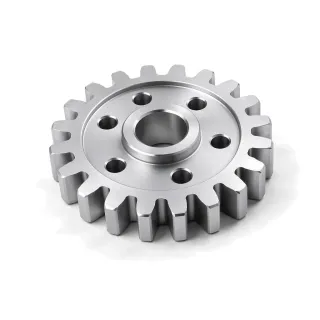
Hard Chrome Plating
Electroplating & electroless plating · $$$$ · instant quote
Hard chrome is a thick engineering chromium deposit for wear, low friction, and dimensional restoration.
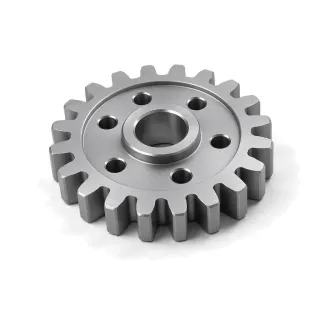
HVOF Carbide Coating
Thermal spray · $$$$ · instant quote
HVOF accelerates WC-Co or Cr3C2-NiCr particles in a supersonic combustion jet to make dense 50–500 µm wear coatings.
When to choose which
Choose Hard chrome
Choose Hard chrome when legacy drawing requirements cannot be changed.
- 850–1050 HV typical hardness
- 10–500 µm engineering thickness (wear to salvage)
- Low adhesive friction and good galling resistance
Choose HVOF coating
HVOF coating is the pick when its strengths below matter more than Hard chrome's.
- Dense carbide wear surface
- 50–500 µm practical build range
- Typical bond strength at least about 70 MPa for qualified systems
What the numbers say
- HVOF coating resists corrosion better.
- Hard chrome is the lower-cost option ($$$$).
- HVOF coating tolerates more heat (500 °C continuous).
Buyer's decision notes
Hard chrome remains practical for established plated interfaces, selective restoration and geometries supported by suitable anodes. HVOF carbide systems are compelling for severe wear on accessible surfaces when line-of-sight spray, bond preparation and finish grinding can be designed into the repair or new part.
- Access and geometry
- HVOF is a line-of-sight thermal-spray process, so shadowed surfaces, small internal passages and abrupt edges require a gun-access review. Chromium plating also depends on current distribution and anode design, but can address some internal surfaces with purpose-built tooling.
- Coating system
- “HVOF” names the deposition process, not the material. Choose the carbide or alloy, binder, bond coat and seal around abrasion, erosion, corrosion, impact, temperature and counterface; do not compare an unspecified HVOF coating with a defined chrome deposit.
- Final geometry
- Both routes may need grinding, honing, lapping or superfinishing. Put pre-coat allowance, coating thickness, final size, roughness, runout and edge condition on the drawing; coating thickness is not a substitute for final dimensional buildup.
- Substrate integrity
- Electroplated high-strength steel needs hydrogen-embrittlement controls. HVOF avoids an electrolytic deposit but introduces grit-blast preparation, thermal input and residual stress, so substrate and fatigue qualification still require application-specific review.
Put this on the RFQ
- State substrate, heat treatment, prior coating, wear mechanism, environment, mating material and lubricant.
- For HVOF, identify coating chemistry or approved system, bond coat or sealer, spray access, masked areas and finishing sequence.
- For either route, define significant surfaces, minimum finished coating, grind allowance, final roughness and inspection method.
Primary references
- ASTM — B177/B177M — Active guide for engineering chromium electroplating, including racking, preparation, post-treatment and mechanical finishing.
- Oerlikon Metco — Thermal spray brochure — Manufacturer process reference describing HVOF coatings as hard-chrome alternatives and the grinding or lapping used for reflective finish.
FabDigit resources: Hard chrome datasheet · HVOF coating datasheet · surface finish selection guide
Scores side by side
Each score is 0–100 against every finish in this catalog. Corrosion is derived from salt-spray test duration and surface hardness from the finish layer's Vickers hardness where a measured figure exists; a finish that leaves the base metal's own surface is not rated for hardness. Cosmetic, lubricity and cost are FabDigit's engineering assessment. Scores and typical figures are screening data, not matched side-by-side tests or service-life rankings; ASTM B117 is a controlled salt-fog method, not a field-life prediction.
| Score | Hard chrome | HVOF coating |
|---|---|---|
| Corrosion resistance | 40 Fair | 78 Very good |
| Surface hardness / wear | 73 Very good | 77 Very good |
| Cosmetic quality | 45 Fair | 35 Fair |
| Lubricity | 65 Good | 35 Fair |
| Cost | 78 $$$$ | 94 $$$$ |
Key numbers
| Property | Hard chrome | HVOF coating |
|---|---|---|
| Thickness | 10–500 µm | 50–500 µm |
| Surface hardness | 850–1,050 HV | 1,000–1,400 HV |
| Salt-spray test duration | 24–96 h | — |
| Max service temperature | 400 °C | 500 °C |
| Electrical | Conductive | Conductive |
| Colours | silver | grey, dark grey |
| Relative cost | High ($$$$) | High ($$$$) |
| Added lead time | 5–10 working days | 12–25 working days |
| RoHS | Compliant | Compliant |
| Instant quote | Yes | Yes |
Bold marks the side that is ahead on a row where more (or less, for cost and lead time) is better. Ranges are the typical specification window; the drawing call-out fixes the class.
Which materials take each finish
| Material family | Hard chrome | HVOF coating |
|---|---|---|
| Nickel Alloy | With care | Yes |
| Stainless Steel | With care | Yes |
| Steel | Yes | Yes |
| Aluminum | With care | With care |
| Brass | With care | Limited |
| Copper Alloy | With care | Limited |
| DMLS / SLM | With care | — |
| Titanium | Limited | With care |
Specifications and drawing call-outs
Hard chrome
- AMS 2406 — Plating, Chromium, Hard Deposit
- ASTM B177 — Standard Guide for Engineering Chromium Electroplating
HARD CHROME PLATE PER AMS 2406, 0.0020 IN MIN BEFORE GRIND; FINISH GRIND TO Ø25.000 ±0.005 mm AND Ra 0.4 µm; MASK THREADS
HVOF coating
No governing public specification — called out by name and thickness.
HVOF SPRAY DESIGNATED JOURNAL WC-10Co-4Cr PER AMS 2447, 250–300 µm FINISHED THICKNESS; DIAMOND GRIND TO Ø50.000 ±0.008 mm, Ra 0.20 µm MAX; TENSILE BOND 70 MPa MIN
Hard chrome vs HVOF coating — frequently asked
What is the difference between Hard chrome and HVOF coating?
Hard Chrome Plating (electroplating & electroless plating) and HVOF Carbide Coating (thermal spray) solve the same problem by different routes; hVOF coating resists corrosion better. Hard chrome is the lower-cost option ($$$$). HVOF coating tolerates more heat (500 °C continuous).
When should I use Hard chrome instead of HVOF coating?
Choose Hard chrome when legacy drawing requirements cannot be changed.
Is Hard chrome or HVOF coating cheaper?
Hard chrome is the lower-cost finish ($$$$ against $$$$ for HVOF coating) among the finishes FabDigit quotes. Both are priced per part with a lot minimum; the exact figure appears on the instant quote once the part is uploaded.