
Laser Marking
Marking & decoration · Laser
Laser marking uses focused fiber, CO2, or UV energy to create permanent text, logos, serials, UDI, and machine-readable codes.
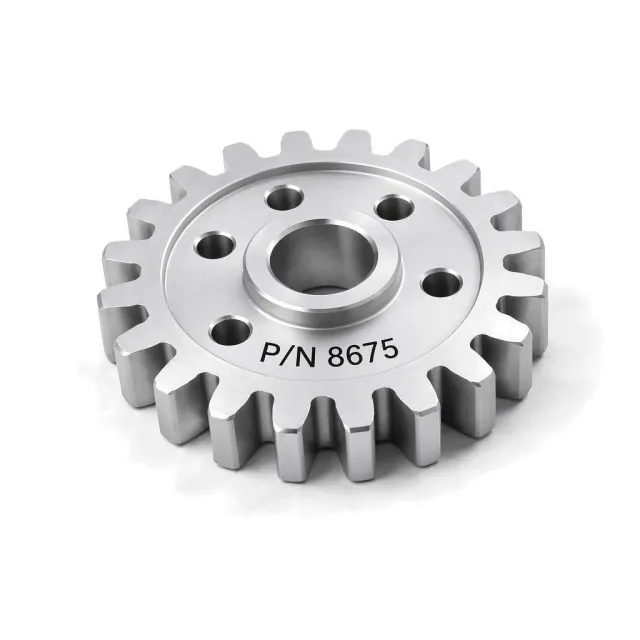
What is Laser mark?
Depending on material and settings, it anneals, engraves, ablates a coating, carbonizes, or foams plastic.
How it works
Galvanometer mirrors scan a focused beam over the artwork. Fiber lasers couple well into many metals and can anneal stainless steel, engrave metal, or remove anodize and paint. CO2 lasers couple well into many organics and glasses, while UV lasers use short wavelength and low heat input for fine polymer marking. Polymer response may be dark carbonization, light foaming, colour change from an additive, or shallow engraving. Focus, pulse energy, speed, hatch spacing, and atmosphere control contrast and depth.
Why specify it
- Creates variable serials and UDI without a physical printing tool
- Supports about 0.10 mm minimum line width
- Annealed colour-change marks add no depth; shallow engraving is typically 5–50 µm
- Can mark Data Matrix ECC200 codes for traceability
- No ink, foil, or curing consumable
Where it falls short
- Contrast depends strongly on alloy, coating, pigment, and laser wavelength
- Deep engraving increases cycle time and heat input
- Reflective copper alloys need appropriate source and process development
- Machine-readable codes require grading on the finished geometry
Laser mark at a glance
Laser mark is strongest on cosmetic quality (70 of 100), at a budget cost. It adds little corrosion protection or lubricity. Surface hardness is not rated: the finish leaves the part's own surface.
Each score is 0–100 against every finish in this catalog. Corrosion comes from salt-spray life (ASTM B117, log scale) and hardness from the finish layer's Vickers or pencil hardness; cosmetic, lubricity and cost are FabDigit's engineering assessment. Economy on the radar is the inverse of cost.
Laser mark key numbers
Typical values from the governing specifications and shop practice; bars are this finish against the highest value among marking & decoration finishes.
- Thickness
- 0 µm depth for annealed colour change or coating ablation at the interface; up to 50 µm depth for shallow engraving. Polymer foaming may create slight positive relief.
- Electrical
- Unchanged
- Colours
- black
- white
- grey
- substrate contrast
- limited colour effects on selected materials
- Appearance
- High-resolution dark, light, frosted, or recessed marks; appearance depends on material response and wavelength.
Specifications for Laser mark
The documents a drawing cites to define this finish, with the Type / Class rows that apply. Each links to a page explaining the standard, and US Government documents are free to download there.
| Standard | Type / Class | Thickness | Requirement / test | Status |
|---|---|---|---|---|
Identification Marking of U.S. Military Property · DoD | Human-readable information | — | Free-text identification containing the required enterprise identifier and part or identifying number, plus other contract data. · Visual legibility, content, location, permanence, and workmanship. | Active |
| Machine-readable information | — | Linear or two-dimensional machine-readable marking, including IUID data when required. · Data syntax, symbol verification, readability, permanence, and contract-specified quality grade. | ||
| Item Unique Identification | — | Machine-readable unique item identifier constructed from approved enterprise and item data elements. · UII construct validation, data-content verification, symbol quality, and permanence. |
Test and related methods: ISO 15415 (Automatic Identification and Data Capture Techniques — Bar Code Symbol Print Quality Test Specification — Two-Dimensional Symbols), ISO 15416 (Automatic Identification and Data Capture Techniques — Bar Code Symbol Print Quality Test Specification — Linear Symbols), AS9132 (Data Matrix Quality Requirements for Parts Marking).
Drawing call-out
LASER MARK PER MIL-STD-130, DATA MATRIX ECC200, 6 × 6 MM, 0.10 MM MIN CELL, CONTRAST ≥ 30 %, GRADE 2.5 MIN PER ISO 15415Pattern: MARK PER MIL-STD-130, METHOD <LASER|DOT PEEN|ELECTROCHEMICAL ETCH|LABEL>, CONTENT <DATA ELEMENTS>, LOCATION AS SHOWN, [IUID/MRI REQUIREMENTS]
Which materials take Laser mark?
Verdict per material family, with the grades that behave differently. Each family links to its datasheets in the material library.
| Material family | Verdict | Notes |
|---|---|---|
| Yes | Fiber marking and anodize ablation are common. | |
| Yes | Common; contrast depends on alloy and laser source. | |
| Yes | Annealed dark marks can preserve a smooth surface when the recipe is controlled. | |
| Yes | Engraving and coating ablation are common. | |
| Yes | Annealed or engraved marks are standard aerospace and medical practice. | |
| With care | Markability depends on glaze and ceramic composition. | |
| With care | High reflectivity needs a suitable wavelength and process development. | |
| With care | CO2 and UV can frost or engrave glass, with crack risk controlled by recipe. | |
| With care | Possible with a low-heat recipe; avoid deep engraving that raises fire-risk fines. | |
| With care | CO2, fiber, or UV response depends on resin, pigment, and laser additive.
| |
| With care | Common on zinc die castings; contrast is alloy- and coating-dependent. |
How Laser mark is applied, and what it does to the part
- 1Verify material and finish
- 2Fixture to datum
- 3Load artwork and variable data
- 4Set focus and laser recipe
- 5Mark
- 6Clean residue if needed
- 7Inspect content, contrast, and code grade
| Dimensions | Annealing and colour change have negligible depth; specify engraving depth when material removal up to 50 µm matters. |
|---|---|
| Masking | Rarely needed. Fixture and software define the mark; exclude sealing faces, fatigue-critical edges, and functional coatings unless approved. |
| Electrical | Unchanged |
| Appearance | High-resolution dark, light, frosted, or recessed marks; appearance depends on material response and wavelength. |
| Added lead time | 1–3 working days on top of the bare part |
Design rules for Laser mark
What to decide on the drawing before the part goes to the finisher.
- Use 0.10 mm minimum line width for general production artwork.Beam spot, focus, material response, and scanner accuracy limit finer robust features.
- Put the mark on a locally accessible surface within the lens field.Focus error and steep curvature change spot size and contrast.
- Specify anneal, coating removal, colour change, foaming, or engraving.The same artwork can produce different depth and durability.
- Grade Data Matrix on the finished part to ISO 15415.Cell geometry, glare, and background affect readability.
- Provide a flat quiet zone around machine-readable codes.Adjacent texture and curvature interfere with decoding.
- Keep engraving away from highly stressed thin sections.Material removal and local heat can create a stress raiser.
Laser mark versus the alternatives
Finishes engineers weigh against Laser mark, and when each wins.
| Finish | Corrosion | Hardness | Cosmetic | Cost | Thickness | Choose it when |
|---|---|---|---|---|---|---|
Laser mark this page | 0 | — | 70 | $ | 0–50 µm | — |
| 0 | — | 35 | $ | 50–500 µm | for robust indented codes on rough metal | |
| 0 | — | 72 | $ | 5–10 µm | for coloured graphics on curved plastic |
The radar overlays Laser mark with Dot Peen Marking, its most common alternative — chosen for robust indented codes on rough metal. Scores in the table are 0–100 across every finish in the catalog.
Cost, lead time and compliance
Relative cost
Laser Marking is a budget-cost finish ($): cheaper than about 81 % of the finishes FabDigit quotes.
Finishing is priced per part with a lot minimum, from FabDigit's own China-side rates cross-checked against US job-shop pricing. The exact figure appears on the instant quote once the part is uploaded.
Lead time and compliance
| Added lead time | 1–3 working days |
|---|---|
| RoHS | Compliant |
| Notes | No ink or foil is added; extraction is needed for ablation fumes and particulate, especially from polymers and coatings. |
What Laser mark is used for
- Serial numbers
- UDI on medical devices
- Data Matrix traceability codes
- Regulatory labels
- Logos and control legends
Laser mark — frequently asked
Laser marking vs engraving: what is the difference?
Laser marking is the broad process and can create contrast with nearly zero depth by annealing, colour change, or coating removal. Laser engraving removes substrate; this record covers shallow engraving from 0 to 50 µm.
Can you laser mark anodized aluminum?
Yes. A laser commonly removes or modifies the dyed anodic layer to create a light mark against dark anodize, with essentially no added film thickness; validate contrast without cutting through more coating than intended.
Fiber vs CO2 vs UV laser marking: which should I use?
Fiber lasers are the usual starting point for metals, CO2 for many organic materials and glass, and UV for fine low-heat polymer marking. The correct source still depends on absorption, pigment, additives, coating, and required 0–50 µm depth.
Can laser marking make a MIL-STD-130 UID Data Matrix?
Yes, when the content, construction, location, and permanence meet the drawing and MIL-STD-130 requirements. Grade the finished direct-part mark to ISO 15415 and state the minimum acceptable grade.
Does laser annealing reduce corrosion resistance of stainless steel?
A controlled anneal mark changes the oxide colour without deliberate material removal, but excess heat can disturb the passive surface. Qualify the laser recipe on the alloy and service environment when corrosion performance is critical.
How small can laser-marked text and lines be?
Use 0.10 mm as a robust minimum line width for general job-shop work. Smaller features may be possible with UV systems and controlled surfaces, but must be proven by sample and, for codes, by ISO 15415 or ISO 15416 grading.
Other marking & decoration finishes
 Chemical EtchingChemical etching uses a patterned resist and material-specific etchant to recess graphics or create a frosted contrast.CorrosionHardnessCost$$$
 Electrochemical EtchingElectrochemical etching makes a localized permanent mark on an electrically conductive part through a stencil and electrolyte.CorrosionHardnessCost$$
 Embossing and DebossingEmbossing raises artwork above a surface, while debossing recesses it through forming dies or molded tool geometry.CorrosionHardnessCost$$$
 Hot StampingHot stamping uses a heated die to transfer pigmented or metallic foil onto a part.CorrosionHardnessCost$$
 In-Mold Decoration (IMD)In-mold decoration places a formed, printed decorative film in an injection mold so the graphic becomes part of the molded surface.CorrosionHardnessCost$$$$
 In-Mold Labeling (IML)In-mold labeling places a preprinted label in the mold before plastic is injected.CorrosionHardnessCost$$$
 Ink StampingInk stamping transfers a fixed image from a rubber, polymer, or metal stamp onto a part.CorrosionHardnessCost$
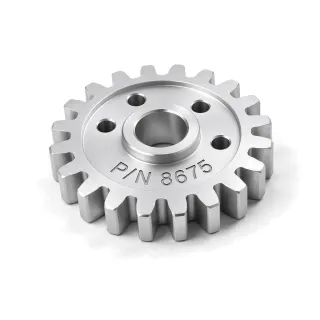 Mechanical EngravingMechanical engraving cuts text, symbols, serials, or decorative lines into a surface with a rotating or dragging tool.CorrosionHardnessCost$$