
Pad Printing
Marking & decoration · Printing
Pad printing transfers ink from an etched plate to a part with a flexible silicone pad.
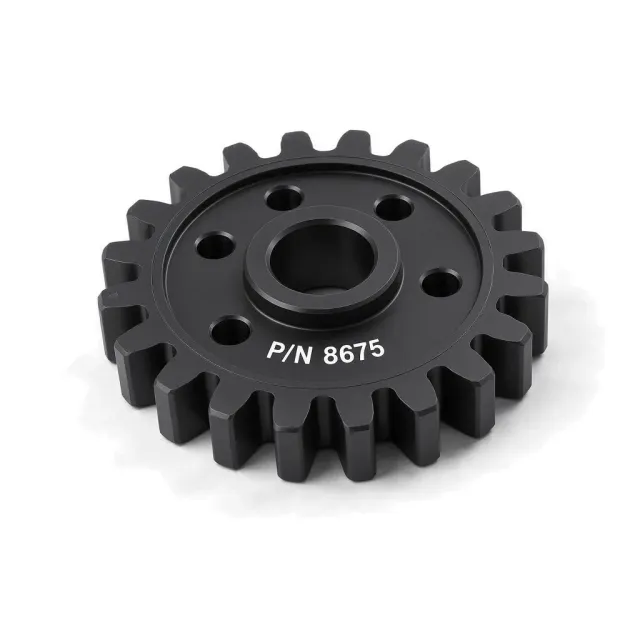
What is Pad print?
It is suited to logos, legends, and regulatory marks on small curved, recessed, or irregular surfaces.
How it works
Ink fills a shallow etched image in a printing plate, and a doctor cup removes ink from the surrounding surface. A silicone pad compresses onto the plate, picks up the tacky image, moves to the fixture, and conforms to the part while releasing the ink. Solvent evaporation or curing develops adhesion. Pad shape, image placement, ink chemistry, and fixture repeatability control distortion and registration.
Why specify it
- Prints on compound-curved and recessed geometry
- Produces a typical 5–10 µm cured ink film
- Supports a practical line width near 0.15 mm
- Efficient for small logos and legends
Where it falls short
- Image size is limited by pad size and deformation
- Large solid fields may show pinholes or uneven density
- Each colour needs another registered pass
- Ink adhesion must be qualified on the actual resin
Pad print at a glance
Pad print is strongest on cosmetic quality (72 of 100), at a budget cost. It adds little corrosion protection or lubricity. Surface hardness is not rated: the finish leaves the part's own surface.
Each score is 0–100 against every finish in this catalog. Corrosion comes from salt-spray life (ASTM B117, log scale) and hardness from the finish layer's Vickers or pencil hardness; cosmetic, lubricity and cost are FabDigit's engineering assessment. Economy on the radar is the inverse of cost.
Pad print key numbers
Typical values from the governing specifications and shop practice; bars are this finish against the highest value among marking & decoration finishes.
- Thickness
- 5–10 µm cured ink film; thickness is deposited film, not engraving depth.
- Electrical
- Unchanged
- Colours
- black
- white
- spot colours
- custom colour
- Appearance
- Fine opaque or translucent graphics that conform to small irregular surfaces.
Specifications for Pad print
The documents a drawing cites to define this finish, with the Type / Class rows that apply. Each links to a page explaining the standard.
| Standard | Type / Class | Thickness | Requirement / test | Status |
|---|---|---|---|---|
Paints and Varnishes — Cross-Cut Test · ISO · alternative | Classification 0 | — | Cut edges completely smooth; no lattice squares detached · Visual comparison after cross-cut procedure | Active |
| Classification 1 | — | Small flakes detached at intersections; affected area not significantly greater than 5% · Visual comparison after cross-cut procedure | ||
| Classification 2 | — | Flaking along edges or intersections affecting more than 5% but not significantly more than 15% · Visual comparison after cross-cut procedure | ||
| Classification 3 | — | Flaking in ribbons or parts of squares affecting more than 15% but not significantly more than 35% · Visual comparison after cross-cut procedure | ||
| Classification 4 | — | Large ribbons or squares detached, affecting more than 35% but not significantly more than 65% · Visual comparison after cross-cut procedure | ||
| Classification 5 | — | Flaking greater than classification 4 · Visual comparison after cross-cut procedure |
Test and related methods: ASTM D3359 (Standard Test Methods for Rating Adhesion by Tape Test).
Drawing call-out
PAD PRINT SYMBOLS, WHITE, 0.15 MM MIN LINE WIDTH, IMAGE 22 × 18 MM MAX, LOCATION ±0.30 MM; ASTM D3359 CLASS 4B MINPattern: CROSS-CUT ADHESION PER ISO 2409, MAXIMUM CLASSIFICATION <0–5>
Which materials take Pad print?
Verdict per material family, with the grades that behave differently. Each family links to its datasheets in the material library.
| Material family | Verdict | Notes |
|---|---|---|
| Yes | Can print bare or coated surfaces after adhesion validation. | |
| Yes | Common on molded parts with resin-specific pretreatment.
| |
| Yes | Prints well over a clean, coated, or passivated surface with a qualified ink. | |
| Yes | Usually printed on clean coated or plated surfaces. | |
| With care | Tarnish control and a metal-compatible ink are required. | |
| With care | Tarnish control and a metal-compatible ink are required. | |
| With care | Requires glass-compatible ink and cure. | |
| With care | Print over conversion coating or primer; bare magnesium rejects most inks. | |
| With care | Print over a clean painted or conversion-coated zinc surface. | |
| Limited | Bare titanium is a poor ink surface; print over a qualified coating. |
How Pad print is applied, and what it does to the part
- 1Clean or activate surface
- 2Fixture part
- 3Fill and doctor plate
- 4Pick image with pad
- 5Transfer image to part
- 6Cure ink
- 7Inspect registration and adhesion
| Dimensions | Allow 5–10 µm buildup at tight interfaces; fixture access and pad compression need clear space around the image. |
|---|---|
| Build-up per side | 5–10 µm — Ink builds locally above the substrate. |
| Masking | Usually needed. Keep ink off contacts, seals, bonding areas, threads, and precision fits. |
| Electrical | Unchanged |
| Appearance | Fine opaque or translucent graphics that conform to small irregular surfaces. |
| Added lead time | 3–7 working days on top of the bare part |
Design rules for Pad print
What to decide on the drawing before the part goes to the finisher.
- Use 0.15 mm minimum line width and gap.Finer etched features can close from ink gain.
- Define the maximum artwork envelope and marking pad size.The silicone pad must carry the complete image without excessive stretch.
- Keep critical features away from abrupt steps.Pad deformation distorts the transferred image.
- Provide a repeatable fixture datum.Part movement directly becomes print-location error.
- Specify ink and surface preparation by substrate.Adhesion is chemistry-specific.
Pad print versus the alternatives
Finishes engineers weigh against Pad print, and when each wins.
| Finish | Corrosion | Hardness | Cosmetic | Cost | Thickness | Choose it when |
|---|---|---|---|---|---|---|
Pad print this page | 0 | — | 72 | $ | 5–10 µm | — |
| 0 | — | 75 | $ | 10–25 µm | for broad flat graphics | |
| 0 | — | 70 | $ | 0–50 µm | for variable permanent data |
The radar overlays Pad print with Screen Printing, its most common alternative — chosen for broad flat graphics. Scores in the table are 0–100 across every finish in the catalog.
Cost, lead time and compliance
Relative cost
Pad Printing is a budget-cost finish ($): cheaper than about 90 % of the finishes FabDigit quotes.
Finishing is priced per part with a lot minimum, from FabDigit's own China-side rates. The exact figure appears on the instant quote once the part is uploaded.
Lead time and compliance
| Added lead time | 3–7 working days |
|---|---|
| RoHS | Compliant |
| Notes | Compliance depends on ink pigments, solvents, and curing agents; require supplier declaration. |
What Pad print is used for
- Button icons
- Medical-device graduations
- Toy graphics
- Golf-ball logos
- Connector and housing legends
Pad print — frequently asked
Pad printing vs screen printing: which is better for curved parts?
Pad printing is generally better for small compound-curved or recessed areas because the silicone pad conforms to geometry. Screen printing is better for larger flat or cylindrical graphics and deposits a thicker 10–25 µm film.
What is the minimum line width for pad printing?
Use about 0.15 mm as a practical production starting point. Very fine lines depend on plate depth, ink, pad hardness, and substrate texture, so approve a sample before release.
How thick is pad-printed ink?
A typical cured film is about 5–10 µm. That small buildup rarely changes overall fit, but it matters on contacts, seals, and close sliding interfaces.
How large can a pad-printed image be?
The usable image must fit inside the pad's stable transfer area, which is equipment-specific. Put the artwork envelope on the drawing and have the supplier confirm pad size and distortion before production.
How do you test pad-print durability?
Use ASTM D3359 or ISO 2409 for adhesion and a separately defined alcohol-rub or abrasion test for service wear. State solvent concentration, applied load, and cycle count rather than writing only 'alcohol resistant.'
Other marking & decoration finishes
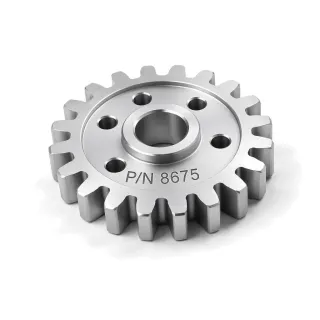 Chemical EtchingChemical etching uses a patterned resist and material-specific etchant to recess graphics or create a frosted contrast.CorrosionHardnessCost$$$
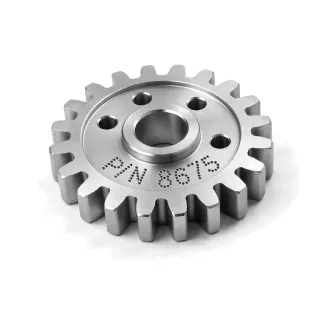 Dot Peen MarkingDot peen marking uses a controlled stylus to build characters and Data Matrix symbols from small permanent indentations.CorrosionHardnessCost$
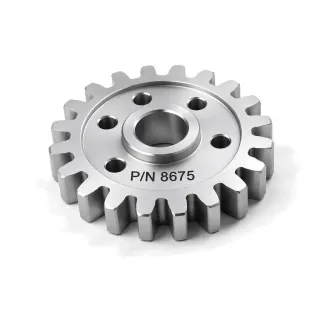 Electrochemical EtchingElectrochemical etching makes a localized permanent mark on an electrically conductive part through a stencil and electrolyte.CorrosionHardnessCost$$
 Embossing and DebossingEmbossing raises artwork above a surface, while debossing recesses it through forming dies or molded tool geometry.CorrosionHardnessCost$$$
 Hot StampingHot stamping uses a heated die to transfer pigmented or metallic foil onto a part.CorrosionHardnessCost$$
 In-Mold Decoration (IMD)In-mold decoration places a formed, printed decorative film in an injection mold so the graphic becomes part of the molded surface.CorrosionHardnessCost$$$$
 In-Mold Labeling (IML)In-mold labeling places a preprinted label in the mold before plastic is injected.CorrosionHardnessCost$$$
 Ink StampingInk stamping transfers a fixed image from a rubber, polymer, or metal stamp onto a part.CorrosionHardnessCost$