
Hot Stamping
Marking & decoration · Thermal
Hot stamping uses a heated die to transfer pigmented or metallic foil onto a part.
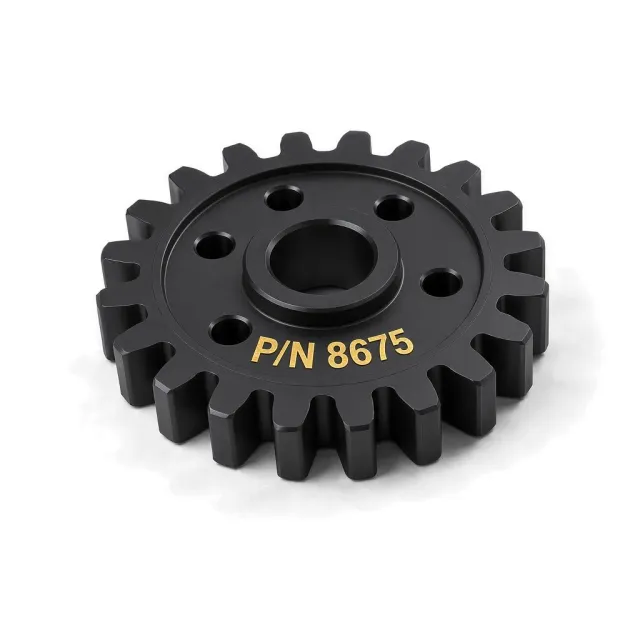
What is Hot stamp?
It is widely used for logos, decorative bands, scales, and premium metallic accents on molded plastics.
How it works
A carrier web positions a multilayer foil between a heated die and the part. Heat activates the release and adhesive layers while pressure brings the image area into contact; the carrier then lifts away and leaves the colour or metallic layer on the substrate. Die geometry, dwell, temperature, pressure, foil chemistry, and part flatness determine edge quality and adhesion. The process is dry and normally transfers one colour per pass.
Why specify it
- Produces bright metallic effects without wet ink
- Transfers a typical 10–20 µm foil stack
- Fast cycle for repeated logos and trim
- No post-print drying step
Where it falls short
- Requires a hard stamping die and stable support under the part
- Compound curves and recessed artwork are difficult
- One foil colour is normally applied per pass
- Surface foil can abrade on high-touch areas
Hot stamp at a glance
Hot stamp is strongest on cosmetic quality (88 of 100), at a standard cost. It adds little corrosion protection or lubricity. Surface hardness is not rated: the finish leaves the part's own surface.
Each score is 0–100 against every finish in this catalog. Corrosion comes from salt-spray life (ASTM B117, log scale) and hardness from the finish layer's Vickers or pencil hardness; cosmetic, lubricity and cost are FabDigit's engineering assessment. Economy on the radar is the inverse of cost.
Hot stamp key numbers
Typical values from the governing specifications and shop practice; bars are this finish against the highest value among marking & decoration finishes.
- Thickness
- 10–20 µm transferred foil and adhesive film; thickness is buildup above the substrate.
- Electrical
- Unchanged
- Colours
- gold metallic
- silver metallic
- pigmented colours
- holographic effects
- Appearance
- Sharp opaque graphics with metallic, pigmented, or holographic appearance.
Specifications for Hot stamp
The documents a drawing cites to define this finish, with the Type / Class rows that apply. Each links to a page explaining the standard.
Test and related methods: ASTM D3359 (Standard Test Methods for Rating Adhesion by Tape Test).
Drawing call-out
HOT STAMP LOGO, BRIGHT SILVER FOIL, 10–20 µm TRANSFER FILM, ARTWORK HS-22 REV B, LOCATION ±0.25 MM; ASTM D3359 CLASS 4B MINWhich materials take Hot stamp?
Verdict per material family, with the grades that behave differently. Each family links to its datasheets in the material library.
| Material family | Verdict | Notes |
|---|---|---|
| Yes | Primary substrate; die, dwell, and foil must match the resin.
| |
| Limited | Possible over a painted or anodized aluminum after qualification; bare metal is a poor foil bond. | |
| Limited | Only over a qualified coated surface. | |
| Limited | Only over a qualified coated surface. | |
| Limited | Only over a qualified painted or coated stainless surface. | |
| Limited | Only over a qualified painted or coated steel. | |
| Limited | Possible over a painted zinc casting after qualification. | |
| No | Not a hot-stamp substrate. | |
| No | Hot-stamp foil is not a titanium identification method. |
How Hot stamp is applied, and what it does to the part
- 1Clean surface
- 2Fixture and support part
- 3Load foil
- 4Heat die
- 5Stamp with controlled pressure and dwell
- 6Peel carrier
- 7Inspect transfer and adhesion
| Dimensions | Allow 10–20 µm local film buildup and provide rigid support behind the stamped area. |
|---|---|
| Build-up per side | 10–20 µm — Only the stamped image receives the transferred film. |
| Masking | Rarely needed. The die defines the image; fixture contact and adjacent cosmetic faces must be protected from scuffing. |
| Electrical | Unchanged |
| Appearance | Sharp opaque graphics with metallic, pigmented, or holographic appearance. |
| Added lead time | 5–10 working days on top of the bare part |
Design rules for Hot stamp
What to decide on the drawing before the part goes to the finisher.
- Place artwork on a flat or gently curved supported area.The heated die needs uniform pressure.
- Avoid ribs, voids, and bosses directly behind the stamp.Uneven stiffness produces incomplete transfer.
- Keep fine lines at least 0.20 mm unless the stamper approves trials.Foil can bridge or break at narrow features.
- Specify foil family, colour, gloss, and approved sample.Metallic appearance varies by supplier and substrate.
Hot stamp versus the alternatives
Finishes engineers weigh against Hot stamp, and when each wins.
| Finish | Corrosion | Hardness | Cosmetic | Cost | Thickness | Choose it when |
|---|---|---|---|---|---|---|
Hot stamp this page | 0 | — | 88 | $$ | 10–20 µm | — |
| — | — | 92 | $$$$ | 100–300 µm | for protected multicolour decoration | |
| 0 | — | 72 | $ | 5–10 µm | for nonmetallic graphics on curved surfaces |
The radar overlays Hot stamp with In-Mold Decoration (IMD), its most common alternative — chosen for protected multicolour decoration. Scores in the table are 0–100 across every finish in the catalog.
Cost, lead time and compliance
Relative cost
Hot Stamping is a standard-cost finish ($$): cheaper than about 76 % of the finishes FabDigit quotes.
Finishing is priced per part with a lot minimum, from FabDigit's own China-side rates. The exact figure appears on the instant quote once the part is uploaded.
Lead time and compliance
| Added lead time | 5–10 working days |
|---|---|
| RoHS | Compliant |
| Notes | Compliance depends on the foil pigments, metallic layer, adhesive, and substrate; require a supplier declaration. |
What Hot stamp is used for
- Cosmetic-package logos
- Appliance trim
- Automotive interior accents
- Security seals
- Consumer-product branding
Hot stamp — frequently asked
Hot stamping vs IMD: which should I use?
Hot stamping is simpler for one-colour logos or metallic accents and leaves about 10–20 µm of foil. IMD carries broader multicolour artwork in a 100–300 µm film and can protect reverse printing from wear.
Can hot stamping be applied to curved plastic?
Gentle cylindrical curvature is possible with a matched die or roll process. Compound curves and abrupt height changes cause uneven pressure, so keep the marked area locally flat when possible.
How durable is hot-stamp foil?
Durability depends on foil-substrate compatibility and whether the area is frequently rubbed. Validate adhesion with ASTM D3359 and define a separate abrasion or alcohol-rub acceptance test on production parts.
How thick is hot stamping foil on a plastic part?
Use 10–20 µm as the typical transferred foil-and-adhesive buildup for this catalog. The carrier web itself is removed and is not part of the finished thickness.
Can hot stamping print multiple colours?
Yes, but each colour generally requires another registered die pass. Registration tolerance and cost rise with the number of foils.
Other marking & decoration finishes
 Chemical EtchingChemical etching uses a patterned resist and material-specific etchant to recess graphics or create a frosted contrast.CorrosionHardnessCost$$$
 Dot Peen MarkingDot peen marking uses a controlled stylus to build characters and Data Matrix symbols from small permanent indentations.CorrosionHardnessCost$
 Electrochemical EtchingElectrochemical etching makes a localized permanent mark on an electrically conductive part through a stencil and electrolyte.CorrosionHardnessCost$$
 Embossing and DebossingEmbossing raises artwork above a surface, while debossing recesses it through forming dies or molded tool geometry.CorrosionHardnessCost$$$
 In-Mold Labeling (IML)In-mold labeling places a preprinted label in the mold before plastic is injected.CorrosionHardnessCost$$$
 Ink StampingInk stamping transfers a fixed image from a rubber, polymer, or metal stamp onto a part.CorrosionHardnessCost$
 Laser MarkingLaser marking uses focused fiber, CO2, or UV energy to create permanent text, logos, serials, UDI, and machine-readable codes.CorrosionHardnessCost$
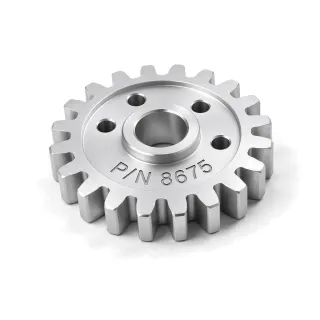 Mechanical EngravingMechanical engraving cuts text, symbols, serials, or decorative lines into a surface with a rotating or dragging tool.CorrosionHardnessCost$$