
MIL-STD-130
Identification Marking of U.S. Military Property
Provides criteria and data content for human-readable and machine-readable identification marking of U.S. military property.
What MIL-STD-130 specifies
MIL-STD-130 is a marking-system standard rather than a single laser-marking process specification. It defines required item identity content, permanence, legibility, location, human-readable information, machine-readable information, and Item Unique Identification requirements. Machine-readable marking is preferred and is mandatory for items designated for IUID under the applicable acquisition rules. The standard permits different direct-part-marking and label methods when they satisfy the contract and do not damage the item. A drawing note should therefore identify MIL-STD-130, the required data elements, marking method or method restrictions, location, size, permanence, and any machine-readable symbol quality requirement.
MIL-STD-130 types and classes
Every designation the document defines, with the thickness it requires and the tests it imposes.
| Designation | Meaning | Requirement / test |
|---|---|---|
Human-readable information | Free-text identification containing the required enterprise identifier and part or identifying number, plus other contract data. | Visual legibility, content, location, permanence, and workmanship. |
Machine-readable information | Linear or two-dimensional machine-readable marking, including IUID data when required. | Data syntax, symbol verification, readability, permanence, and contract-specified quality grade. |
Item Unique Identification | Machine-readable unique item identifier constructed from approved enterprise and item data elements. | UII construct validation, data-content verification, symbol quality, and permanence. |
Tests and the drawing call-out
Tests the document imposes
- Marking content and syntax verification
- Visual legibility and workmanship
- Machine-readable symbol verification to the contract-specified method
- Permanence appropriate to item life and environment
- No unacceptable effect on item function, strength, corrosion resistance, or protective finish
How to cite it
Drawing call-out
MARK PER MIL-STD-130, METHOD <LASER|DOT PEEN|ELECTROCHEMICAL ETCH|LABEL>, CONTENT <DATA ELEMENTS>, LOCATION AS SHOWN, [IUID/MRI REQUIREMENTS]Angle brackets mark the choices the drawing must make; every finish page shows a completed example.
Finishes specified to MIL-STD-130
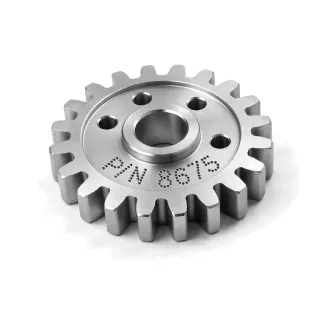 Dot Peen MarkingMarking & decorationDot peen marking uses a controlled stylus to build characters and Data Matrix symbols from small permanent indentations.CorrosionHardnessCost$
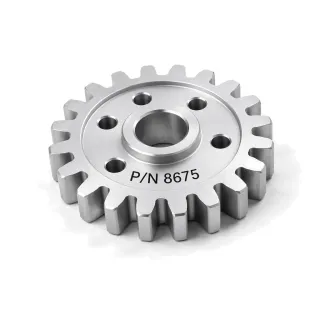 Laser MarkingMarking & decorationLaser marking uses focused fiber, CO2, or UV energy to create permanent text, logos, serials, UDI, and machine-readable codes.CorrosionHardnessCost$
Also referenced by: Electrochemical Etching, Mechanical Engraving, Steel Stamp Part Marking, Vibro Engraving.
MIL-STD-130 — frequently asked
Does MIL-STD-130 require laser marking?
No. It controls identification content and marking performance, not one mandatory process. Laser marking is one option when it meets the item and contract requirements.
Is machine-readable marking always required?
Machine-readable information is preferred, but it is mandatory when the item is designated for IUID or the contract specifically requires it. Other items may use compliant human-readable marking.
What must a drawing note specify in addition to MIL-STD-130?
State the data content, method or prohibited methods, location, size, permanence, and machine-readable symbol requirements. A bare reference to MIL-STD-130 may leave manufacturing choices unresolved.
MIL-STD-130 is a work of the US Government and not subject to copyright. The authoritative copy is the DLA ASSIST database; check it for amendments issued after this page was updated. Official source ↗