
In-Mold Decoration (IMD)
Marking & decoration · Printing
In-mold decoration places a formed, printed decorative film in an injection mold so the graphic becomes part of the molded surface.
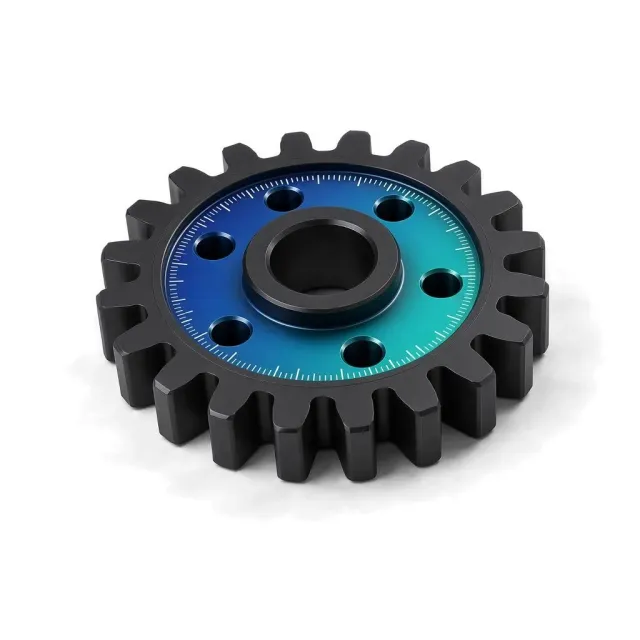
What is IMD?
It supports durable multicolour user interfaces, bezels, and automotive trim.
How it works
Artwork is reverse-printed on a clear carrier or decorative film, often followed by hard coat and optional vacuum-metallized layers. The film is registered, thermoformed when needed, trimmed, and loaded into the mold. Injected resin bonds to the back of the insert while the mold defines the visible surface. Because decoration and molding occur together, tool geometry, film draw, gate location, and resin compatibility must be developed as one system.
Why specify it
- Protects reverse-printed graphics behind a clear film
- Supports multicolour and photographic decoration in one insert
- Combines molding and decoration in one production cycle
- Provides repeatable registration at production volume
Where it falls short
- High artwork, forming, trimming, and loading setup cost
- Film can wrinkle, wash out, or delaminate near gates
- Severe draw and compound curvature distort artwork
- Design changes can require new print and forming tooling
IMD at a glance
IMD is strongest on cosmetic quality (92 of 100), at a high cost. It adds little lubricity. Corrosion protection and surface hardness are not rated: a plastic part does not corrode, and the finish leaves the part's own surface.
Each score is 0–100 against every finish in this catalog. Corrosion comes from salt-spray life (ASTM B117, log scale) and hardness from the finish layer's Vickers or pencil hardness; cosmetic, lubricity and cost are FabDigit's engineering assessment. Economy on the radar is the inverse of cost.
IMD key numbers
Typical values from the governing specifications and shop practice; bars are this finish against the highest value among marking & decoration finishes.
- Thickness
- 100–300 µm decorative carrier-film stack inherited from v1; this is insert thickness, not ink alone.
- Electrical
- Unchanged
- Colours
- full colour
- metallic effects
- transparent windows
- custom graphics
- Appearance
- High-resolution gloss, matte, textured, metallic, or transparent graphics under a protective film.
Specifications for IMD
The documents a drawing cites to define this finish, with the Type / Class rows that apply. Each links to a page explaining the standard.
Drawing call-out
IN-MOLD DECORATION PER APPROVED ARTWORK FD-IMD-104 REV C, 0.20 MM PET FILM, REVERSE PRINTED, GLOSS 60–75 GU AT 60°, REGISTRATION ±0.30 MMWhich materials take IMD?
Verdict per material family, with the grades that behave differently. Each family links to its datasheets in the material library.
| Material family | Verdict | Notes |
|---|---|---|
| Yes | Designed for compatible injection-molded resin and film systems.
| |
| No | IMD is an injection-mould polymer process. | |
| No | IMD is an injection-mould polymer process. | |
| No | IMD is an injection-mould polymer process. | |
| No | IMD is an injection-mould polymer process. | |
| No | IMD is an injection-mould polymer process. | |
| No | IMD is an injection-mould polymer process. | |
| No | IMD is an injection-mould polymer process. | |
| No | IMD is an injection-mould polymer process. |
How IMD is applied, and what it does to the part
- 1Print decorative film
- 2Apply hard coat if required
- 3Thermoform film
- 4Trim insert
- 5Register insert in mold
- 6Injection mold backing resin
- 7Inspect registration and adhesion
| Dimensions | Tool steel and cavity geometry must account for the film stack; do not add IMD to an existing mold without reviewing fit and flow. |
|---|---|
| Build-up per side | 100–300 µm — The insert occupies part of the molded surface stack and must be included in tool design. |
| Masking | Rarely needed. No post-mold masking is typical, but the insert must exclude gates, vents, seals, and bonding zones. |
| Electrical | Unchanged |
| Appearance | High-resolution gloss, matte, textured, metallic, or transparent graphics under a protective film. |
| Added lead time | 15–30 working days on top of the bare part |
Design rules for IMD
What to decide on the drawing before the part goes to the finisher.
- Provide draft-free film seating and capture zones as agreed with the molder.The insert must remain registered while the mold closes and fills.
- Keep critical artwork away from gates and high-shear flow paths.Melt flow can wash out ink or move the insert.
- Compensate artwork for thermoforming distortion.Film draw changes line width and image location.
- Use generous radii through formed transitions.Sharp corners thin, whiten, or split film.
- Freeze resin, film, ink, and adhesive as one qualified stack.Changing one material can cause delamination.
IMD versus the alternatives
Finishes engineers weigh against IMD, and when each wins.
| Finish | Corrosion | Hardness | Cosmetic | Cost | Thickness | Choose it when |
|---|---|---|---|---|---|---|
IMD this page | — | — | 92 | $$$$ | 100–300 µm | — |
| — | — | 88 | $$$ | 50–150 µm | for label-like graphics on containers | |
| 0 | — | 88 | $$ | 10–20 µm | for a simpler metallic accent |
The radar overlays IMD with In-Mold Labeling (IML), its most common alternative — chosen for label-like graphics on containers. Scores in the table are 0–100 across every finish in the catalog.
Cost, lead time and compliance
Relative cost
In-Mold Decoration (IMD) is a high-cost finish ($$$$): more expensive than about 73 % of the finishes FabDigit quotes.
Finishing is priced per part with a lot minimum, from FabDigit's own China-side rates. The exact figure appears on the instant quote once the part is uploaded.
Lead time and compliance
| Added lead time | 15–30 working days |
|---|---|
| RoHS | Compliant |
| Notes | Require declarations for film, inks, hard coat, adhesive layers, and any metallization. |
What IMD is used for
- Automotive control panels
- Appliance interfaces
- Consumer-electronics bezels
- Backlit key panels
- Decorative trim
IMD — frequently asked
Hot stamping vs IMD: which is more durable?
IMD can protect reverse-printed artwork behind a 100–300 µm film, while hot stamping leaves a roughly 10–20 µm transferred foil at the surface. IMD is generally better for broad, multicolour wear areas; hot stamping is simpler for a small accent.
What is the difference between IMD and IML?
Both place printed material in the mold, but IMD commonly describes decorative films that may be formed and can cover an interface or trim surface. IML more often uses a pre-cut label that becomes the container or part surface.
Can IMD be used on curved plastic parts?
Yes, if the film is thermoformed and the artwork is compensated for draw. Deep compound curves need prototype forming trials because local film thickness and registration can change by more than the drawing tolerance.
How thick is an IMD film?
This catalog uses the v1 range of 100–300 µm for the decorative film stack. The production drawing should state the actual film and nominal thickness selected with the molder.
What causes IMD film delamination?
Common causes include incompatible resin and ink layers, contamination, inadequate bonding temperature, and film movement during fill. Qualification must use the final resin-film-ink stack and molded geometry.
Other marking & decoration finishes
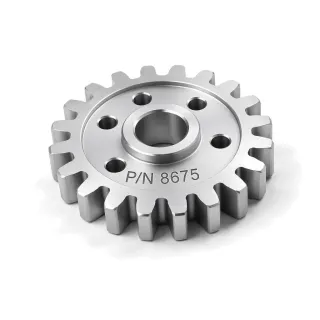 Chemical EtchingChemical etching uses a patterned resist and material-specific etchant to recess graphics or create a frosted contrast.CorrosionHardnessCost$$$
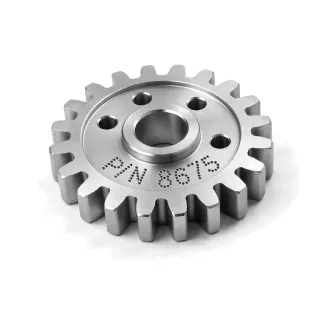 Dot Peen MarkingDot peen marking uses a controlled stylus to build characters and Data Matrix symbols from small permanent indentations.CorrosionHardnessCost$
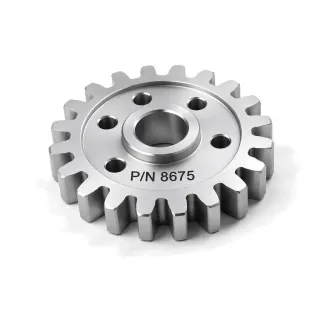 Electrochemical EtchingElectrochemical etching makes a localized permanent mark on an electrically conductive part through a stencil and electrolyte.CorrosionHardnessCost$$
 Embossing and DebossingEmbossing raises artwork above a surface, while debossing recesses it through forming dies or molded tool geometry.CorrosionHardnessCost$$$
 Ink StampingInk stamping transfers a fixed image from a rubber, polymer, or metal stamp onto a part.CorrosionHardnessCost$
 Laser MarkingLaser marking uses focused fiber, CO2, or UV energy to create permanent text, logos, serials, UDI, and machine-readable codes.CorrosionHardnessCost$
 Mechanical EngravingMechanical engraving cuts text, symbols, serials, or decorative lines into a surface with a rotating or dragging tool.CorrosionHardnessCost$$
 Pad PrintingPad printing transfers ink from an etched plate to a part with a flexible silicone pad.CorrosionHardnessCost$