
In-Mold Labeling (IML)
Marking & decoration · Printing
In-mold labeling places a preprinted label in the mold before plastic is injected.
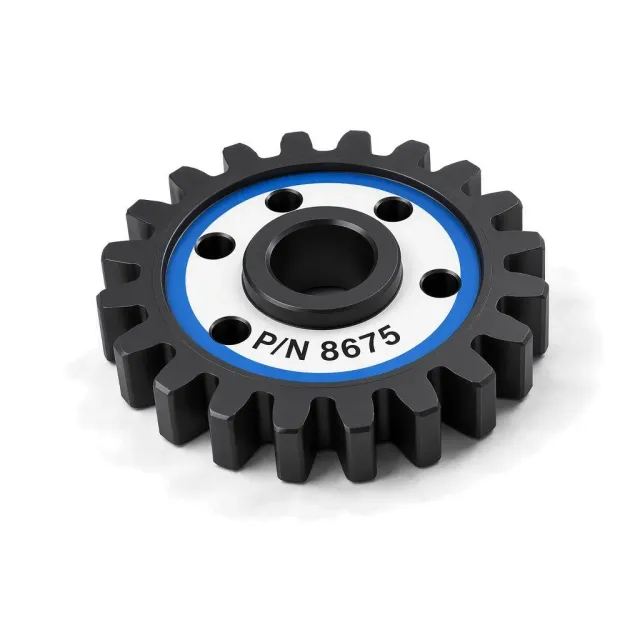
What is IML?
The label bonds into the part surface and is used for durable product graphics, instructions, barcodes, and regulatory information.
How it works
A printed and die-cut polymer label is picked, oriented, and held against the cavity by static charge, vacuum, or mechanical location. Molten resin fills behind it and heat and pressure bond the label to the molded part. The label becomes the visible surface rather than a post-applied decal. Label stock, ink, resin, mold venting, and gate position must be compatible to prevent wrinkles, trapped air, distortion, and edge lift. ASTM F2252 is a tape-adhesion practice for ink or coating on flexible packaging, not a general ink-abrasion test; use it only when the label construction is within its scope.
Why specify it
- Integrates label application with molding
- Supports full-colour graphics and machine-readable codes
- Uses a typical 50–150 µm label stock
- Resists edge picking better than many pressure-sensitive labels
Where it falls short
- Requires automated label handling and mold development
- Artwork can distort from shrinkage and flow
- Trapped air causes blisters or incomplete bonding
- Artwork revisions require new printed label inventory
IML at a glance
IML is strongest on cosmetic quality (88 of 100), at a premium cost. It adds little lubricity. Corrosion protection and surface hardness are not rated: a plastic part does not corrode, and the finish leaves the part's own surface.
Each score is 0–100 against every finish in this catalog. Corrosion comes from salt-spray life (ASTM B117, log scale) and hardness from the finish layer's Vickers or pencil hardness; cosmetic, lubricity and cost are FabDigit's engineering assessment. Economy on the radar is the inverse of cost.
IML key numbers
Typical values from the governing specifications and shop practice; bars are this finish against the highest value among marking & decoration finishes.
- Thickness
- 50–150 µm label stock inherited from v1; printed ink is only part of this stack.
- Electrical
- Unchanged
- Colours
- full colour
- white
- transparent
- metallic effects
- Appearance
- Label-quality gloss, matte, photographic, or transparent artwork integrated into the molded surface.
Specifications for IML
The documents a drawing cites to define this finish, with the Type / Class rows that apply. Each links to a page explaining the standard.
Test and related methods: ASTM F2252 (Standard Practice for Evaluating Ink or Coating Adhesion to Flexible Packaging Materials Using Tape), ISO 15415 (Automatic Identification and Data Capture Techniques — Bar Code Symbol Print Quality Test Specification — Two-Dimensional Symbols), ISO 15416 (Automatic Identification and Data Capture Techniques — Bar Code Symbol Print Quality Test Specification — Linear Symbols).
Drawing call-out
IN-MOLD LABEL PER ARTWORK IML-308 REV D, 75 µm PP LABEL, MATTE, REGISTRATION ±0.50 MM; DATA MATRIX GRADE 2.5 MIN PER ISO 15415Which materials take IML?
Verdict per material family, with the grades that behave differently. Each family links to its datasheets in the material library.
| Material family | Verdict | Notes |
|---|---|---|
| Yes | Common with resin-compatible labels in injection molding.
| |
| No | IML is an injection-mould polymer process. | |
| No | IML is an injection-mould polymer process. | |
| No | IML is an injection-mould polymer process. | |
| No | IML is an injection-mould polymer process. | |
| No | IML is an injection-mould polymer process. | |
| No | IML is an injection-mould polymer process. | |
| No | IML is an injection-mould polymer process. | |
| No | IML is an injection-mould polymer process. |
How IML is applied, and what it does to the part
- 1Print label
- 2Die-cut label
- 3Load and register in mold
- 4Hold label against cavity
- 5Injection mold part
- 6Eject and inspect bond and registration
| Dimensions | Include the 50–150 µm label stock in cavity and wall-thickness review. |
|---|---|
| Build-up per side | 50–150 µm — The label occupies part of the molded wall and visible surface. |
| Masking | Rarely needed. Keep the label clear of gates, vents, sealing faces, weld interfaces, and assembly bonds. |
| Electrical | Unchanged |
| Appearance | Label-quality gloss, matte, photographic, or transparent artwork integrated into the molded surface. |
| Added lead time | 10–20 working days on top of the bare part |
Design rules for IML
What to decide on the drawing before the part goes to the finisher.
- Keep critical text and codes away from label edges and high-draw regions.Shrinkage and flow can distort print.
- Provide a draft-free, smooth label seating zone.The label must lie against the cavity without wrinkling.
- Keep gates and vents out of the visible label field.Flow and gas can lift or blister the insert.
- Grade production barcodes on the molded geometry.Curvature, gloss, and distortion affect scanner performance.
IML versus the alternatives
Finishes engineers weigh against IML, and when each wins.
| Finish | Corrosion | Hardness | Cosmetic | Cost | Thickness | Choose it when |
|---|---|---|---|---|---|---|
IML this page | — | — | 88 | $$$ | 50–150 µm | — |
| — | — | 92 | $$$$ | 100–300 µm | for formed decorative-film interfaces | |
| 0 | — | 75 | $ | 10–25 µm | for lower-volume flat graphics |
The radar overlays IML with In-Mold Decoration (IMD), its most common alternative — chosen for formed decorative-film interfaces. Scores in the table are 0–100 across every finish in the catalog.
Cost, lead time and compliance
Relative cost
In-Mold Labeling (IML) is a premium-cost finish ($$$): more expensive than about 55 % of the finishes FabDigit quotes.
Finishing is priced per part with a lot minimum, from FabDigit's own China-side rates. The exact figure appears on the instant quote once the part is uploaded.
Lead time and compliance
| Added lead time | 10–20 working days |
|---|---|
| RoHS | Compliant |
| Notes | Using label stock compatible with the molded resin can improve recyclability; inks and coatings still require declarations. |
What IML is used for
- Food containers
- Detergent packaging
- Durable instruction labels
- Rugged handheld housings
- Regulatory and traceability labels
IML — frequently asked
What is the difference between IML and IMD?
IML generally uses a die-cut printed label that bonds into a molded container or part. IMD often uses a larger decorative film that may be thermoformed for an interface or trim surface.
How thick is an in-mold label?
This catalog carries the v1 range of 50–150 µm for label stock. State the actual material and nominal thickness on the approved label specification.
Can an IML barcode be graded after molding?
Yes; grade 2D symbols with ISO 15415 and linear symbols with ISO 15416 on the finished part. Curvature, gloss, flow distortion, and label registration can reduce the grade compared with the flat printed label.
Does IML peel off?
A compatible label bonds into the molded surface and normally resists edge picking better than a post-applied decal. Poor resin compatibility, contamination, trapped air, or low bonding temperature can still cause edge lift.
Can IML be used on curved surfaces?
Yes, especially on containers with developable walls, but the label and artwork must tolerate mold curvature and shrinkage. Deep compound geometry needs placement trials and compensated artwork.
Other marking & decoration finishes
 Chemical EtchingChemical etching uses a patterned resist and material-specific etchant to recess graphics or create a frosted contrast.CorrosionHardnessCost$$$
 Dot Peen MarkingDot peen marking uses a controlled stylus to build characters and Data Matrix symbols from small permanent indentations.CorrosionHardnessCost$
 Electrochemical EtchingElectrochemical etching makes a localized permanent mark on an electrically conductive part through a stencil and electrolyte.CorrosionHardnessCost$$
 Embossing and DebossingEmbossing raises artwork above a surface, while debossing recesses it through forming dies or molded tool geometry.CorrosionHardnessCost$$$
 Hot StampingHot stamping uses a heated die to transfer pigmented or metallic foil onto a part.CorrosionHardnessCost$$
 Ink StampingInk stamping transfers a fixed image from a rubber, polymer, or metal stamp onto a part.CorrosionHardnessCost$
 Laser MarkingLaser marking uses focused fiber, CO2, or UV energy to create permanent text, logos, serials, UDI, and machine-readable codes.CorrosionHardnessCost$
 Mechanical EngravingMechanical engraving cuts text, symbols, serials, or decorative lines into a surface with a rotating or dragging tool.CorrosionHardnessCost$$