
Embossing and Debossing
Marking & decoration · Mechanical
Embossing raises artwork above a surface, while debossing recesses it through forming dies or molded tool geometry.
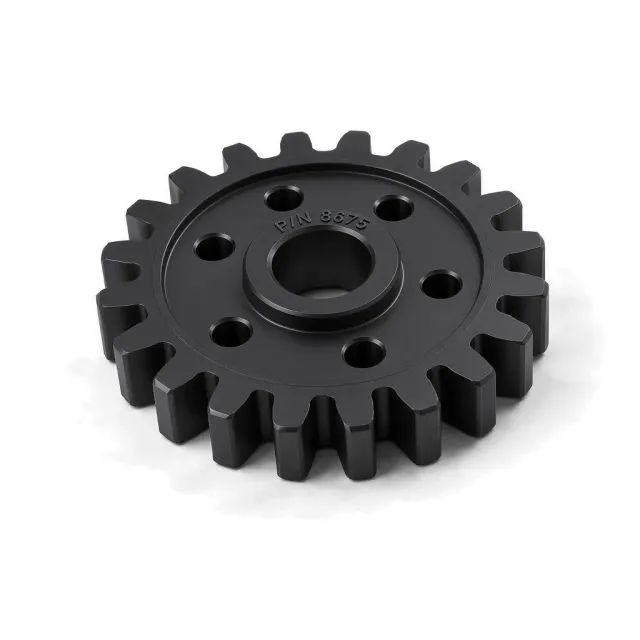
What is Emboss/deboss?
Both create integral logos, text, grip patterns, and permanent regulatory information without ink.
How it works
Sheet-metal embossing forms material between matched or male-female dies, displacing the sheet into a raised or recessed feature. Molded embossing and debossing are machined directly into the cavity or core so the feature forms during injection molding. Relief, wall thickness, draft, radii, material flow, and support determine fill and definition. Colour can be added later by paint, hot stamping, or printing, but the base mark remains geometric.
Why specify it
- Creates integral permanent decoration without added film
- Typical part-marking relief is 200–1000 µm
- Adds tactile identification and grip
- No post-process cycle when molded into the tool
Where it falls short
- Tooling changes are required to revise molded artwork
- Sharp or deep relief causes thinning, sink, or poor fill
- Sheet embossing can distort surrounding flatness
- Fine machine-readable codes are difficult to mold or form consistently
Emboss/deboss at a glance
Emboss/deboss is strongest on cosmetic quality (72 of 100), at a premium cost. It adds little corrosion protection or lubricity. Surface hardness is not rated: the finish leaves the part's own surface.
Each score is 0–100 against every finish in this catalog. Corrosion comes from salt-spray life (ASTM B117, log scale) and hardness from the finish layer's Vickers or pencil hardness; cosmetic, lubricity and cost are FabDigit's engineering assessment. Economy on the radar is the inverse of cost.
Emboss/deboss key numbers
Typical values from the governing specifications and shop practice; bars are this finish against the highest value among marking & decoration finishes.
- Thickness
- 200–1000 µm raised or recessed relief for logos and text; this is geometry, not a coating thickness.
- Electrical
- Unchanged
- Colours
- substrate colour
- optional secondary fill or foil
- Appearance
- Integral raised or recessed text, symbols, logos, textures, or tactile features.
Specifications for Emboss/deboss
The documents a drawing cites to define this finish, with the Type / Class rows that apply. Each links to a page explaining the standard.
Drawing call-out
EMBOSS LOGO 0.50 MM ABOVE SURFACE, 1.0° MIN DRAFT, 0.25 MM MIN ROOT RADIUS, ARTWORK EMB-17 REV C, LOCATION ±0.25 MMWhich materials take Emboss/deboss?
Verdict per material family, with the grades that behave differently. Each family links to its datasheets in the material library.
| Material family | Verdict | Notes |
|---|---|---|
| Yes | Sheet embossing is common with formability review. | |
| Yes | Common decorative sheet embossing substrate. | |
| Yes | Soft copper sheet embosses readily; surrounding flatness can distort. | |
| Yes | Moulded-in or formed relief is the usual polymer route.
| |
| Yes | Higher forming load and springback require tooling review. | |
| Yes | Sheet embossing requires appropriate tonnage and ductility. | |
| With care | Thin magnesium sheet can take formed relief but cracks if the draw is sharp. | |
| With care | Die-cast zinc can carry moulded relief; cold shop embossing of thick castings is limited. | |
| Limited | Only moulded or slumped glass can carry relief; cold glass is not shop-embossed. | |
| Limited | High strength makes post-form embossing difficult; moulded-in relief is preferred. | |
| No | Fired ceramic is not post-process embossed. |
How Emboss/deboss is applied, and what it does to the part
- 1Prepare artwork with draft and radii
- 2Manufacture forming die or mold feature
- 3Form or mold part
- 4Trim and cool
- 5Apply secondary colour if specified
- 6Inspect relief and definition
| Dimensions | Relief changes the local envelope by 200–1000 µm and can thin sheet or molded walls. |
|---|---|
| Build-up per side | 200–1,000 µm — Embossing creates positive relief; debossing creates negative relief. |
| Masking | Rarely needed. No masking for the forming operation; later coatings may need masking around relief. |
| Electrical | Unchanged |
| Appearance | Integral raised or recessed text, symbols, logos, textures, or tactile features. |
| Added lead time | 7–20 working days on top of the bare part |
Design rules for Emboss/deboss
What to decide on the drawing before the part goes to the finisher.
- Use 200–1000 µm relief appropriate to wall or sheet thickness.Excessive relief causes thinning, sink, and distortion.
- Add draft to molded feature sidewalls.Draft prevents scuffing and sticking during ejection.
- Use radiused roots and crests.Sharp geometry concentrates strain and is difficult to fill.
- Keep sheet embossing away from bends and precision flatness zones.Forming strain distorts surrounding material.
- Confirm the complete artwork before cutting production tooling.Text changes require tool rework.
Emboss/deboss versus the alternatives
Finishes engineers weigh against Emboss/deboss, and when each wins.
| Finish | Corrosion | Hardness | Cosmetic | Cost | Thickness | Choose it when |
|---|---|---|---|---|---|---|
Emboss/deboss this page | 0 | — | 72 | $$$ | 200–1,000 µm | — |
| 0 | — | 88 | $$ | 10–20 µm | for metallic colour without geometric relief | |
| — | — | 92 | $$$$ | 100–300 µm | for detailed multicolour molded decoration |
The radar overlays Emboss/deboss with Hot Stamping, its most common alternative — chosen for metallic colour without geometric relief. Scores in the table are 0–100 across every finish in the catalog.
Cost, lead time and compliance
Relative cost
Embossing and Debossing is a premium-cost finish ($$$): more expensive than about 57 % of the finishes FabDigit quotes.
Finishing is priced per part with a lot minimum, from FabDigit's own China-side rates. The exact figure appears on the instant quote once the part is uploaded.
Lead time and compliance
| Added lead time | 7–20 working days |
|---|---|
| RoHS | Compliant |
| Notes | Integral forming adds no substance; any secondary ink, foil, or coating needs separate compliance documentation. |
What Emboss/deboss is used for
- Molded brand logos
- Sheet-metal safety labels
- Tactile symbols
- Grip textures
- Permanent molded regulatory text
Emboss/deboss — frequently asked
Embossing vs debossing: what is the difference?
Embossing creates a raised feature, while debossing creates a recessed feature. Typical product-marking relief in this catalog is 200–1000 µm in either direction.
Can you emboss injection-molded plastic?
Yes, by machining the inverse feature into the mold. Add draft and radii, and review wall thickness and flow to avoid sink, short shots, or ejection scuffing.
How deep should embossed or debossed text be?
Use 200–1000 µm as a general marking range, then scale it to character size and section thickness. Deep relief on thin sheet or molded walls can distort the part.
Hot stamping vs embossing: which should I choose?
Embossing creates permanent tactile geometry without colour, typically 200–1000 µm high or deep. Hot stamping adds a roughly 10–20 µm coloured or metallic foil and is easier to revise than molded artwork.
Can embossed text be painted or foil stamped?
Yes, raised features can receive a secondary ink or foil accent. Add that operation explicitly because it changes colour capability, wear behavior, buildup, and cost.
Other marking & decoration finishes
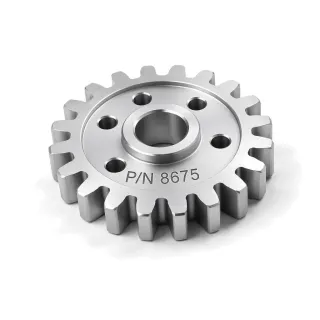 Chemical EtchingChemical etching uses a patterned resist and material-specific etchant to recess graphics or create a frosted contrast.CorrosionHardnessCost$$$
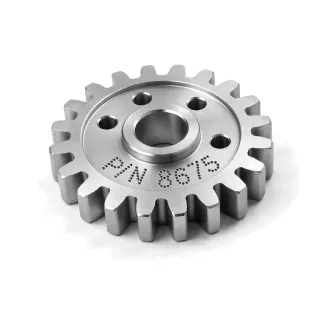 Dot Peen MarkingDot peen marking uses a controlled stylus to build characters and Data Matrix symbols from small permanent indentations.CorrosionHardnessCost$
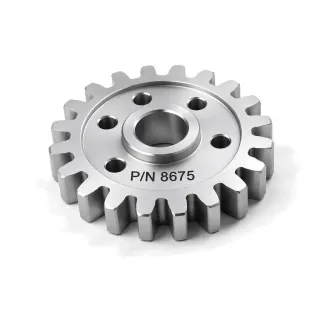 Electrochemical EtchingElectrochemical etching makes a localized permanent mark on an electrically conductive part through a stencil and electrolyte.CorrosionHardnessCost$$
 In-Mold Labeling (IML)In-mold labeling places a preprinted label in the mold before plastic is injected.CorrosionHardnessCost$$$
 Ink StampingInk stamping transfers a fixed image from a rubber, polymer, or metal stamp onto a part.CorrosionHardnessCost$
 Laser MarkingLaser marking uses focused fiber, CO2, or UV energy to create permanent text, logos, serials, UDI, and machine-readable codes.CorrosionHardnessCost$
 Mechanical EngravingMechanical engraving cuts text, symbols, serials, or decorative lines into a surface with a rotating or dragging tool.CorrosionHardnessCost$$
 Pad PrintingPad printing transfers ink from an etched plate to a part with a flexible silicone pad.CorrosionHardnessCost$