
Mechanical Engraving
Marking & decoration · Mechanical
Mechanical engraving cuts text, symbols, serials, or decorative lines into a surface with a rotating or dragging tool.
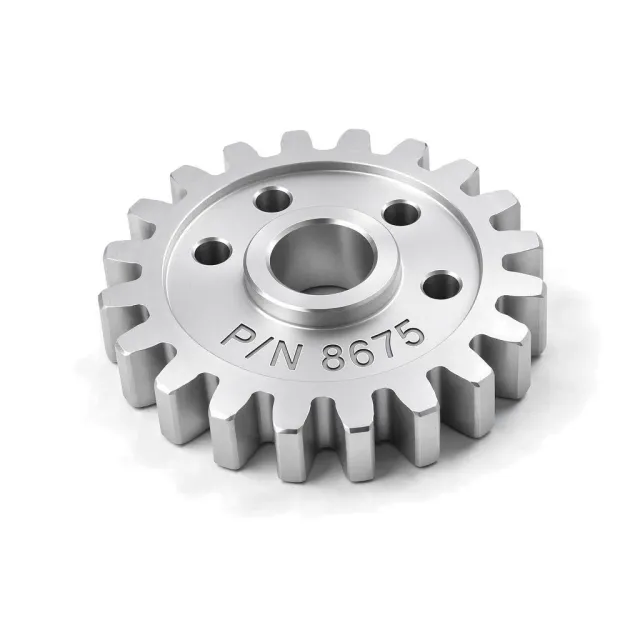
What is Mechanical engraving?
It provides a permanent recessed mark that remains identifiable after ink is lost.
How it works
A CNC spindle, pantograph, or drag tool follows vector artwork while the part is rigidly fixtured. A V-cutter varies line width with depth; a small end mill creates constant-width grooves; a diamond drag tool scribes a fine line. The groove may be left natural or paint-filled for contrast. Cutter geometry, runout, depth control, burr formation, and surface curvature govern legibility.
Why specify it
- Creates a permanent recessed mark
- Supports variable serial numbers under CNC control
- Typical shallow depth is 50–500 µm
- Can be paint-filled for high contrast
Where it falls short
- Requires tool access and rigid fixturing
- Creates chips and may raise burrs
- Slower than laser marking for dense variable codes
- Deep cuts can weaken thin or highly stressed sections
Mechanical engraving at a glance
Mechanical engraving is a middle-of-the-range finish; its best score is cosmetic quality (58 of 100), at a standard cost. It adds little corrosion protection or lubricity. Surface hardness is not rated: the finish leaves the part's own surface.
Each score is 0–100 against every finish in this catalog. Corrosion comes from salt-spray life (ASTM B117, log scale) and hardness from the finish layer's Vickers or pencil hardness; cosmetic, lubricity and cost are FabDigit's engineering assessment. Economy on the radar is the inverse of cost.
Mechanical engraving key numbers
Typical values from the governing specifications and shop practice; bars are this finish against the highest value among marking & decoration finishes.
- Thickness
- 50–500 µm recessed cut depth for part marking; deeper decorative engraving requires separate review.
- Electrical
- Unchanged
- Colours
- substrate colour
- optional paint fill
- Appearance
- Crisp recessed grooves with machined or scribed texture; optional contrasting fill.
Specifications for Mechanical engraving
The documents a drawing cites to define this finish, with the Type / Class rows that apply. Each links to a page explaining the standard, and US Government documents are free to download there.
Test and related methods: MIL-STD-130 (Identification Marking of U.S. Military Property).
Drawing call-out
MECHANICALLY ENGRAVE PART NO. AND SERIAL NO. PER MIL-STD-130, 2.5 MM CHARACTER HEIGHT, 0.20 MM DEPTH, WHITE PAINT FILLWhich materials take Mechanical engraving?
Verdict per material family, with the grades that behave differently. Each family links to its datasheets in the material library.
| Material family | Verdict | Notes |
|---|---|---|
| Yes | Machines readily; protect or restore corrosion finish if cut after coating. | |
| Yes | A standard engraving substrate. | |
| Yes | Soft copper engraves easily; burrs raise quickly. | |
| Yes | Rigid polymers engrave well; heat and burr response vary. | |
| Yes | Use suitable cutters and remove burrs. | |
| Yes | Tooling and feed depend on hardness. | |
| Yes | Engraves with rigid fixturing and sharp carbide tools. | |
| With care | Possible with sharp tools and fire-safe chip control. | |
| With care | Soft zinc engraves easily and raises burrs. | |
| Limited | Possible with diamond tooling on selected ceramics; chipping is common. | |
| Limited | Possible with diamond tooling; fracture risk is high. |
How Mechanical engraving is applied, and what it does to the part
- 1Fixture to datum
- 2Load vector artwork
- 3Set cutter and zero
- 4Engrave
- 5Deburr and clean
- 6Apply fill if specified
- 7Inspect depth and content
| Dimensions | The mark removes 50–500 µm locally; maintain remaining wall thickness and edge distance. |
|---|---|
| Masking | Rarely needed. Protect adjacent cosmetic finishes from chips and fixture contact. |
| Electrical | Unchanged |
| Appearance | Crisp recessed grooves with machined or scribed texture; optional contrasting fill. |
| Added lead time | 2–5 working days on top of the bare part |
Design rules for Mechanical engraving
What to decide on the drawing before the part goes to the finisher.
- Provide a flat, rigidly supported marking area.Depth accuracy depends on stable tool-to-part distance.
- Keep groove depth below the remaining-wall and stress limits.Engraving is a material-removal notch.
- Use open fonts and adequate spacing.Small cutters and paint fill can close narrow counters.
- Locate artwork away from sealing and bearing surfaces.Burrs and grooves alter contact.
Mechanical engraving versus the alternatives
Finishes engineers weigh against Mechanical engraving, and when each wins.
| Finish | Corrosion | Hardness | Cosmetic | Cost | Thickness | Choose it when |
|---|---|---|---|---|---|---|
Mechanical engraving this page | 0 | — | 58 | $$ | 50–500 µm | — |
| 0 | — | 70 | $ | 0–50 µm | for finer noncontact variable data | |
| 0 | — | 35 | $ | 50–500 µm | for faster indented serial marking |
The radar overlays Mechanical engraving with Laser Marking, its most common alternative — chosen for finer noncontact variable data. Scores in the table are 0–100 across every finish in the catalog.
Cost, lead time and compliance
Relative cost
Mechanical Engraving is a standard-cost finish ($$): cheaper than about 64 % of the finishes FabDigit quotes.
Finishing is priced per part with a lot minimum, from FabDigit's own China-side rates. The exact figure appears on the instant quote once the part is uploaded.
Lead time and compliance
| Added lead time | 2–5 working days |
|---|---|
| RoHS | Compliant |
| Notes | The cut itself adds no restricted substance; paint fill, coolant, and cleaning chemistry require separate control. |
What Mechanical engraving is used for
- Nameplates
- Valve and instrument scales
- Part numbers
- Serial numbers
- Decorative monograms
Mechanical engraving — frequently asked
Laser marking vs mechanical engraving: which lasts longer?
A 50–500 µm mechanical groove remains visible after surface colour is removed and is easy to feel. Laser marks can be equally permanent but may use zero-depth annealing or only up to 50 µm shallow engraving, so specify the required mechanism.
How deep should part-number engraving be?
A typical shallow job-shop range is 50–500 µm. Select depth from required permanence, character size, wall thickness, stress, and whether paint fill is needed.
Can mechanical engraving be used on curved parts?
It can follow gentle curvature with multi-axis motion or compliant diamond drag tools. Abrupt curvature requires special fixturing and may change line width or depth.
Does engraving damage anodizing?
Yes, cutting after anodizing removes the oxide in the groove and exposes aluminum. Engrave before anodizing for a coated groove, or approve a post-engrave seal or paint fill.
Can engraved marks meet MIL-STD-130?
Mechanical engraving can be used when the specified identification content, location, size, and permanence satisfy the drawing and applicable MIL-STD-130 requirements. The drawing still needs a complete marking callout.
Other marking & decoration finishes
 Chemical EtchingChemical etching uses a patterned resist and material-specific etchant to recess graphics or create a frosted contrast.CorrosionHardnessCost$$$
 Electrochemical EtchingElectrochemical etching makes a localized permanent mark on an electrically conductive part through a stencil and electrolyte.CorrosionHardnessCost$$
 Embossing and DebossingEmbossing raises artwork above a surface, while debossing recesses it through forming dies or molded tool geometry.CorrosionHardnessCost$$$
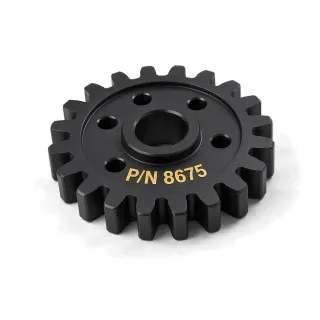 Hot StampingHot stamping uses a heated die to transfer pigmented or metallic foil onto a part.CorrosionHardnessCost$$
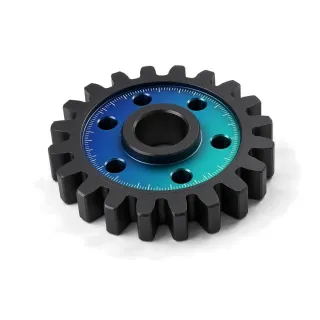 In-Mold Decoration (IMD)In-mold decoration places a formed, printed decorative film in an injection mold so the graphic becomes part of the molded surface.CorrosionHardnessCost$$$$
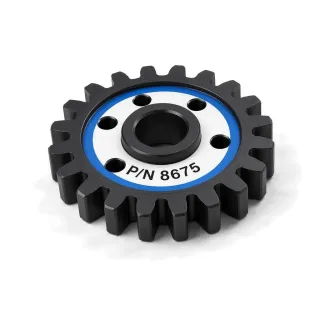 In-Mold Labeling (IML)In-mold labeling places a preprinted label in the mold before plastic is injected.CorrosionHardnessCost$$$
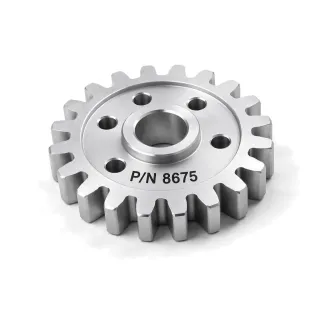 Ink StampingInk stamping transfers a fixed image from a rubber, polymer, or metal stamp onto a part.CorrosionHardnessCost$
 Pad PrintingPad printing transfers ink from an etched plate to a part with a flexible silicone pad.CorrosionHardnessCost$