
Vibro Engraving
Marking & decoration · Mechanical
Vibro engraving uses a rapidly oscillating point to hand-scribe letters, numbers, and lines into a surface.
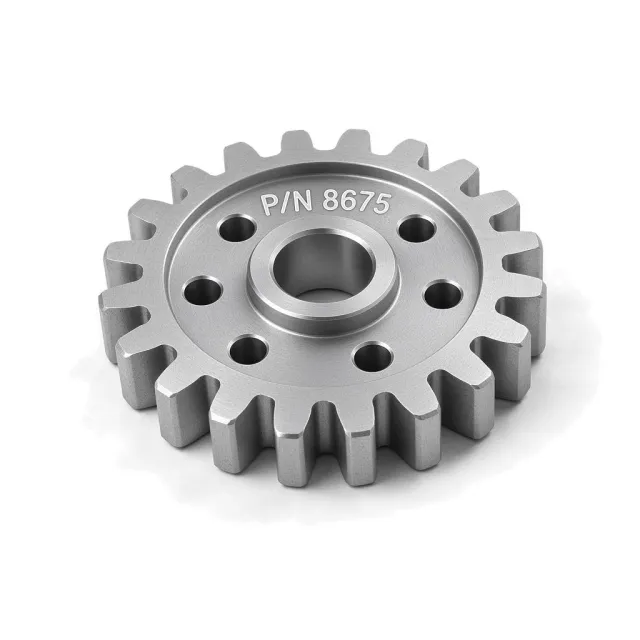
What is Vibro engraving?
It is a low-tooling method for repair, maintenance, low-volume serials, and quick shop identification.
How it works
An electric or pneumatic handpiece oscillates a carbide point while the operator guides it over the workpiece. Repeated impacts scratch and displace a narrow groove rather than cutting a controlled chip like CNC engraving. Tip shape, amplitude, hand speed, material hardness, and operator pressure determine depth and line quality. Templates can improve character consistency, but the process remains substantially operator-dependent.
Why specify it
- Very low setup for one-off identification
- Portable for large or assembled equipment
- Creates a 20–200 µm permanent scribed groove
- No ink, stencil, or artwork tooling required
Where it falls short
- Handwritten appearance and variable depth
- Poor choice for machine-readable codes
- Can slip and damage adjacent cosmetic surfaces
- Not suitable for brittle materials or precision branding
Vibro engraving at a glance
Vibro engraving is a middle-of-the-range finish; its best score is cosmetic quality (15 of 100), at a budget cost. It adds little corrosion protection or lubricity. Surface hardness is not rated: the finish leaves the part's own surface.
Each score is 0–100 against every finish in this catalog. Corrosion comes from salt-spray life (ASTM B117, log scale) and hardness from the finish layer's Vickers or pencil hardness; cosmetic, lubricity and cost are FabDigit's engineering assessment. Economy on the radar is the inverse of cost.
Vibro engraving key numbers
Typical values from the governing specifications and shop practice; bars are this finish against the highest value among marking & decoration finishes.
- Thickness
- 20–200 µm irregular scribed depth; operator technique causes local variation.
- Electrical
- Unchanged
- Colours
- substrate colour
- Appearance
- Hand-scribed vibrating line with visible irregularity in width and depth.
Specifications for Vibro engraving
The documents a drawing cites to define this finish, with the Type / Class rows that apply. Each links to a page explaining the standard, and US Government documents are free to download there.
Test and related methods: MIL-STD-130 (Identification Marking of U.S. Military Property).
Drawing call-out
VIBRO-ENGRAVE REPAIR SERIAL NO. PER MIL-STD-130, 3 MM CHARACTER HEIGHT, 0.05–0.15 MM DEEP, LOCATION AS SHOWNWhich materials take Vibro engraving?
Verdict per material family, with the grades that behave differently. Each family links to its datasheets in the material library.
| Material family | Verdict | Notes |
|---|---|---|
| Yes | Easy to scribe but cosmetic damage is obvious. | |
| Yes | Soft brass scribes easily. | |
| Yes | Soft copper scribes easily; depth varies with operator pressure. | |
| Yes | Possible with suitable tip and pressure. | |
| Yes | Common for tools and maintenance marks. | |
| With care | Possible; collect fines and avoid deep gouges on thin walls. | |
| With care | Hard titanium gives a shallow, low-contrast scribe. | |
| With care | Soft zinc scribes easily; depth varies with operator pressure. | |
| Limited | Rigid polymers may scribe, but melting, tearing, and recovery vary. | |
| No | Vibro scribing chips ceramics. | |
| No | Vibro scribing fractures glass. |
How Vibro engraving is applied, and what it does to the part
- 1Clean marking area
- 2Lay out or stencil characters
- 3Support part
- 4Scribe with oscillating point
- 5Remove burrs if permitted
- 6Verify content
| Dimensions | The stylus creates a local 20–200 µm groove and displaced lip. |
|---|---|
| Masking | Rarely needed. Use a guard or template to protect adjacent finished surfaces from a slipping stylus. |
| Electrical | Unchanged |
| Appearance | Hand-scribed vibrating line with visible irregularity in width and depth. |
| Added lead time | 1–2 working days on top of the bare part |
Design rules for Vibro engraving
What to decide on the drawing before the part goes to the finisher.
- Reserve a flat marking field with a character baseline.Operator guidance controls legibility.
- Keep the mark away from sealing, bearing, and fatigue-critical surfaces.The uncontrolled groove can raise burrs and stress.
- Do not specify vibro engraving for Data Matrix or barcodes.Manual line geometry cannot support repeatable grading.
- Use a template where character uniformity matters.Freehand marks vary by operator.
Vibro engraving versus the alternatives
Finishes engineers weigh against Vibro engraving, and when each wins.
| Finish | Corrosion | Hardness | Cosmetic | Cost | Thickness | Choose it when |
|---|---|---|---|---|---|---|
Vibro engraving this page | 0 | — | 15 | $ | 20–200 µm | — |
| 0 | — | 58 | $$ | 50–500 µm | for controlled cosmetic grooves | |
| 0 | — | 70 | $ | 0–50 µm | for production-quality variable data |
The radar overlays Vibro engraving with Mechanical Engraving, its most common alternative — chosen for controlled cosmetic grooves. Scores in the table are 0–100 across every finish in the catalog.
Cost, lead time and compliance
Relative cost
Vibro Engraving is a budget-cost finish ($): cheaper than about 96 % of the finishes FabDigit quotes.
Finishing is priced per part with a lot minimum, from FabDigit's own China-side rates. The exact figure appears on the instant quote once the part is uploaded.
Lead time and compliance
| Added lead time | 1–2 working days |
|---|---|
| RoHS | Compliant |
| Notes | The operation adds no material; control dust if it breaks a hazardous coating. |
What Vibro engraving is used for
- Maintenance identification
- Repair serials
- Tool ownership marks
- Large assembled equipment
- Low-volume prototypes
Vibro engraving — frequently asked
Vibro engraving vs mechanical engraving: what is the difference?
Vibro engraving is handheld and creates an irregular 20–200 µm scribed groove with very low setup. CNC mechanical engraving controls path and depth and typically produces a more consistent 50–500 µm cut.
Is vibro engraving permanent?
Yes, the mark physically displaces the substrate and survives loss of ink or surface dirt. Heavy grinding or polishing can remove the shallow 20–200 µm groove.
Can vibro engraving mark hardened steel?
It may mark moderately hard surfaces with the correct carbide tip, but line quality and tip life fall as hardness rises. Laser or electrochemical marking is preferable when impact damage or tool wear is a concern.
Can vibro engraving make a Data Matrix code?
No, manual scribing does not create controlled cells suitable for ISO 15415 grading. Use laser or automated dot peen for a direct-part Data Matrix.
Does vibro engraving damage corrosion coatings?
Yes, it cuts through paint, plating, or anodize in the groove. If exposed substrate matters, specify touch-up, sealing, or a different marking method.
Other marking & decoration finishes
 Chemical EtchingChemical etching uses a patterned resist and material-specific etchant to recess graphics or create a frosted contrast.CorrosionHardnessCost$$$
 Dot Peen MarkingDot peen marking uses a controlled stylus to build characters and Data Matrix symbols from small permanent indentations.CorrosionHardnessCost$
 Electrochemical EtchingElectrochemical etching makes a localized permanent mark on an electrically conductive part through a stencil and electrolyte.CorrosionHardnessCost$$
 Embossing and DebossingEmbossing raises artwork above a surface, while debossing recesses it through forming dies or molded tool geometry.CorrosionHardnessCost$$$
 Hot StampingHot stamping uses a heated die to transfer pigmented or metallic foil onto a part.CorrosionHardnessCost$$
 In-Mold Decoration (IMD)In-mold decoration places a formed, printed decorative film in an injection mold so the graphic becomes part of the molded surface.CorrosionHardnessCost$$$$
 In-Mold Labeling (IML)In-mold labeling places a preprinted label in the mold before plastic is injected.CorrosionHardnessCost$$$
 Ink StampingInk stamping transfers a fixed image from a rubber, polymer, or metal stamp onto a part.CorrosionHardnessCost$