
Honing
Mechanical finishing · Mechanical
Honing precision-finishes bores with expanding abrasive stones and a controlled cross-hatch.
Reference page — Honed is not in the instant-quote configurator. Upload the part, name the finish in the notes, and an engineer quotes it with the part.
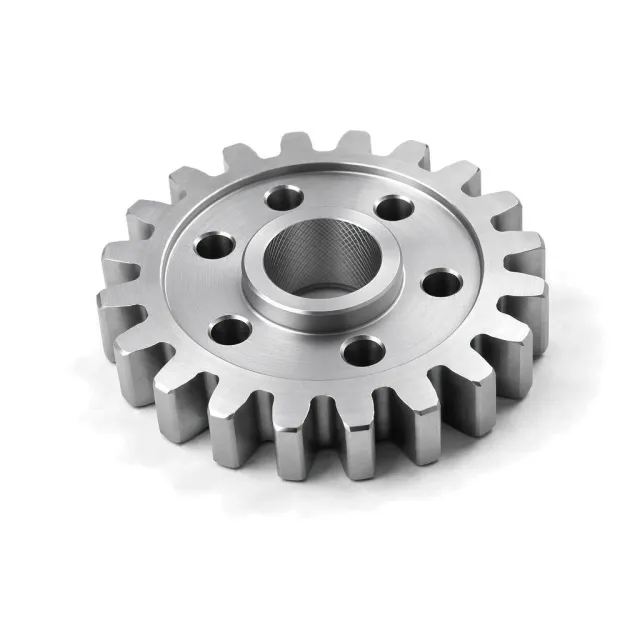
What is Honed?
It corrects small errors in size, roundness, straightness, and texture while creating oil-retaining valleys.
How it works
A honing head rotates while reciprocating through the bore, pressing bonded abrasive stones, commonly about 150–600 grit across rough and finish stages, against the wall. The combined motions create a cross-hatch whose angle is set by rotation-to-stroke speed. Rough honing corrects geometry and finish or plateau honing reduces peaks. Typical final Ra is 0.1–0.8 µm (4–32 µin), although cylinder specifications often add Rz and material-ratio parameters under ASME B46.1 or ISO 21920.
Why specify it
- Produces Ra about 0.1–0.8 µm (4–32 µin)
- Corrects bore roundness and straightness
- Creates oil-retaining cross-hatch
- Controls final bore size
Where it falls short
- Primarily suited to bores
- Cannot correct large location error
- Blind bores need tool overtravel planning
- A single Ra value does not define plateau texture
Honed at a glance
Honed is a middle-of-the-range finish; its best score is lubricity (45 of 100), at a premium cost. It adds little corrosion protection. Surface hardness is not rated: the finish leaves the part's own surface.
Each score is 0–100 against every finish in this catalog. Corrosion comes from salt-spray life (ASTM B117, log scale) and hardness from the finish layer's Vickers or pencil hardness; cosmetic, lubricity and cost are FabDigit's engineering assessment. Economy on the radar is the inverse of cost.
Honed key numbers
Typical values from the governing specifications and shop practice; bars are this finish against the highest value among mechanical finishing finishes.
- Thickness
- No coating; typical final Ra 0.1–0.8 µm (4–32 µin).
- Electrical
- Unchanged
- Appearance
- Fine intersecting helical cross-hatch on bore walls.
Specifications for Honed
The documents a drawing cites to define this finish, with the Type / Class rows that apply. Each links to a page explaining the standard.
Drawing call-out
HONE BORE Ø40.000 +0.010/0 mm, Ra 0.2–0.4 µm, 40–50° CROSS-HATCH; CLEAN UNTIL WHITE-CLOTH WIPE IS FREE OF ABRASIVEWhich materials take Honed?
Verdict per material family, with the grades that behave differently. Each family links to its datasheets in the material library.
| Material family | Verdict | Notes |
|---|---|---|
| Yes | Requires suitable stones and anti-loading process control. | |
| Yes | Common for cylinders, gears, and bushings. | |
| With care | Soft aluminum and plated aluminum bores need substrate-specific abrasives. | |
| With care | Soft brass smears; plateau texture is harder to hold than on steel. | |
| With care | Soft copper smears and can load the stone; use light pressure and frequent dressing. | |
| With care | Possible with non-sparking media and fire-safe dust control. | |
| With care | Difficult cutting and loading require specialist stones. | |
| With care | Possible on titanium bores with low heat and contamination-controlled stones. | |
| With care | Soft die-cast zinc cuts quickly and can embed media. | |
| No | Honing is a metal bore-finishing process, not a plastic finish. |
How Honed is applied, and what it does to the part
- 1Pre-bore with honing allowance
- 2Select and dress stones
- 3Rough hone
- 4Finish or plateau hone
- 5Clean and inspect bore geometry and texture
| Dimensions | Honing enlarges the bore by removing a planned radial allowance; specify final diameter, cylindricity or roundness, straightness, cross-hatch, and roughness. |
|---|---|
| Build-up per side | 0 µm — No buildup; a controlled radial machining allowance is removed. |
| Masking | Rarely needed. Protect cross-holes and shoulders from stone snagging; clean abrasive thoroughly. |
| Electrical | Unchanged |
| Appearance | Fine intersecting helical cross-hatch on bore walls. |
| Added lead time | 2–7 working days on top of the bare part |
Design rules for Honed
What to decide on the drawing before the part goes to the finisher.
- Provide stone overtravel.Uniform geometry requires travel beyond the working length.
- Specify cross-hatch angle.It controls lubricant distribution.
- Add plateau parameters when functional.Ra alone cannot distinguish peaks from oil valleys.
- Require abrasive cleaning.Residual grit accelerates wear.
Honed versus the alternatives
Finishes engineers weigh against Honed, and when each wins.
| Finish | Corrosion | Hardness | Cosmetic | Cost | Thickness | Choose it when |
|---|---|---|---|---|---|---|
Honed this page | 0 | — | 25 | $$$ | 0 µm | — |
| 0 | — | 35 | $$$ | 0 µm | when an external flat surface is being finished | |
| 5 | — | 65 | $$$$ | 0 µm | when an external bearing journal needs isotropic low-friction texture |
The radar overlays Honed with Surface Grinding, its most common alternative — chosen when an external flat surface is being finished. Scores in the table are 0–100 across every finish in the catalog.
Cost, lead time and compliance
Relative cost
Honing is a premium-cost finish ($$$): more expensive than about 63 % of the finishes FabDigit quotes.
Finishing is priced per part with a lot minimum, from FabDigit's own China-side rates. The exact figure appears on the instant quote once the part is uploaded.
Lead time and compliance
| Added lead time | 2–7 working days |
|---|---|
| RoHS | Compliant |
| Notes | Capture honing oil, abrasive, and metal fines; verify post-process cleanliness. |
What Honed is used for
- Hydraulic cylinders
- Engine bores
- Valve guides
- Precision bushings
Honed — frequently asked
what Ra does honing produce
Finish honing commonly produces Ra 0.1–0.8 µm (4–32 µin). Plateau-honed cylinders also need Rz or material-ratio parameters because Ra alone is incomplete.
why does honing leave a cross hatch
Simultaneous rotation and reciprocation create intersecting grooves. A typical drawing may specify 40–50° to support oil retention and ring or seal behavior.
does honing increase bore size
Yes. It removes a planned radial allowance and enlarges the bore to final size while improving geometry.
honing vs boring
Boring establishes bore location and removes substantial stock. Honing removes a smaller allowance to improve final diameter, roundness, straightness, and texture.
what is plateau honing
Plateau honing removes the highest cross-hatch peaks while retaining deeper oil valleys. It can reduce break-in wear without eliminating lubricant storage.
Other mechanical finishing finishes
 Aluminum Bright DipBright dipping is a chemical polishing pretreatment that levels microscopic peaks on aluminum to produce a reflective surface before anodizing.CorrosionHardnessCost$$
 As MachinedAs machined is the baseline CNC condition with no secondary cosmetic finishing.CorrosionHardnessCost$
 Bead BlastingBead blasting propels spherical media at a surface to make a uniform satin or matte finish.CorrosionHardnessCost$
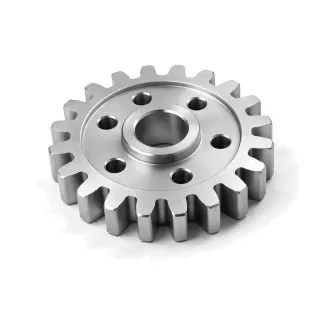 Brushed FinishBrushing creates a directional grain with abrasive belts, wheels, or pads.CorrosionHardnessCost$$
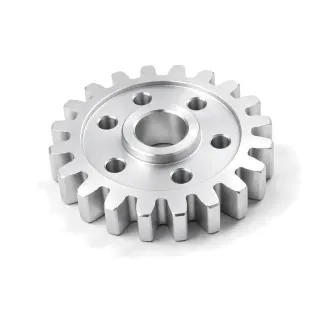 DeburringDeburring removes loose or sharp burrs left by cutting, punching, molding, or casting.CorrosionHardnessCost$
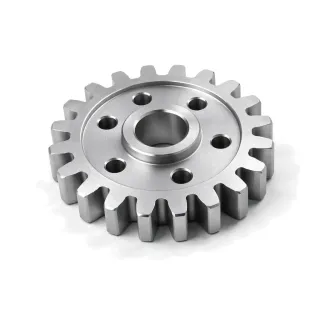 Edge RoundingEdge rounding deliberately replaces a sharp edge with a controlled radius or broad edge break.CorrosionHardnessCost$
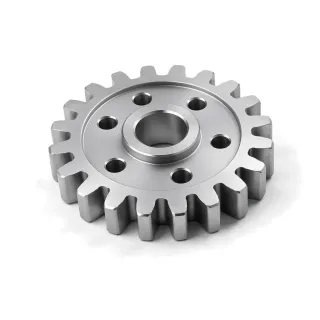 LappingLapping is a precision loose-abrasive process used to improve flatness, parallelism, and very fine roughness.CorrosionHardnessCost$$$$
 Mirror PolishingMirror polishing removes visible directional scratches and buffs the surface to high specular reflectance.CorrosionHardnessCost$$$$