
Lapping
Mechanical finishing · Mechanical
Lapping is a precision loose-abrasive process used to improve flatness, parallelism, and very fine roughness.
Reference page — Lapped is not in the instant-quote configurator. Upload the part, name the finish in the notes, and an engineer quotes it with the part.
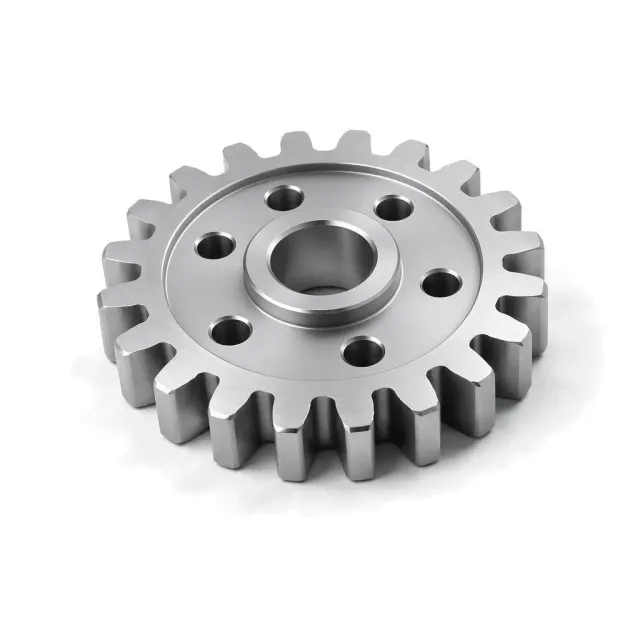
What is Lapped?
It is common on seal faces, gauges, valves, ceramics, and optical or metrology components.
How it works
The workpiece moves against a dimensionally controlled lap charged with loose diamond, alumina, or silicon-carbide slurry, typically specified by micrometre particle size rather than grit alone. Abrasive particles roll and slide between surfaces, removing microscopic high spots rather than following the prior tool path. Production lapping commonly reaches Ra 0.01–0.10 µm (0.4–4 µin), including the requested sub-0.1 µm class, while flatness depends on lap conditioning, geometry, and thermal control. Measure Ra under ASME B46.1 or ISO 21920.
Why specify it
- Achieves Ra 0.01–0.10 µm (0.4–4 µin)
- Improves flatness and parallelism
- Produces high bearing area
- Finishes hard metals and ceramics
Where it falls short
- Slow and costly
- Can embed abrasive in soft materials
- Rounds unsupported edges
- Requires rigorous cleaning
Lapped at a glance
Lapped is strongest on cosmetic quality (70 of 100), at a high cost. It adds little corrosion protection. Surface hardness is not rated: the finish leaves the part's own surface.
Each score is 0–100 against every finish in this catalog. Corrosion comes from salt-spray life (ASTM B117, log scale) and hardness from the finish layer's Vickers or pencil hardness; cosmetic, lubricity and cost are FabDigit's engineering assessment. Economy on the radar is the inverse of cost.
Lapped key numbers
Typical values from the governing specifications and shop practice; bars are this finish against the highest value among mechanical finishing finishes.
- Thickness
- No coating; typical resulting Ra 0.01–0.10 µm (0.4–4 µin).
- Electrical
- Unchanged
- Appearance
- Very smooth matte-to-reflective surface with nondirectional fine marks.
Specifications for Lapped
The documents a drawing cites to define this finish, with the Type / Class rows that apply. Each links to a page explaining the standard.
Drawing call-out
LAP DATUM A TO FLATNESS 0.002 mm AND Ra 0.05 µm MAX; FINAL THICKNESS 8.000 ±0.003 mm; NO EMBEDDED ABRASIVEWhich materials take Lapped?
Verdict per material family, with the grades that behave differently. Each family links to its datasheets in the material library.
| Material family | Verdict | Notes |
|---|---|---|
| Yes | Diamond lapping is common for hard technical ceramics. | |
| Yes | Common for seal and hygienic components. | |
| Yes | Common for gauges, valves, and seals. | |
| With care | Soft aluminum embeds abrasive; use a dedicated plate and rigorous cleaning. | |
| With care | Soft brass embeds abrasive and rounds edges quickly. | |
| With care | Soft copper embeds abrasive; use a dedicated plate and thorough cleaning. | |
| With care | Possible with non-sparking media and fire-safe dust control. | |
| With care | Possible; control galling and abrasive embedment. | |
| With care | Soft die-cast zinc cuts quickly and can embed media. | |
| No | Abrasive lapping is for metals and ceramics, not polymers. |
How Lapped is applied, and what it does to the part
- 1Pre-grind with allowance
- 2Condition lap
- 3Charge with selected loose abrasive
- 4Lap under controlled pressure and motion
- 5Clean and inspect flatness thickness and Ra
| Dimensions | Lapping removes small but measurable stock and can hold precise thickness, flatness, and parallelism only when each is specified and inspected. |
|---|---|
| Build-up per side | 0 µm — No buildup; micrometre-scale stock is removed and allowance must be planned. |
| Masking | Rarely needed. Only designated faces contact the lap; protect holes and crevices from slurry ingress. |
| Electrical | Unchanged |
| Appearance | Very smooth matte-to-reflective surface with nondirectional fine marks. |
| Added lead time | 3–10 working days on top of the bare part |
Design rules for Lapped
What to decide on the drawing before the part goes to the finisher.
- Specify flatness and Ra independently.Neither guarantees the other.
- Provide lapping allowance.The process must clean up the pre-ground face.
- Control edge condition.Unsupported edges can roll.
- State cleaning acceptance.Loose abrasive may remain in pores and holes.
Lapped versus the alternatives
Finishes engineers weigh against Lapped, and when each wins.
| Finish | Corrosion | Hardness | Cosmetic | Cost | Thickness | Choose it when |
|---|---|---|---|---|---|---|
Lapped this page | 0 | — | 70 | $$$$ | 0 µm | — |
| 0 | — | 35 | $$$ | 0 µm | when faster stock removal and Ra above 0.2 µm are acceptable | |
| 5 | — | 65 | $$$$ | 0 µm | when a low-friction bearing surface is primary |
The radar overlays Lapped with Surface Grinding, its most common alternative — chosen when faster stock removal and Ra above 0.2 µm are acceptable. Scores in the table are 0–100 across every finish in the catalog.
Cost, lead time and compliance
Relative cost
Lapping is a high-cost finish ($$$$): more expensive than about 75 % of the finishes FabDigit quotes.
Finishing is priced per part with a lot minimum, from FabDigit's own China-side rates. The exact figure appears on the instant quote once the part is uploaded.
Lead time and compliance
| Added lead time | 3–10 working days |
|---|---|
| RoHS | Compliant |
| Notes | Spent slurry contains fine abrasive and substrate particles and requires controlled collection. |
What Lapped is used for
- Mechanical seal faces
- Valve plates
- Gauge surfaces
- Ceramic seats
Lapped — frequently asked
what Ra can lapping achieve
Production lapping commonly achieves Ra 0.01–0.10 µm (0.4–4 µin). Material, abrasive size, lap condition, and cleaning determine the actual result.
lapping vs grinding
Grinding uses a bonded wheel for faster removal and commonly gives Ra 0.2–1.6 µm. Lapping uses loose abrasive for finer flatness and Ra below 0.1 µm.
does lapping improve flatness
Yes, when the lap is correctly conditioned and the part is thermally stable. Flatness must still be stated as a separate tolerance.
what abrasive is used for lapping
Diamond, aluminum oxide, and silicon carbide are common. Abrasive type and size are selected for hardness, removal rate, and embedment risk.
does lapping change dimensions
Yes. It removes micrometre-scale stock and can control final thickness precisely, so allowance and final thickness must be on the drawing.
Other mechanical finishing finishes
 Aluminum Bright DipBright dipping is a chemical polishing pretreatment that levels microscopic peaks on aluminum to produce a reflective surface before anodizing.CorrosionHardnessCost$$
 As MachinedAs machined is the baseline CNC condition with no secondary cosmetic finishing.CorrosionHardnessCost$
 Bead BlastingBead blasting propels spherical media at a surface to make a uniform satin or matte finish.CorrosionHardnessCost$
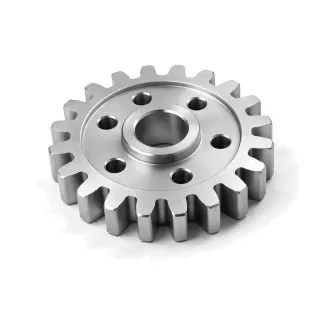 Brushed FinishBrushing creates a directional grain with abrasive belts, wheels, or pads.CorrosionHardnessCost$$
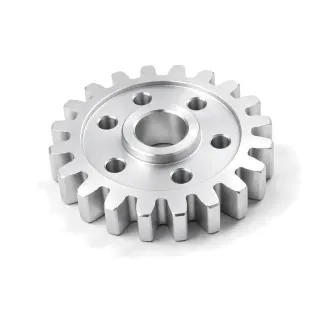 DeburringDeburring removes loose or sharp burrs left by cutting, punching, molding, or casting.CorrosionHardnessCost$
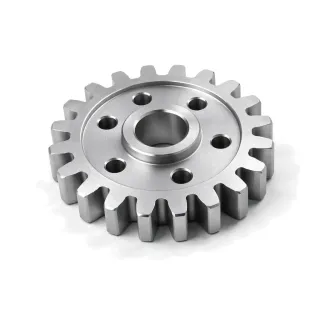 Edge RoundingEdge rounding deliberately replaces a sharp edge with a controlled radius or broad edge break.CorrosionHardnessCost$
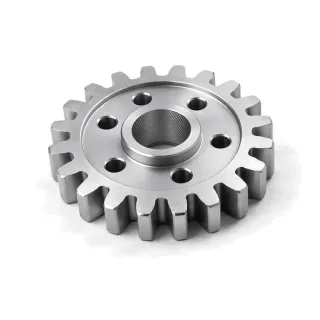 HoningHoning precision-finishes bores with expanding abrasive stones and a controlled cross-hatch.CorrosionHardnessCost$$$
 Mirror PolishingMirror polishing removes visible directional scratches and buffs the surface to high specular reflectance.CorrosionHardnessCost$$$$