
Aluminum Bright Dip
Mechanical finishing · Dip / immersion
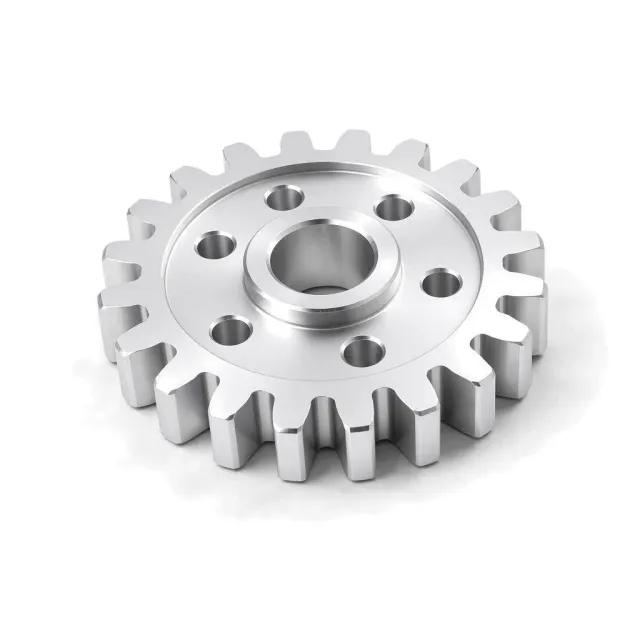
Bright dipping is a chemical polishing pretreatment that levels microscopic peaks on aluminum to produce a reflective surface before anodizing.
Reference page — Bright dip is not in the instant-quote configurator. Upload the part, name the finish in the notes, and an engineer quotes it with the part.
What is Bright dip?
It is used on decorative trim, reflectors, and hardware where mechanical polishing would be slow or inconsistent.
How it works
Clean aluminum is immersed briefly in a heated chemical-brightening bath, traditionally based on phosphoric and nitric acids. Preferential dissolution of microscopic peaks lowers short-wavelength roughness and increases specular reflectance while preserving broad waviness and deep defects. The part is rinsed and desmutted, then normally anodized promptly to protect the reactive bright surface. Bright dip deposits no coating and removes a process-dependent amount of aluminum, so tight dimensions require a qualified sample cycle.
Why specify it
- Brightens many parts simultaneously by immersion
- Improves reflectance before clear anodize
- Reaches shapes that are difficult to mechanically buff
- Deposits 0 µm because it is a material-removal pretreatment
Where it falls short
- Does not remove deep scratches, pits, or waviness
- High-copper and high-silicon alloys can brighten poorly
- Removes substrate by an alloy-dependent amount
- Usually needs clear anodize to preserve appearance
Bright dip at a glance
Bright dip is strongest on cosmetic quality (88 of 100), at a standard cost. It adds little corrosion protection or lubricity. Surface hardness is not rated: the finish leaves the part's own surface.
Each score is 0–100 against every finish in this catalog. Corrosion comes from salt-spray life (ASTM B117, log scale) and hardness from the finish layer's Vickers or pencil hardness; cosmetic, lubricity and cost are FabDigit's engineering assessment. Economy on the radar is the inverse of cost.
Bright dip key numbers
Typical values from the governing specifications and shop practice; bars are this finish against the highest value among mechanical finishing finishes.
- Thickness
- 0 µm (0 mil) — No coating is deposited; material removal must be established on representative coupons.
- Electrical
- Unchanged
- Appearance
- Bright, specular aluminum; final gloss depends on alloy, forming texture, and subsequent clear anodize.
Specifications for Bright dip
The documents a drawing cites to define this finish, with the Type / Class rows that apply. Each links to a page explaining the standard.
Drawing call-out
CHEMICALLY BRIGHT DIP ALUMINUM TO MATCH APPROVED LIMIT SAMPLE FD-BD-01, THEN CLEAR ANODIZE PER MIL-A-8625 TYPE II CLASS 1, 0.0003–0.0005 INWhich materials take Bright dip?
Verdict per material family, with the grades that behave differently. Each family links to its datasheets in the material library.
| Material family | Verdict | Notes |
|---|---|---|
| Yes | Results are strongly alloy-dependent.
| |
| No | Brass uses different bright-dip chemistries. | |
| No | Copper alloys use different bright-dip chemistries. | |
| No | Not an aluminum bright-dip process. | |
| No | Chemical bright dip is for aluminum, not plastics. | |
| No | Use electropolishing or mechanical polish, not aluminum bright dip. | |
| No | Not an aluminum bright-dip chemistry; use electropolish or mechanical polish. | |
| No | Not applicable; titanium uses different chemical or mechanical finishes. | |
| No | Not an aluminum bright-dip process. |
How Bright dip is applied, and what it does to the part
- 1Clean / degrease
- 2Rinse
- 3Bright dip
- 4Desmut
- 5Clear anodize promptly
| Dimensions | No film is added, but aluminum is removed; qualify stock loss before assigning final dimensions. |
|---|---|
| Build-up per side | removes 2–20 µm — Chemical bright dip removes metal; typical stock loss is about 2–20 µm per side and is alloy-, time-, and bath-dependent. |
| Masking | Usually needed. Mask precision dimensions, etched legends, dissimilar inserts, and surfaces where chemical polishing is not allowed. |
| Electrical | Unchanged |
| Appearance | Bright, specular aluminum; final gloss depends on alloy, forming texture, and subsequent clear anodize. |
| Added lead time | 3–6 working days on top of the bare part |
Design rules for Bright dip
What to decide on the drawing before the part goes to the finisher.
- Approve reflectance or physical limit samples.The word bright does not define measurable appearance.
- Qualify stock loss on the production alloy.Chemical removal changes with alloy and bath cycle.
- Remove scratches mechanically before bright dip.Chemical leveling cannot erase deep defects.
- Schedule clear anodize immediately afterward.Fresh bright aluminum oxidizes and stains readily.
Bright dip versus the alternatives
Finishes engineers weigh against Bright dip, and when each wins.
| Finish | Corrosion | Hardness | Cosmetic | Cost | Thickness | Choose it when |
|---|---|---|---|---|---|---|
Bright dip this page | 2 | — | 88 | $$ | 0 µm | — |
| 45 | — | 82 | $$$ | removes 5–25 µm | when controlled electrochemical smoothing is appropriate | |
| 71 | 54 | 88 | $$ | 5–25 µm | when corrosion protection is required without chemical brightening |
The radar overlays Bright dip with Electropolishing, its most common alternative — chosen when controlled electrochemical smoothing is appropriate. Scores in the table are 0–100 across every finish in the catalog.
Cost, lead time and compliance
Relative cost
Aluminum Bright Dip is a standard-cost finish ($$): cheaper than about 64 % of the finishes FabDigit quotes.
Finishing is priced per part with a lot minimum, from FabDigit's own China-side rates. The exact figure appears on the instant quote once the part is uploaded.
Lead time and compliance
| Added lead time | 3–6 working days |
|---|---|
| RoHS | Compliant |
| Notes | The finished aluminum can be compliant; nitric/phosphoric bath emissions and wastewater require processor controls. |
What Bright dip is used for
- Lighting reflectors
- Decorative aluminum trim
- Consumer hardware
- Instrument bezels
Bright dip — frequently asked
What is bright dipping aluminum?
It is chemical polishing that preferentially dissolves microscopic peaks and increases reflectance. It is normally followed by clear anodizing.
Does bright dip add thickness?
No; it deposits 0 µm and removes aluminum. Stock loss must be established on the production alloy and cycle before final tolerances are released.
Can bright dip remove machining marks?
It can soften very fine texture but will not remove deep tool marks, pits, or waviness. Cosmetic surfaces usually need suitable machining or mechanical polish first.
Which aluminum alloys bright dip well?
High-purity and selected wrought alloys generally brighten best. High copper, silicon, or intermetallic content can cause haze, smut, or uneven reflectance.
Does bright-dipped aluminum need anodizing?
Usually yes, because the freshly brightened aluminum is reactive and easy to stain. A thin clear Type II anodize preserves the appearance while adding corrosion resistance.
Other mechanical finishing finishes
 As MachinedAs machined is the baseline CNC condition with no secondary cosmetic finishing.CorrosionHardnessCost$
 Bead BlastingBead blasting propels spherical media at a surface to make a uniform satin or matte finish.CorrosionHardnessCost$
 Brushed FinishBrushing creates a directional grain with abrasive belts, wheels, or pads.CorrosionHardnessCost$$
 DeburringDeburring removes loose or sharp burrs left by cutting, punching, molding, or casting.CorrosionHardnessCost$
 Edge RoundingEdge rounding deliberately replaces a sharp edge with a controlled radius or broad edge break.CorrosionHardnessCost$
 HoningHoning precision-finishes bores with expanding abrasive stones and a controlled cross-hatch.CorrosionHardnessCost$$$
 LappingLapping is a precision loose-abrasive process used to improve flatness, parallelism, and very fine roughness.CorrosionHardnessCost$$$$
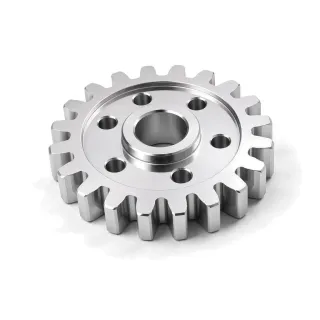 Mirror PolishingMirror polishing removes visible directional scratches and buffs the surface to high specular reflectance.CorrosionHardnessCost$$$$