
Bead Blasting
Mechanical finishing · Mechanical
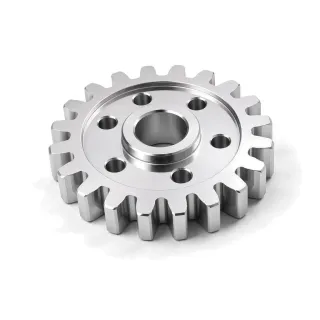
Bead blasting propels spherical media at a surface to make a uniform satin or matte finish.
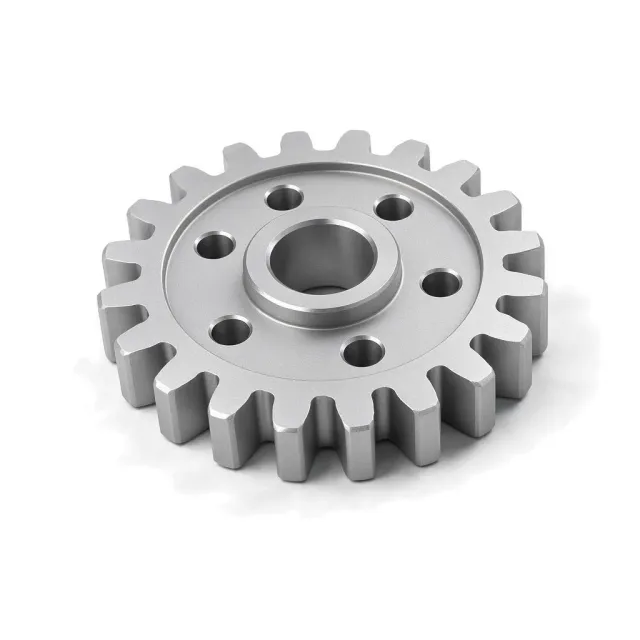
What is Bead blast?
It hides machining marks on aluminum and evens the appearance of metal and polymer additive parts.
How it works
Compressed air accelerates glass or ceramic beads toward the workpiece. Repeated shallow impacts peen and visually homogenize the surface without intentionally cutting it like angular grit. Glass bead in the 80–120 mesh range is common for cosmetic aluminum. Pressure, stand-off, angle, dwell, bead size, and prior roughness control the result; ASME B46.1 or ISO 21920 measurement is needed when Ra is a drawing requirement.
Why specify it
- Hides light tool marks on aluminum
- Produces a repeatable satin appearance
- Removes essentially no bulk material in a controlled cosmetic pass
- Prepares a uniform surface before anodizing
Where it falls short
- Does not remove deep scratches or pits
- Can round sharp edges and soften laser marks
- May embed media in soft metals if media and pressure are wrong
- Raises rather than lowers some initially smooth surfaces
Bead blast at a glance
Bead blast is a middle-of-the-range finish; its best score is cosmetic quality (65 of 100), at a budget cost. It adds little corrosion protection or lubricity. Surface hardness is not rated: the finish leaves the part's own surface.
Each score is 0–100 against every finish in this catalog. Corrosion comes from salt-spray life (ASTM B117, log scale) and hardness from the finish layer's Vickers or pencil hardness; cosmetic, lubricity and cost are FabDigit's engineering assessment. Economy on the radar is the inverse of cost.
Bead blast key numbers
Typical values from the governing specifications and shop practice; bars are this finish against the highest value among mechanical finishing finishes.
- Thickness
- No coating; resulting Ra is typically 1.6–6.3 µm (63–250 µin).
- Electrical
- Unchanged
- Appearance
- Uniform satin to matte with fine diffuse texture.
Specifications for Bead blast
The documents a drawing cites to define this finish, with the Type / Class rows that apply. Each links to a page explaining the standard.
Drawing call-out
BEAD BLAST ALL OVER, 120 MESH GLASS BEAD, Ra 1.6 µm MAX, MASK DATUM A AND ALL THREADED HOLESWhich materials take Bead blast?
Verdict per material family, with the grades that behave differently. Each family links to its datasheets in the material library.
| Material family | Verdict | Notes |
|---|---|---|
| Yes | Commonly used to hide machining marks and prepare a satin anodized appearance.
| |
| Yes | Suitable; protect against smear and media embedment. | |
| Yes | Suitable; expect faster cutting and easier smearing than steel. | |
| Yes | Common to remove sintered powder and even metal AM texture. | |
| Yes | Standard cosmetic clean-up for powder-bed nylon.
| |
| Yes | Standard cosmetic clean-up for powder-bed nylon. | |
| Yes | Produces a uniform satin surface when stainless-dedicated media is used.
| |
| Yes | Suitable with contamination-controlled tooling or media. | |
| With care | Can hide layer lines but also rounds edges and opens porosity. | |
| With care | Possible with non-sparking media and fire-safe dust control. | |
| With care | Light glass bead can frost plastics; aggressive blast erodes edges. | |
| With care | Light blast can even gloss; heavy blast frosts and can pit resin. | |
| With care | Produces a satin blast but carbon steel can flash-rust unless coated or oiled promptly. | |
| With care | Soft die-cast zinc cuts quickly and can embed media. |
How Bead blast is applied, and what it does to the part
- 1Degrease
- 2Mask critical areas
- 3Blast with 80–120 mesh glass bead
- 4Clean with filtered air and wash
- 5Inspect appearance and Ra
| Dimensions | Bulk dimensions normally remain unchanged, but repeated impact can round exposed edges and alter precision sealing or optical surfaces. |
|---|---|
| Build-up per side | 0 µm — No intentional buildup or measurable bulk removal; edge rounding is possible. |
| Masking | Usually needed. Mask sealing faces, bearing fits, threads, datums, labels, and surfaces whose roughness must remain unchanged. |
| Electrical | Unchanged |
| Appearance | Uniform satin to matte with fine diffuse texture. |
| Added lead time | 1–3 working days on top of the bare part |
Design rules for Bead blast
What to decide on the drawing before the part goes to the finisher.
- State bead material and mesh.Glass bead 80–120 mesh gives a different texture from ceramic bead.
- Specify Ra separately from appearance.Visual uniformity does not guarantee profilometer roughness.
- Mask functional datums and fits.Impact can change texture and edge condition.
- Approve a limit sample for cosmetic work.Pressure, dwell, and alloy change gloss.
Bead blast versus the alternatives
Finishes engineers weigh against Bead blast, and when each wins.
| Finish | Corrosion | Hardness | Cosmetic | Cost | Thickness | Choose it when |
|---|---|---|---|---|---|---|
Bead blast this page | 5 | — | 65 | $ | 0 µm | — |
| 0 | — | 35 | $ | 0 µm | when aggressive scale removal or coating key is required | |
| 5 | — | 70 | $$ | 0 µm | when a finer slurry-blasted satin surface is preferred |
The radar overlays Bead blast with Sand Blasting, its most common alternative — chosen when aggressive scale removal or coating key is required. Scores in the table are 0–100 across every finish in the catalog.
Cost, lead time and compliance
Relative cost
Bead Blasting is a budget-cost finish ($): cheaper than about 85 % of the finishes FabDigit quotes.
Finishing is priced per part with a lot minimum, from FabDigit's own China-side rates cross-checked against US job-shop pricing. The exact figure appears on the instant quote once the part is uploaded.
Lead time and compliance
| Added lead time | 1–3 working days |
|---|---|
| RoHS | Compliant |
| Notes | The process adds no regulated coating; collect spent media and removed contaminants. |
What Bead blast is used for
- Aluminum electronics housings
- Stainless instrument panels
- MJF and SLS cosmetic parts
- Pre-anodize cosmetic preparation
Bead blast — frequently asked
bead blast vs sand blast
Bead blasting uses spherical media and usually gives Ra 1.6–6.3 µm (63–250 µin) with a softer satin look. Sand blasting normally uses angular grit, cuts more aggressively, and commonly leaves Ra 3.2–12.5 µm (125–500 µin).
does bead blasting change dimensions
A controlled cosmetic pass removes essentially no bulk material. It can still round sharp edges, soften markings, and disturb precision sealing surfaces, so mask critical features.
what glass bead size is used for aluminum
Glass bead in the 80–120 mesh range is common for cosmetic aluminum. The drawing should state media, mesh, Ra limit, and masked surfaces.
does bead blasting hide machining marks
It hides shallow tool marks by making reflectance uniform, especially on aluminum. Deep cutter tracks remain visible and must be sanded or polished first.
how is bead blasted roughness measured
Measure Ra with a suitable cutoff and evaluation length under ASME B46.1 or ISO 21920. Do not accept a visual sample as a substitute when Ra is functional.
Other mechanical finishing finishes
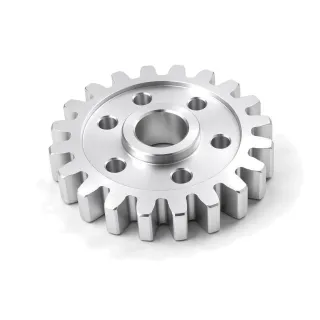 Aluminum Bright DipBright dipping is a chemical polishing pretreatment that levels microscopic peaks on aluminum to produce a reflective surface before anodizing.CorrosionHardnessCost$$
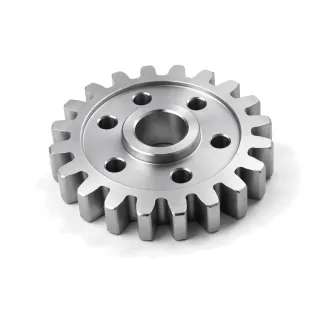 As MachinedAs machined is the baseline CNC condition with no secondary cosmetic finishing.CorrosionHardnessCost$
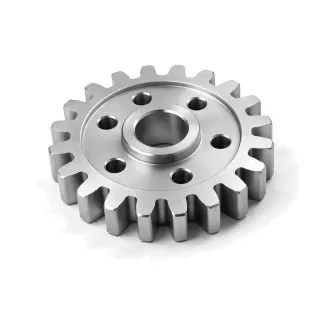 Brushed FinishBrushing creates a directional grain with abrasive belts, wheels, or pads.CorrosionHardnessCost$$
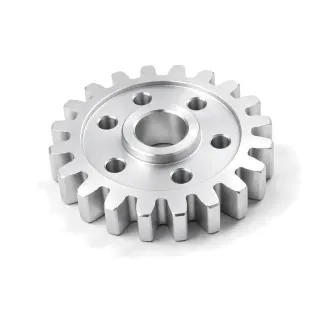 DeburringDeburring removes loose or sharp burrs left by cutting, punching, molding, or casting.CorrosionHardnessCost$
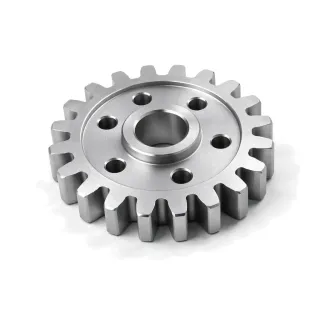 Edge RoundingEdge rounding deliberately replaces a sharp edge with a controlled radius or broad edge break.CorrosionHardnessCost$
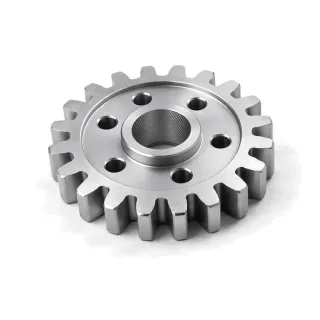 HoningHoning precision-finishes bores with expanding abrasive stones and a controlled cross-hatch.CorrosionHardnessCost$$$
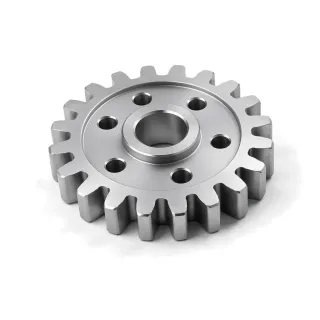 LappingLapping is a precision loose-abrasive process used to improve flatness, parallelism, and very fine roughness.CorrosionHardnessCost$$$$
 Mirror PolishingMirror polishing removes visible directional scratches and buffs the surface to high specular reflectance.CorrosionHardnessCost$$$$