
Tumbling and Vibratory Finishing
Mechanical finishing · Mechanical
Tumbling and vibratory finishing are mass-finishing methods that deburr many small parts together.
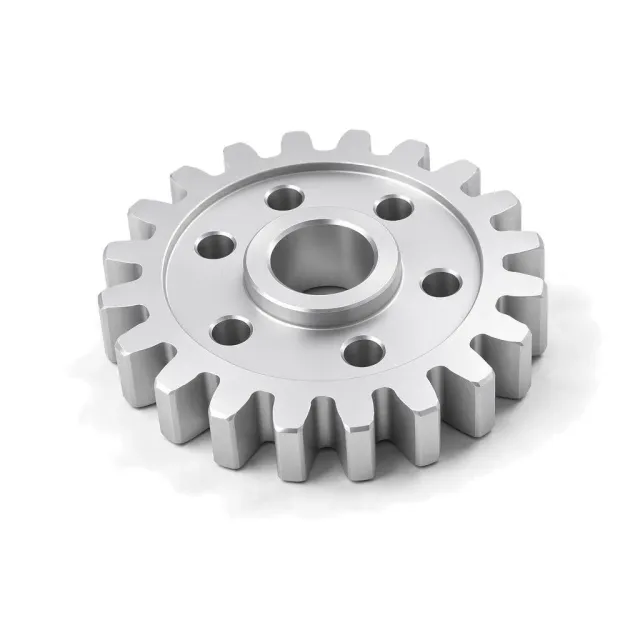
What is Mass finishing?
Vibratory bowls are generally gentler and more controllable, while rotary barrels create stronger part-to-part action.
How it works
Parts circulate with shaped ceramic or plastic media, water, and compound. Relative motion abrades burrs and surface peaks; media shape reaches selected edges while leaving inaccessible recesses largely unchanged. Ceramic media cuts faster, plastic media is gentler on aluminum, and steel media burnishes. A typical controlled cycle removes about 0.01–0.05 mm from exposed surfaces and leaves Ra about 0.4–3.2 µm (16–125 µin), measured under ASME B46.1 or ISO 21920.
Why specify it
- Processes many small parts per batch
- Breaks edges and removes light burrs
- Typical exposed-surface removal is 0.01–0.05 mm
- Can improve Ra to about 0.4–3.2 µm (16–125 µin)
Where it falls short
- Parts may impinge and nick each other
- Media can lodge in holes and slots
- Cannot selectively preserve exposed sharp edges without fixturing
- Deep recesses receive less action
Mass finishing at a glance
Mass finishing is a middle-of-the-range finish; its best score is cosmetic quality (50 of 100), at a budget cost. It adds little corrosion protection. Surface hardness is not rated: the finish leaves the part's own surface.
Each score is 0–100 against every finish in this catalog. Corrosion comes from salt-spray life (ASTM B117, log scale) and hardness from the finish layer's Vickers or pencil hardness; cosmetic, lubricity and cost are FabDigit's engineering assessment. Economy on the radar is the inverse of cost.
Mass finishing key numbers
Typical values from the governing specifications and shop practice; bars are this finish against the highest value among mechanical finishing finishes.
- Thickness
- No coating; typical resulting Ra 0.4–3.2 µm (16–125 µin).
- Electrical
- Unchanged
- Appearance
- Even matte, satin, or burnished surface depending on media.
Specifications for Mass finishing
The documents a drawing cites to define this finish, with the Type / Class rows that apply. Each links to a page explaining the standard.
Drawing call-out
VIBRATORY FINISH WITH NON-FERROUS PLASTIC MEDIA, REMOVE ALL BURRS, EDGE BREAK 0.2–0.4 mm, MAX MATERIAL REMOVAL 0.03 mm PER SURFACEWhich materials take Mass finishing?
Verdict per material family, with the grades that behave differently. Each family links to its datasheets in the material library.
| Material family | Verdict | Notes |
|---|---|---|
| Yes | Use plastic media to limit impingement and excessive cutting. | |
| Yes | Suitable; protect against smear and media embedment. | |
| Yes | Suitable; expect faster cutting and easier smearing than steel. | |
| Yes | Suitable for deburring and burnishing with dedicated media. | |
| Yes | Ceramic media is common for deburring. | |
| Yes | Common for small titanium parts with ceramic or plastic media and contamination control. | |
| With care | Possible with non-sparking media and fire-safe dust control. | |
| With care | Soft die-cast zinc cuts quickly and can embed media. | |
| Limited | Only selected rigid polymers tolerate useful abrasion without damage. |
How Mass finishing is applied, and what it does to the part
- 1Select ceramic plastic or steel media
- 2Load parts media water and compound
- 3Run validated vibratory or barrel cycle
- 4Separate and clear trapped media
- 5Rinse dry and inspect
| Dimensions | Expect approximately 0.01–0.05 mm removal on exposed surfaces plus edge rounding; measure critical dimensions after the validated cycle. |
|---|---|
| Build-up per side | removes 10–50 µm — Typical exposed-surface removal is approximately 0.01–0.05 mm per side; validate by trial. |
| Masking | Rarely needed. Selective masking is uncommon; plug holes where media lodging is unacceptable and fixture delicate parts. |
| Electrical | Unchanged |
| Appearance | Even matte, satin, or burnished surface depending on media. |
| Added lead time | 1–3 working days on top of the bare part |
Design rules for Mass finishing
What to decide on the drawing before the part goes to the finisher.
- State the maximum stock removal.Common cycles can remove 0.01–0.05 mm.
- Define edge break separately.Ra does not control edge radius.
- Avoid blind media traps.Media can lodge in holes and slots.
- Separate cosmetic parts.Part-to-part contact can cause dents.
Mass finishing versus the alternatives
Finishes engineers weigh against Mass finishing, and when each wins.
| Finish | Corrosion | Hardness | Cosmetic | Cost | Thickness | Choose it when |
|---|---|---|---|---|---|---|
Mass finishing this page | 5 | — | 50 | $ | 0 µm | — |
| 0 | — | 20 | $ | 0 µm | when burr removal must be local and dimensions tightly controlled | |
| 0 | — | 35 | $ | 0 µm | when a defined edge radius is required |
The radar overlays Mass finishing with Deburring, its most common alternative — chosen when burr removal must be local and dimensions tightly controlled. Scores in the table are 0–100 across every finish in the catalog.
Cost, lead time and compliance
Relative cost
Tumbling and Vibratory Finishing is a budget-cost finish ($): cheaper than about 90 % of the finishes FabDigit quotes.
Finishing is priced per part with a lot minimum, from FabDigit's own China-side rates. The exact figure appears on the instant quote once the part is uploaded.
Lead time and compliance
| Added lead time | 1–3 working days |
|---|---|
| RoHS | Compliant |
| Notes | Treat process water and metal-bearing sludge according to local requirements. |
What Mass finishing is used for
- Machined fittings
- Stamped clips
- Fasteners
- Precision gears
Mass finishing — frequently asked
tumbling vs vibratory finishing
Both are mass finishing. Vibratory action is usually gentler and more controllable for precision parts, while barrel tumbling creates stronger part-to-part action and more edge rounding.
how much material does tumbling remove
A common controlled range is about 0.01–0.05 mm on exposed surfaces. Actual removal depends on media, compound, time, load, and alloy and must be proven by a sample run.
what Ra does vibratory finishing produce
Typical job-shop results are about Ra 0.4–3.2 µm (16–125 µin). Burnishing media can be smoother, while cutting ceramic media can remain rougher.
can tumbling damage threads
Yes. It can round thread starts and lodge media in threads or cross-holes, so plugs or post-process inspection may be needed.
what media is used for mass finishing
Ceramic media cuts hard metals quickly, plastic media cuts aluminum more gently, and steel media burnishes. Shape and size must be chosen so media cannot lodge in the part.
Other mechanical finishing finishes
 Aluminum Bright DipBright dipping is a chemical polishing pretreatment that levels microscopic peaks on aluminum to produce a reflective surface before anodizing.CorrosionHardnessCost$$
 As MachinedAs machined is the baseline CNC condition with no secondary cosmetic finishing.CorrosionHardnessCost$
 Bead BlastingBead blasting propels spherical media at a surface to make a uniform satin or matte finish.CorrosionHardnessCost$
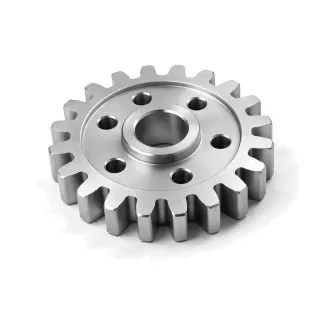 Brushed FinishBrushing creates a directional grain with abrasive belts, wheels, or pads.CorrosionHardnessCost$$
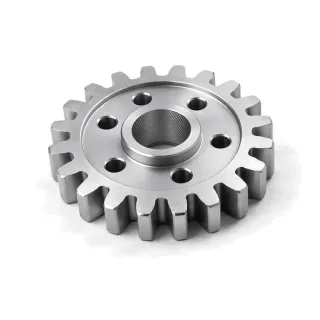 HoningHoning precision-finishes bores with expanding abrasive stones and a controlled cross-hatch.CorrosionHardnessCost$$$
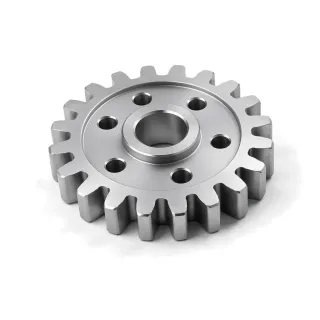 LappingLapping is a precision loose-abrasive process used to improve flatness, parallelism, and very fine roughness.CorrosionHardnessCost$$$$
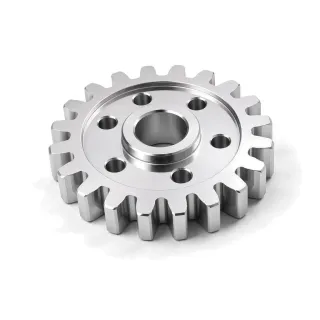 Mirror PolishingMirror polishing removes visible directional scratches and buffs the surface to high specular reflectance.CorrosionHardnessCost$$$$
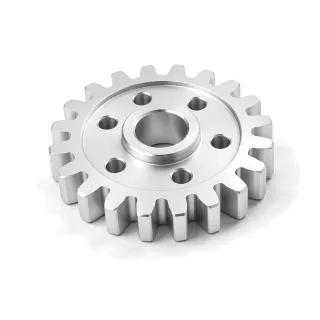 PolishingMechanical polishing progressively removes surface peaks and scratches to produce a smooth glossy surface.CorrosionHardnessCost$$$