
Polishing
Mechanical finishing · Mechanical
Mechanical polishing progressively removes surface peaks and scratches to produce a smooth glossy surface.
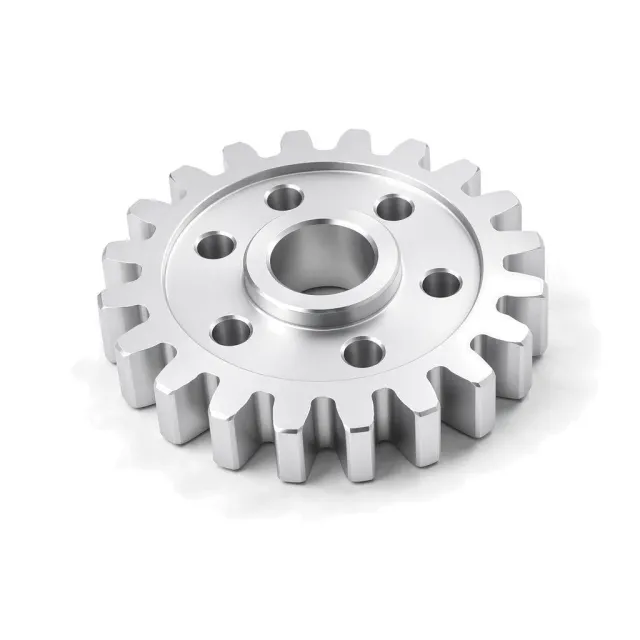
What is Polished?
It applies to metals and, with different compounds and heat control, selected molded polymers.
How it works
Successively finer coated abrasives level cutter marks, then a cloth or nonwoven wheel with compound refines the surface. A practical metal sequence may progress from 240 through 600 grit before buffing. Typical polished work reaches Ra 0.1–0.8 µm (4–32 µin), but waviness and gloss also depend on prior flatness, operator pressure, and alloy. Measure roughness under ASME B46.1 or ISO 21920 with a stated cutoff.
Why specify it
- Reduces Ra to about 0.1–0.8 µm (4–32 µin)
- Improves cleanability
- Creates a glossy cosmetic surface
- Removes shallow scratches and tool marks
Where it falls short
- Rounds edges and washes out detail
- Cannot correct deep pits without substantial stock removal
- May smear soft metal
- Plastic can overheat or craze
Polished at a glance
Polished is strongest on cosmetic quality (82 of 100), at a premium cost. It adds little corrosion protection. Surface hardness is not rated: the finish leaves the part's own surface.
Each score is 0–100 against every finish in this catalog. Corrosion comes from salt-spray life (ASTM B117, log scale) and hardness from the finish layer's Vickers or pencil hardness; cosmetic, lubricity and cost are FabDigit's engineering assessment. Economy on the radar is the inverse of cost.
Polished key numbers
Typical values from the governing specifications and shop practice; bars are this finish against the highest value among mechanical finishing finishes.
- Thickness
- No coating; typical resulting Ra 0.1–0.8 µm (4–32 µin).
- Electrical
- Unchanged
- Appearance
- Smooth glossy surface with faint or no visible abrasive lines.
Specifications for Polished
The documents a drawing cites to define this finish, with the Type / Class rows that apply. Each links to a page explaining the standard.
Drawing call-out
MECHANICALLY POLISH EXTERNAL SURFACES TO Ra 0.4 µm MAX, REMOVE VISIBLE TOOL MARKS, MAINTAIN ALL DRAWING DIMENSIONS AND SHARP DATUM EDGESWhich materials take Polished?
Verdict per material family, with the grades that behave differently. Each family links to its datasheets in the material library.
| Material family | Verdict | Notes |
|---|---|---|
| Yes | Polishes brightly but is easy to round and wave. | |
| Yes | Common decorative polish; tarnish protection is usually required. | |
| Yes | Takes a high gloss but tarnishes without protection. | |
| Yes | Common polished architectural and hygienic surface. | |
| Yes | Common on carbon and alloy steels before plating or as a cosmetic finish. | |
| With care | Possible with non-sparking media and fire-safe dust control. | |
| With care | Compatibility and heat sensitivity depend on resin. | |
| With care | Possible with low heat and contamination-controlled compounds. | |
| With care | Soft die-cast zinc cuts quickly and can embed media. |
How Polished is applied, and what it does to the part
- 1Remove deep defects
- 2Progress through finer abrasive grades
- 3Buff with compatible compound
- 4Clean residue
- 5Inspect gloss scratches and Ra
| Dimensions | Polishing removes variable stock and rounds edges; retain grinding or machining as the final operation on precision datums. |
|---|---|
| Build-up per side | 0 µm — No buildup; stock removal depends on starting condition and abrasive sequence. |
| Masking | Usually needed. Protect sharp edges, fits, datums, engraving, and specified non-cosmetic surfaces. |
| Electrical | Unchanged |
| Appearance | Smooth glossy surface with faint or no visible abrasive lines. |
| Added lead time | 2–7 working days on top of the bare part |
Design rules for Polished
What to decide on the drawing before the part goes to the finisher.
- State Ra and visual acceptance separately.Gloss and profile roughness are different measurements.
- Define surfaces to polish.Manual access and labor dominate cost.
- Protect sharp functional edges.Buffing rounds them rapidly.
- Specify post-polish cleaning.Compound can remain in holes and seams.
Polished versus the alternatives
Finishes engineers weigh against Polished, and when each wins.
| Finish | Corrosion | Hardness | Cosmetic | Cost | Thickness | Choose it when |
|---|---|---|---|---|---|---|
Polished this page | 8 | — | 82 | $$$ | 0 µm | — |
| 10 | — | 95 | $$$$ | 0 µm | when a specular No. 8-class surface is required | |
| 5 | — | 75 | $$ | 0 µm | when a directional satin grain is acceptable |
The radar overlays Polished with Mirror Polishing, its most common alternative — chosen when a specular No. 8-class surface is required. Scores in the table are 0–100 across every finish in the catalog.
Cost, lead time and compliance
Relative cost
Polishing is a premium-cost finish ($$$): more expensive than about 63 % of the finishes FabDigit quotes.
Finishing is priced per part with a lot minimum, from FabDigit's own China-side rates cross-checked against US job-shop pricing. The exact figure appears on the instant quote once the part is uploaded.
Lead time and compliance
| Added lead time | 2–7 working days |
|---|---|
| RoHS | Compliant |
| Notes | Collect polishing dust and spent compound; substrate residues may require controlled disposal. |
What Polished is used for
- Surgical handles
- Consumer trim
- Molded clear covers
- Food-contact hardware
Polished — frequently asked
what Ra is a polished surface
General mechanical polishing commonly reaches Ra 0.1–0.8 µm (4–32 µin). Mirror polishing and lapping can be lower, but the drawing must state the measurement requirement.
does polishing change dimensions
Yes, because it removes peaks and may remove more material while correcting scratches. Precision fits and datums should be masked or finished afterward.
brushed vs polished stainless
Brushed stainless retains a directional grain and commonly has Ra 0.2–1.6 µm. Polished stainless is glossier and commonly reaches Ra 0.1–0.8 µm, with mirror work lower.
can aluminum be polished
Yes. Aluminum develops high gloss but is soft, easy to wave, and prone to compound smearing, so edge protection and clean dedicated wheels matter.
can injection molded plastic be polished
Selected polymers can be mechanically polished with fine compound and strict heat control. Clear plastics can craze or distort, so a resin-specific trial is required.
Other mechanical finishing finishes
 Aluminum Bright DipBright dipping is a chemical polishing pretreatment that levels microscopic peaks on aluminum to produce a reflective surface before anodizing.CorrosionHardnessCost$$
 As MachinedAs machined is the baseline CNC condition with no secondary cosmetic finishing.CorrosionHardnessCost$
 Bead BlastingBead blasting propels spherical media at a surface to make a uniform satin or matte finish.CorrosionHardnessCost$
 DeburringDeburring removes loose or sharp burrs left by cutting, punching, molding, or casting.CorrosionHardnessCost$
 Edge RoundingEdge rounding deliberately replaces a sharp edge with a controlled radius or broad edge break.CorrosionHardnessCost$
 HoningHoning precision-finishes bores with expanding abrasive stones and a controlled cross-hatch.CorrosionHardnessCost$$$
 LappingLapping is a precision loose-abrasive process used to improve flatness, parallelism, and very fine roughness.CorrosionHardnessCost$$$$
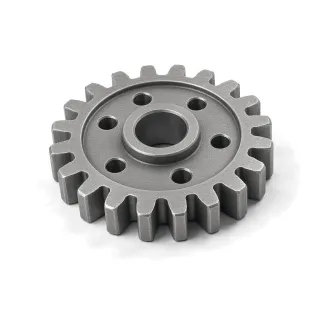 Sand BlastingSand blasting uses angular abrasive to remove scale, rust, and coatings or to create a rough coating-ready surface.CorrosionHardnessCost$