
Trimming
3D-print & moulding post-processing · Mechanical
Trimming removes flash, excess edge material, membranes, or sacrificial tabs.
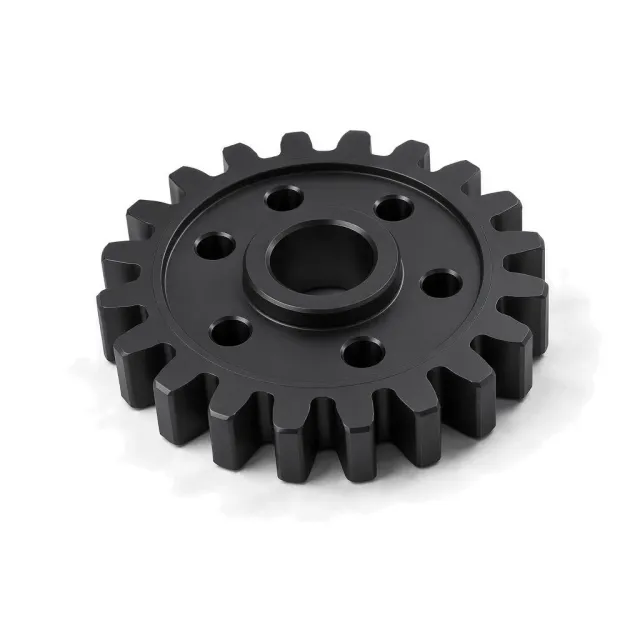
What is Trimming?
It is an operation rather than a uniform finish and should be controlled by profile, vestige, and burr requirements.
How it works
A knife, die, router, saw, punch, laser, or abrasive tool follows the intended edge and removes excess material. Flexible elastomers often need very sharp or cryogenic tooling, while rigid plastics can be routed or punched. Local trimmed edges commonly fall around Ra 1.6–12.5 µm (63–500 µin). Heat, tool sharpness, support, and feed control burr, melt smear, whitening, and dimensional accuracy.
Why specify it
- Removes molding flash and membranes
- Restores intended edge profile
- Clears holes and vents
- Prepares parts for assembly
Where it falls short
- Does not create an all-over finish
- Can tear elastomers
- Can melt or whiten thermoplastics
- Manual trimming has variable profile accuracy
Trimming at a glance
Trimming is a middle-of-the-range finish; its best score is cosmetic quality (10 of 100), at a budget cost. It adds little corrosion protection, cosmetic quality or lubricity. Surface hardness is not rated: the finish leaves the part's own surface.
Each score is 0–100 against every finish in this catalog. Corrosion comes from salt-spray life (ASTM B117, log scale) and hardness from the finish layer's Vickers or pencil hardness; cosmetic, lubricity and cost are FabDigit's engineering assessment. Economy on the radar is the inverse of cost.
Trimming key numbers
Typical values from the governing specifications and shop practice; bars are this finish against the highest value among 3d-print & moulding post-processing finishes.
- Thickness
- No coating; local trimmed edges commonly Ra 1.6–12.5 µm (63–500 µin).
- Electrical
- Unchanged
- Appearance
- Clean cut edge with parent surfaces unchanged.
Specifications for Trimming
The documents a drawing cites to define this finish, with the Type / Class rows that apply. Each links to a page explaining the standard.
Drawing call-out
TRIM FLASH TO NOMINAL PROFILE ±0.20 mm; MAX POSITIVE VESTIGE 0.15 mm; NO NEGATIVE GOUGE, TEARS, MELT SMEAR, OR LOOSE MATERIALWhich materials take Trimming?
Verdict per material family, with the grades that behave differently. Each family links to its datasheets in the material library.
| Material family | Verdict | Notes |
|---|---|---|
| Yes | Standard flash, membrane, and vestige trim on moulded plastics. | |
| Yes | Common for urethane casting flash. | |
| Yes | Requires sharp supported or cryogenic trimming methods. | |
| Yes | Standard die-cast zinc flash trimming. | |
| With care | Cut edges may expose fibers and require sealing. | |
| Limited | Sheet or die-cast flash trim is a metal operation, not this polymer-trim record. | |
| Limited | Trim brims, purge, or wipe; there is no mould flash. | |
| Limited | Trim drain nubs and film; not injection-mould flash. | |
| No | This is a polymer finishing step, not a brass process. | |
| No | This is a polymer finishing step, not a copper-alloy process. | |
| No | Use support removal and machining, not polymer trimming. | |
| No | This is a polymer finishing step, not a magnesium process. | |
| No | Powder-bed nylon has no mould flash to trim. | |
| No | Powder-bed nylon has no mould flash to trim. | |
| No | This is a polymer finishing step, not a stainless process. | |
| No | This is a polymer finishing step, not a steel process. | |
| No | This is a polymer finishing step, not a titanium process. |
How Trimming is applied, and what it does to the part
- 1Identify trim line
- 2Support part
- 3Cut excess material
- 4Remove burr or loose debris
- 5Inspect profile tears melt and whitening
| Dimensions | Trim-to-line accuracy and allowable positive or negative vestige must be stated; over-trimming can reduce wall or seal width. |
|---|---|
| Build-up per side | 0 µm — No buildup; excess material is removed to the stated profile. |
| Masking | Rarely needed. Fixture and protect cosmetic faces during trimming. |
| Electrical | Unchanged |
| Appearance | Clean cut edge with parent surfaces unchanged. |
| Added lead time | 0–2 working days on top of the bare part |
Design rules for Trimming
What to decide on the drawing before the part goes to the finisher.
- Dimension the trim line.The word trim does not set profile accuracy.
- State positive and negative vestige.Both proud flash and gouge can fail assembly.
- Support flexible parts.Deflection causes wavy cuts.
- Control heat on thermoplastics.Melt smear changes fit and appearance.
Trimming versus the alternatives
Finishes engineers weigh against Trimming, and when each wins.
| Finish | Corrosion | Hardness | Cosmetic | Cost | Thickness | Choose it when |
|---|---|---|---|---|---|---|
Trimming this page | 0 | — | 10 | $ | 0 µm | — |
| 0 | — | 10 | $ | 0 µm | when a discrete runner gate is being removed | |
| 0 | — | 20 | $ | 0 µm | when only sharp burrs remain after trimming |
The radar overlays Trimming with Degating, its most common alternative — chosen when a discrete runner gate is being removed. Scores in the table are 0–100 across every finish in the catalog.
Cost, lead time and compliance
Relative cost
Trimming is a budget-cost finish ($): cheaper than about 96 % of the finishes FabDigit quotes.
Finishing is priced per part with a lot minimum, from FabDigit's own China-side rates. The exact figure appears on the instant quote once the part is uploaded.
Lead time and compliance
| Added lead time | 0–2 working days |
|---|---|
| RoHS | Compliant |
| Notes | Collect trimmed polymer and elastomer waste by material. |
What Trimming is used for
- Molded enclosure flash
- Urethane cast membranes
- Silicone seals
- Printed sacrificial tabs
Trimming — frequently asked
what is trimming in molding
Trimming removes flash, membranes, and excess edge material after molding. It should be controlled by profile tolerance and maximum vestige.
trimming vs degating
Trimming follows an edge or removes flash. Degating removes the localized runner-to-part connection.
what Ra is a trimmed plastic edge
A practical range is Ra 1.6–12.5 µm (63–500 µin). Resin, tool, support, and cut method determine the actual texture.
how is silicone flash trimmed
Sharp dies, knives, cryogenic deflashing, or specialist abrasive methods are used. Poor support or dull tooling can tear the seal.
does trimming change dimensions
Yes at the trim profile. State tolerances such as ±0.20 mm and separately limit positive vestige and negative gouge.
Other 3d-print & moulding post-processing finishes
 Chemical SmoothingChemical smoothing applies a compatible liquid or vapor solvent to reflow or level selected printed polymers.CorrosionHardnessCost$$$
 Support RemovalSupport removal separates sacrificial print structures and cleans their attachment scars.CorrosionHardnessCost$$
 Surface SealingSurface sealing fills connected pores in printed or cast parts with a compatible resin or sealant.CorrosionHardnessCost$$$
 Vapor SmoothingVapor smoothing briefly softens the outer skin of compatible powder-bed polymers so surface peaks flow together.CorrosionHardnessCost$$$
Compare every 3d-print & moulding post-processing finish side by side →