
Degating
3D-print & moulding post-processing · Mechanical
Degating removes the runner and gate from a molded or cast part.
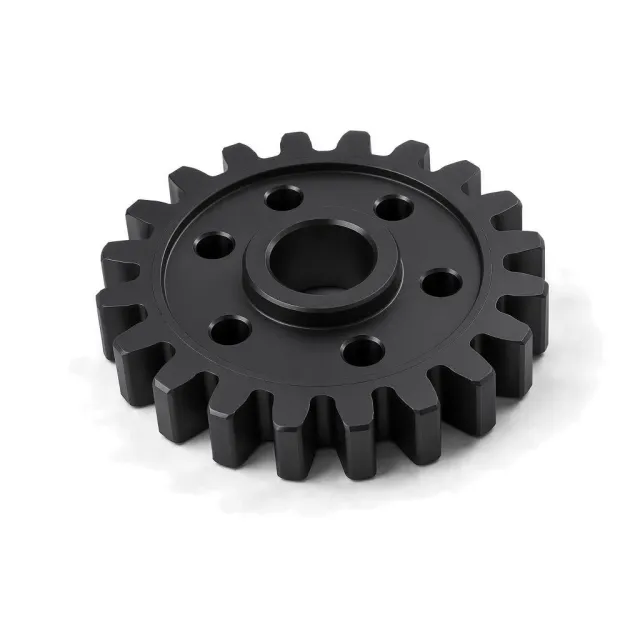
What is Degating?
It is a required operation, not an all-over finish, and acceptance should define gate vestige height and local appearance.
How it works
The gate is sheared automatically, clipped, sawn, machined, or trimmed with a knife according to resin, gate type, and volume. The remaining vestige may be locally filed or polished. A trimmed gate zone commonly remains around Ra 1.6–12.5 µm (63–500 µin), while the rest of the molded surface is unchanged. Poor removal can cause whitening, cracking, a proud nub, or a gouge.
Why specify it
- Separates parts from runners
- Controls gate vestige
- Removes sharp gate remnants
- Prepares the local gate for cosmetic blending
Where it falls short
- Does not change the overall molded finish
- Can gouge or stress-whiten polymer
- Flush removal may be impossible for some gates
- Gate location remains visible on cosmetic faces
Degating at a glance
Degating is a middle-of-the-range finish; its best score is cosmetic quality (10 of 100), at a budget cost. It adds little corrosion protection, cosmetic quality or lubricity. Surface hardness is not rated: the finish leaves the part's own surface.
Each score is 0–100 against every finish in this catalog. Corrosion comes from salt-spray life (ASTM B117, log scale) and hardness from the finish layer's Vickers or pencil hardness; cosmetic, lubricity and cost are FabDigit's engineering assessment. Economy on the radar is the inverse of cost.
Degating key numbers
Typical values from the governing specifications and shop practice; bars are this finish against the highest value among 3d-print & moulding post-processing finishes.
- Thickness
- No coating; local trimmed gate zones commonly Ra 1.6–12.5 µm (63–500 µin).
- Electrical
- Unchanged
- Appearance
- Local trimmed witness at the gate; parent texture unchanged.
Specifications for Degating
The documents a drawing cites to define this finish, with the Type / Class rows that apply. Each links to a page explaining the standard.
Drawing call-out
DEGATE AT INDICATED LOCATION; GATE VESTIGE 0 TO +0.20 mm, NO GOUGE BELOW NOMINAL SURFACE, NO CRACKS OR STRESS WHITENINGWhich materials take Degating?
Verdict per material family, with the grades that behave differently. Each family links to its datasheets in the material library.
| Material family | Verdict | Notes |
|---|---|---|
| Yes | Standard injection-moulded and cast-polymer gate removal. | |
| Yes | Common on urethane castings. | |
| Yes | Standard die-cast zinc gate removal. | |
| With care | Soft gates tear; use sharp tools and supported cuts. | |
| Limited | Die-cast aluminum gates are trimmed, but that is a foundry operation, not polymer degating. | |
| Limited | Remove sprues or drain supports; this is not an injection-mould gate. | |
| No | This is a polymer finishing step, not a brass process. | |
| No | This is a polymer finishing step, not a copper-alloy process. | |
| No | Metal AM has no mould gate; use support removal. | |
| No | FDM parts do not have mould gates; remove purge or brim instead. | |
| No | This is a polymer finishing step, not a magnesium process. | |
| No | Powder-bed nylon has no mould gate. | |
| No | Powder-bed nylon has no mould gate. | |
| No | This is a polymer finishing step, not a stainless process. | |
| No | This is a polymer finishing step, not a steel process. | |
| No | This is a polymer finishing step, not a titanium process. |
How Degating is applied, and what it does to the part
- 1Separate runner
- 2Trim gate
- 3Blend if specified
- 4Remove loose chips
- 5Inspect vestige whitening cracks and dimensions
| Dimensions | Control positive vestige and negative gouge separately; gate removal must not undercut the nominal wall. |
|---|---|
| Build-up per side | 0 µm — No buildup; runner and gate material are removed to the stated vestige limit. |
| Masking | Rarely needed. Fixture the part to avoid scratching cosmetic surfaces. |
| Electrical | Unchanged |
| Appearance | Local trimmed witness at the gate; parent texture unchanged. |
| Added lead time | 0–1 working days on top of the bare part |
Design rules for Degating
What to decide on the drawing before the part goes to the finisher.
- Place gates off cosmetic faces.A witness usually remains.
- Dimension vestige height.Flush is not a measurable tolerance.
- Ban negative gouge where sealing matters.Over-trimming can cut below nominal.
- Inspect brittle resins for cracks.Gate fracture can propagate into the wall.
Degating versus the alternatives
Finishes engineers weigh against Degating, and when each wins.
| Finish | Corrosion | Hardness | Cosmetic | Cost | Thickness | Choose it when |
|---|---|---|---|---|---|---|
Degating this page | 0 | — | 10 | $ | 0 µm | — |
| 0 | — | 10 | $ | 0 µm | when flash or broad excess material rather than a discrete gate is removed |
The radar overlays Degating with Trimming, its most common alternative — chosen when flash or broad excess material rather than a discrete gate is removed. Scores in the table are 0–100 across every finish in the catalog.
Cost, lead time and compliance
Relative cost
Degating is a budget-cost finish ($): cheaper than about 96 % of the finishes FabDigit quotes.
Finishing is priced per part with a lot minimum, from FabDigit's own China-side rates. The exact figure appears on the instant quote once the part is uploaded.
Lead time and compliance
| Added lead time | 0–1 working days |
|---|---|
| RoHS | Compliant |
| Notes | Segregate runners and trimmed polymer for regrind or disposal according to resin controls. |
What Degating is used for
- Injection-molded housings
- Runner-fed castings
- Urethane cast parts
Degating — frequently asked
what is degating in injection molding
Degating separates the molded part from its runner and removes the gate remnant. The drawing should state a vestige range such as 0 to +0.20 mm.
does degating leave a mark
Usually yes. A trimmed zone may be Ra 1.6–12.5 µm (63–500 µin) and can show whitening or gloss change.
degating vs trimming
Degating removes a discrete gate or runner connection. Trimming removes flash, parting-line excess, or broad edge material.
can a gate be trimmed perfectly flush
Sometimes, but brittle or cosmetic resins can gouge or whiten. A positive vestige tolerance is more controllable than an undefined flush requirement.
where should an injection mold gate be located
Keep it off critical cosmetic, sealing, and highly stressed regions when flow permits. Access is needed for automatic or manual removal.
Other 3d-print & moulding post-processing finishes
 Chemical SmoothingChemical smoothing applies a compatible liquid or vapor solvent to reflow or level selected printed polymers.CorrosionHardnessCost$$$
 Support RemovalSupport removal separates sacrificial print structures and cleans their attachment scars.CorrosionHardnessCost$$
 Surface SealingSurface sealing fills connected pores in printed or cast parts with a compatible resin or sealant.CorrosionHardnessCost$$$
 Vapor SmoothingVapor smoothing briefly softens the outer skin of compatible powder-bed polymers so surface peaks flow together.CorrosionHardnessCost$$$
Compare every 3d-print & moulding post-processing finish side by side →