
Surface Sealing
3D-print & moulding post-processing · Dip / immersion
Surface sealing fills connected pores in printed or cast parts with a compatible resin or sealant.
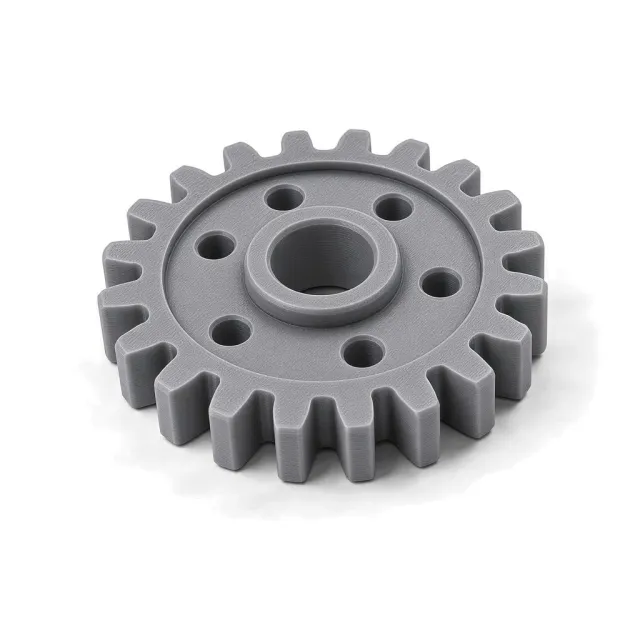
What is Surface seal?
It can improve cleanability, moisture resistance, and leak performance but must be qualified for fluid, pressure, and temperature.
How it works
The clean dry part is brushed, sprayed, dipped, or vacuum impregnated with low-viscosity epoxy, cyanoacrylate, acrylic, or another qualified sealant. Vacuum assists penetration into connected pores; excess is drained and the chemistry cures. A surface film may reduce roughness toward Ra 1–10 µm (40–400 µin), but thickness and final texture are highly chemistry-dependent. Leak testing, not appearance, verifies sealing. The supplier must state chemistry, cure, and compatibility.
Why specify it
- Reduces connected porosity
- Improves cleanability
- Can make parts liquid-tight after validation
- Protects porous surfaces from moisture
Where it falls short
- Adds chemistry-specific film and dimensions
- Does not repair structural voids
- Temperature and fluid compatibility vary
- Pressure tightness requires testing
Surface seal at a glance
Surface seal is a middle-of-the-range finish; its best score is cosmetic quality (55 of 100), at a premium cost. Surface hardness is not rated: the finish leaves the part's own surface.
Each score is 0–100 against every finish in this catalog. Corrosion comes from salt-spray life (ASTM B117, log scale) and hardness from the finish layer's Vickers or pencil hardness; cosmetic, lubricity and cost are FabDigit's engineering assessment. Economy on the radar is the inverse of cost.
Surface seal key numbers
Typical values from the governing specifications and shop practice; bars are this finish against the highest value among 3d-print & moulding post-processing finishes.
- Thickness
- Penetrating systems may leave little surface film; coating sealers vary by chemistry. Typical finished Ra may be 1–10 µm (40–400 µin).
- Electrical
- Unchanged
- Colours
- clear
- custom
- Appearance
- Clear to tinted sealed surface, from near-original matte to coated gloss.
Specifications for Surface seal
The documents a drawing cites to define this finish, with the Type / Class rows that apply. Each links to a page explaining the standard.
Drawing call-out
VACUUM IMPREGNATE POROUS PRINT WITH SUPPLIER-QUALIFIED CLEAR SEALER; MASK THREADS AND DATUM A; LEAK TEST AT 200 kPa FOR 10 min, ZERO VISIBLE BUBBLESWhich materials take Surface seal?
Verdict per material family, with the grades that behave differently. Each family links to its datasheets in the material library.
| Material family | Verdict | Notes |
|---|---|---|
| Yes | Infiltration and sealing are common but chemistry depends on part material. | |
| Yes | Use where validated leak performance is needed beyond depowdering. | |
| Yes | Common on porous printed nylon and FDM parts. | |
| Yes | Porous nylon can be sealed with a qualified compatible system. | |
| With care | Vacuum impregnation can close residual porosity; it does not fix lack-of-fusion defects. | |
| With care | Layer-path leaks may require coating rather than simple pore impregnation. | |
| Limited | Vacuum impregnation is for porous cast or AM aluminum, not dense wrought stock. | |
| Limited | Only porous AM or PM copper needs impregnation. | |
| Limited | Porous magnesium castings can be impregnated with a compatible sealer. | |
| Limited | Fully dense SLA rarely needs impregnation; coating is usually enough. | |
| Limited | Used on porous AM or PM stainless, not dense wrought stainless. | |
| Limited | Used on porous PM or AM steel, not dense bar stock. | |
| Limited | DMLS titanium may be impregnated for pressure tightness after qualification. | |
| Limited | Porous zinc die castings are sometimes impregnated. | |
| No | Dense brass does not need print sealing. |
How Surface seal is applied, and what it does to the part
- 1Clean dry and depowder
- 2Mask
- 3Apply or vacuum impregnate sealant
- 4Drain and cure
- 5Clean and leak-test to requirement
| Dimensions | Penetrating sealers may add little surface film, while coating sealers can alter fits and close small passages; qualify and inspect critical dimensions. |
|---|---|
| Build-up per side | ≥ 0 µm — Buildup is supplier- and chemistry-specific; mask or post-machine fits. |
| Masking | Usually needed. Mask threads, bonding zones, precision fits, electrical contacts, and passages that must not retain sealant. |
| Electrical | Unchanged |
| Appearance | Clear to tinted sealed surface, from near-original matte to coated gloss. |
| Added lead time | 2–7 working days on top of the bare part |
Design rules for Surface seal
What to decide on the drawing before the part goes to the finisher.
- State fluid pressure and test duration.The word sealed is not measurable.
- Name approved sealant chemistry.Temperature and chemical compatibility vary.
- Provide drain paths.Excess resin can block cavities.
- Mask bonds and fits.Sealer can impair adhesion and dimensions.
Surface seal versus the alternatives
Finishes engineers weigh against Surface seal, and when each wins.
| Finish | Corrosion | Hardness | Cosmetic | Cost | Thickness | Choose it when |
|---|---|---|---|---|---|---|
Surface seal this page | 30 | — | 55 | $$$ | ≥ 0 µm | — |
| — | — | 80 | $$$ | 0 µm | when compatible nylon surface reflow can reduce porosity without an added sealer | |
| — | — | 75 | $$$ | 0 µm | when a solvent-compatible FDM surface needs reflow |
The radar overlays Surface seal with Vapor Smoothing, its most common alternative — chosen when compatible nylon surface reflow can reduce porosity without an added sealer. Scores in the table are 0–100 across every finish in the catalog.
Cost, lead time and compliance
Relative cost
Surface Sealing is a premium-cost finish ($$$): cheaper than about 55 % of the finishes FabDigit quotes.
Finishing is priced per part with a lot minimum, from FabDigit's own China-side rates. The exact figure appears on the instant quote once the part is uploaded.
Lead time and compliance
| Added lead time | 2–7 working days |
|---|---|
| RoHS | Compliant |
| Notes | Cured status does not establish food contact or biocompatibility; manage uncured resin and solvent as specified by the supplier. |
What Surface seal is used for
- SLS and MJF fluid housings
- Binder-jet parts
- Porous castings
- Printed vacuum fixtures
Surface seal — frequently asked
does sealing make SLS parts waterproof
A qualified sealer can reduce connected porosity and pass a defined leak test. It is not automatically waterproof without a stated pressure, fluid, duration, and acceptance criterion.
what Ra does surface sealing produce
A broad practical range is Ra 1–10 µm (40–400 µin), but penetrating and film-forming sealers differ greatly. Measure the qualified system rather than relying on this range.
vacuum impregnation vs surface coating
Vacuum impregnation drives low-viscosity resin into connected pores and may leave little film. Surface coating intentionally forms a layer and changes dimensions and appearance more.
does print sealing change dimensions
It can. Film-forming sealers add thickness and can close holes or threads, while penetrating sealers usually have less buildup.
how do you test a sealed 3d print
Use the actual service fluid or an approved leak medium at a specified pressure and duration. For example, a drawing can require 200 kPa for 10 minutes with zero visible bubbles.
Other 3d-print & moulding post-processing finishes
 DegatingDegating removes the runner and gate from a molded or cast part.CorrosionHardnessCost$
 Support RemovalSupport removal separates sacrificial print structures and cleans their attachment scars.CorrosionHardnessCost$$
 TrimmingTrimming removes flash, excess edge material, membranes, or sacrificial tabs.CorrosionHardnessCost$
Compare every 3d-print & moulding post-processing finish side by side →