
Chemical Smoothing
3D-print & moulding post-processing · Chemical bath
Chemical smoothing applies a compatible liquid or vapor solvent to reflow or level selected printed polymers.
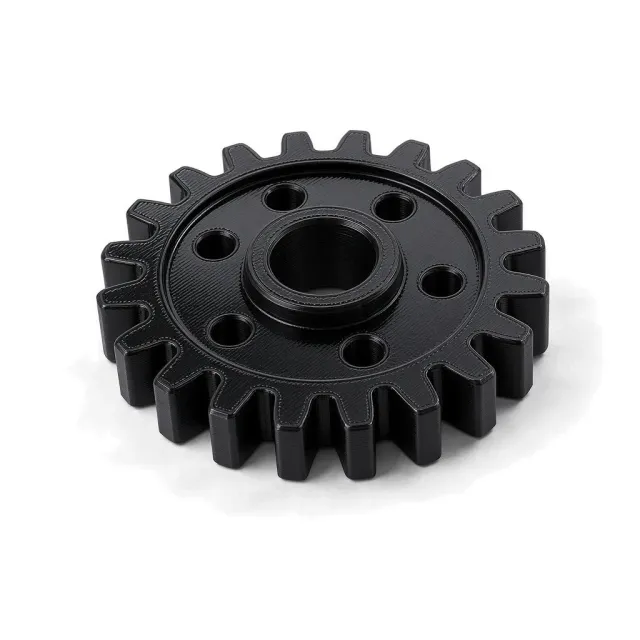
What is Chemical smooth?
It is kept separate from qualified PA12 and PA11 vapor smoothing because FDM ABS and resin systems use different chemistries and controls.
How it works
A solvent is wiped, dipped, sprayed, or vaporized onto a compatible polymer. For ABS, acetone dissolves and reflows the outer skin; other thermoplastics require different and often hazardous solvents. Some photopolymer parts can be coated or wet-polished but do not truly melt-reflow like ABS. Typical successful results are Ra 0.8–6.3 µm (32–250 µin), with exposure and drying tightly controlled to prevent swelling or retained solvent.
Why specify it
- Reduces visible FDM layer lines
- Can reach Ra about 0.8–6.3 µm (32–250 µin)
- Reaches complex external surfaces
- Improves gloss and cleanability
Where it falls short
- Polymer-specific and often hazardous chemistry
- Can weaken or distort thin features
- Residual solvent may remain
- PLA has no broadly accepted safe job-shop solvent process
Chemical smooth at a glance
Chemical smooth is strongest on cosmetic quality (75 of 100), at a premium cost. Corrosion protection and surface hardness are not rated: a plastic part does not corrode, and the finish leaves the part's own surface.
Each score is 0–100 against every finish in this catalog. Corrosion comes from salt-spray life (ASTM B117, log scale) and hardness from the finish layer's Vickers or pencil hardness; cosmetic, lubricity and cost are FabDigit's engineering assessment. Economy on the radar is the inverse of cost.
Chemical smooth key numbers
Typical values from the governing specifications and shop practice; bars are this finish against the highest value among 3d-print & moulding post-processing finishes.
- Thickness
- No deposited coating; successful compatible systems commonly finish near Ra 0.8–6.3 µm (32–250 µin).
- Electrical
- Unchanged
- Appearance
- Glossy surface with reduced layer lines; pooling can create waves.
Specifications for Chemical smooth
The documents a drawing cites to define this finish, with the Type / Class rows that apply. Each links to a page explaining the standard.
Drawing call-out
CHEMICALLY SMOOTH FDM ABS EXTERNAL SURFACES USING QUALIFIED ACETONE-VAPOR PROCESS TO Ra 3.2 µm MAX; MASK THREADS AND BONDING FACESWhich materials take Chemical smooth?
Verdict per material family, with the grades that behave differently. Each family links to its datasheets in the material library.
| Material family | Verdict | Notes |
|---|---|---|
| With care | ABS is commonly acetone-compatible; do not infer compatibility for PLA or PETG.
| |
| With care | Only solvent-compatible thermoplastics; chemistry is resin-specific. | |
| Limited | Use the separate qualified vapor-smoothing route for PA12 and PA11. | |
| Limited | Thermoset photopolymers generally need wet sanding or coating, not thermoplastic reflow. | |
| Limited | Use the separate qualified vapor-smoothing route for PA12 and PA11. | |
| No | This is a polymer additive or moulded-plastic finishing step, not a bulk-aluminum process. | |
| No | This is a polymer finishing step, not a brass process. | |
| No | This is a polymer finishing step, not a copper-alloy process. | |
| No | Solvent reflow is not used on metal AM parts. | |
| No | This is a polymer finishing step, not a magnesium process. | |
| No | This is a polymer finishing step, not a stainless process. | |
| No | This is a polymer finishing step, not a steel process. | |
| No | This is a polymer finishing step, not a titanium process. | |
| No | This is a polymer finishing step, not a zinc process. |
How Chemical smooth is applied, and what it does to the part
- 1Verify polymer and solvent compatibility
- 2Clean and dry part
- 3Apply controlled solvent exposure
- 4Drain without pooling
- 5Dry condition and inspect residual solvent and dimensions
| Dimensions | Solvent swelling and reflow can round edges and change gaps, holes, threads, and wall thickness locally. |
|---|---|
| Build-up per side | 0 µm — The surface dissolves and reflows; local swelling or shrinkage may occur. |
| Masking | Usually needed. Mask or post-machine fits, threads, bonding zones, and surfaces that cannot tolerate solvent. |
| Electrical | Unchanged |
| Appearance | Glossy surface with reduced layer lines; pooling can create waves. |
| Added lead time | 2–7 working days on top of the bare part |
Design rules for Chemical smooth
What to decide on the drawing before the part goes to the finisher.
- Name polymer and solvent process.Compatibility cannot be inferred from 'plastic'.
- Add drainage and spacing.Pooling causes waves and stuck assemblies.
- Keep thin features conservative.Solvent temporarily lowers stiffness.
- Set residual-solvent acceptance.Medical and enclosed applications may be sensitive.
Chemical smooth versus the alternatives
Finishes engineers weigh against Chemical smooth, and when each wins.
| Finish | Corrosion | Hardness | Cosmetic | Cost | Thickness | Choose it when |
|---|---|---|---|---|---|---|
Chemical smooth this page | — | — | 75 | $$$ | 0 µm | — |
| — | — | 80 | $$$ | 0 µm | when a qualified PA12 or PA11 MJF-SLS process is intended | |
| 8 | — | 82 | $$$ | 0 µm | when solvent compatibility is unacceptable |
The radar overlays Chemical smooth with Vapor Smoothing, its most common alternative — chosen when a qualified PA12 or PA11 MJF-SLS process is intended. Scores in the table are 0–100 across every finish in the catalog.
Cost, lead time and compliance
Relative cost
Chemical Smoothing is a premium-cost finish ($$$): more expensive than about 51 % of the finishes FabDigit quotes.
Finishing is priced per part with a lot minimum, from FabDigit's own China-side rates. The exact figure appears on the instant quote once the part is uploaded.
Lead time and compliance
| Added lead time | 2–7 working days |
|---|---|
| RoHS | Compliant |
| Notes | Use closed solvent handling, recovery, explosion controls, and application-specific residual-solvent verification. |
What Chemical smooth is used for
- FDM ABS display parts
- Solvent-compatible polymer ducts
- Aesthetic prototypes
- Selected resin parts with supplier-qualified chemistry
Chemical smooth — frequently asked
can ABS be acetone smoothed
Yes, controlled acetone vapor can reflow FDM ABS and reduce roughness toward Ra 0.8–6.3 µm. Excess exposure rounds detail, swells fits, and can retain solvent.
can PLA be chemically smoothed
PLA does not have the broadly accepted job-shop acetone process used for ABS. Potential solvents may be hazardous or inconsistent, so sanding, coating, or another material is usually preferable.
chemical smoothing vs vapor smoothing
Chemical smoothing is the broad method and includes liquid or vapor treatment of compatible FDM polymers. This catalog reserves vapor smoothing for supplier-qualified PA12 or PA11 powder-bed systems.
does chemical smoothing weaken prints
Overexposure can soften walls, round features, and change dimensions. A validated cycle and full drying are required before mechanical testing.
what Ra does acetone smoothing produce
A controlled ABS process can commonly reach about Ra 0.8–6.3 µm (32–250 µin). Starting layer height, orientation, exposure, and drainage control the result.
Other 3d-print & moulding post-processing finishes
 DegatingDegating removes the runner and gate from a molded or cast part.CorrosionHardnessCost$
 Support RemovalSupport removal separates sacrificial print structures and cleans their attachment scars.CorrosionHardnessCost$$
 Surface SealingSurface sealing fills connected pores in printed or cast parts with a compatible resin or sealant.CorrosionHardnessCost$$$
 TrimmingTrimming removes flash, excess edge material, membranes, or sacrificial tabs.CorrosionHardnessCost$
Compare every 3d-print & moulding post-processing finish side by side →