
Anodizing, conversion & passivation · finish comparison
Electropolishing vs Stainless Steel Passivation
Electropolishing and Stainless Steel Passivation are both passivation & electropolishing finishes; electropolishing resists corrosion better.
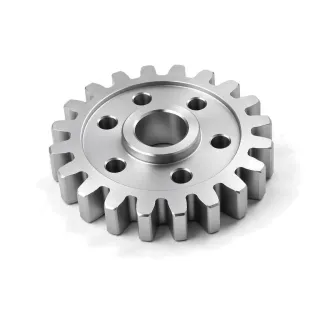
Electropolishing
Passivation & electropolishing · $$$ · instant quote
Electropolishing is controlled anodic dissolution that brightens, deburrs, and smooths stainless steel and other qualified alloys.
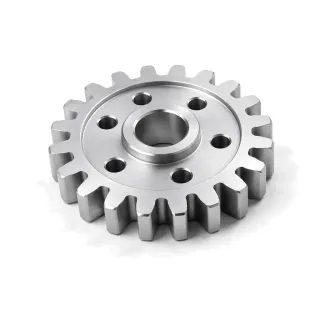
Stainless Steel Passivation
Passivation & electropolishing · $ · instant quote
Passivation removes free iron and shop contamination from stainless steel so its chromium-rich passive film can reform.
When to choose which
Choose Electropolishing
Choose Electropolishing when a brighter, smoother, more corrosion-resistant surface is wanted.
- Removes about 5–25 µm per surface
- Reduces microscopic peaks and cleanability traps
- Deburrs very small edges without embedded abrasive
Choose Stainless passivation
Choose Stainless passivation when only corrosion resistance is required and appearance is secondary.
- Removes embedded free iron that can rust
- Adds no measurable coating thickness
- ASTM A967 and AMS 2700 offer nitric and citric methods
What the numbers say
- Electropolishing resists corrosion better.
- Stainless passivation is the lower-cost option ($).
- Electropolishing is the thinner coating (removes 5–25 µm), so it disturbs tight fits less.
Buyer's decision notes
Use chemical passivation when the goal is to remove free iron and verify a clean passive stainless surface with negligible intentional stock removal. Use electropolishing when controlled material removal, micro-smoothing and edge refinement are part of the requirement as well as passivation.
- Stainless grade
- Both processes begin with the alloy and its heat, weld and scale condition. Give the supplier the stainless grade and fabrication history; neither process repairs embedded contamination, deep pits, weld defects or an unsuitable base finish by itself.
- Geometry and stock
- Electropolishing removes metal, and removal can vary with current density around edges, recesses and fixtures. Passivation is the safer choice when the machined texture and dimensions must remain essentially as made.
- Surface requirement
- If smoothness matters, state the pre-process and final roughness requirement and the measurement location. “Electropolished” alone does not define stock removal, edge break, reflected appearance or a hygienic acceptance criterion.
- Verification
- Select the free-iron or corrosion verification practice appropriate to the alloy and service. The tests in ASTM A967 are qualitative checks of treatment effectiveness, not predictions of service life or proof that the alloy suits the environment.
Put this on the RFQ
- Provide stainless grade, condition, weld or heat-tint state, starting finish and prohibited chemistry if applicable.
- For electropolishing, define stock-removal allowance, final roughness, edge condition, critical dimensions and measurement locations.
- Name ASTM B912, ASTM A967 or AMS 2700 as applicable and state the selected verification test and lot acceptance plan.
Primary references
- ASTM — B912 — Active specification for passivation of stainless steels using electropolishing, including covered alloy families and verification routes.
- ASTM — A967/A967M — Active specification for chemical passivation treatments and qualitative confirmation tests on stainless steel parts.
FabDigit resources: Electropolishing datasheet · Stainless passivation datasheet · surface finish selection guide
Scores side by side
Each score is 0–100 against every finish in this catalog. Corrosion is derived from salt-spray test duration and surface hardness from the finish layer's Vickers hardness where a measured figure exists; a finish that leaves the base metal's own surface is not rated for hardness. Cosmetic, lubricity and cost are FabDigit's engineering assessment. Scores and typical figures are screening data, not matched side-by-side tests or service-life rankings; ASTM B117 is a controlled salt-fog method, not a field-life prediction.
| Score | Electropolishing | Stainless passivation |
|---|---|---|
| Corrosion resistance | 45 Fair | 34 Low |
| Surface hardness / wear | — — | — — |
| Cosmetic quality | 82 Very good | 18 Low |
| Lubricity | 35 Fair | 10 Minimal |
| Cost | 54 $$$ | 10 $ |
Key numbers
| Property | Electropolishing | Stainless passivation |
|---|---|---|
| Thickness | removes 5–25 µm | 0 µm |
| Electrical | Unchanged | Unchanged |
| Relative cost | Premium ($$$) | Budget ($) |
| Added lead time | 3–6 working days | 2–4 working days |
| RoHS | Compliant | Compliant |
| Instant quote | Yes | Yes |
Bold marks the side that is ahead on a row where more (or less, for cost and lead time) is better. Ranges are the typical specification window; the drawing call-out fixes the class.
Which materials take each finish
| Material family | Electropolishing | Stainless passivation |
|---|---|---|
| Stainless Steel | Yes | Yes |
| Cobalt-Chrome Alloy | With care | Limited |
| DMLS / SLM | With care | With care |
| Nickel Alloy | With care | — |
| Aluminum | Limited | No |
| Brass | Limited | No |
| Copper Alloy | Limited | No |
| Steel | Limited | No |
| Titanium | Limited | Limited |
Specifications and drawing call-outs
Electropolishing
- ASTM B912 — Standard Specification for Passivation of Stainless Steels Using Electropolishing
ELECTROPOLISH STAINLESS STEEL PER ASTM B912; REMOVE 0.0002–0.0005 IN PER SURFACE; FINAL Ra 0.4 µm MAX; MASK THREADS
Electropolishing vs Stainless passivation — frequently asked
What is the difference between Electropolishing and Stainless passivation?
Electropolishing and Stainless Steel Passivation are both passivation & electropolishing finishes; electropolishing resists corrosion better. Stainless passivation is the lower-cost option ($). Electropolishing is the thinner coating (removes 5–25 µm), so it disturbs tight fits less.
When should I use Electropolishing instead of Stainless passivation?
Choose Electropolishing when a brighter, smoother, more corrosion-resistant surface is wanted. Conversely: choose Stainless passivation when only corrosion resistance is required and appearance is secondary.
Is Electropolishing or Stainless passivation cheaper?
Stainless passivation is the lower-cost finish ($ against $$$ for Electropolishing) among the finishes FabDigit quotes. Both are priced per part with a lot minimum; the exact figure appears on the instant quote once the part is uploaded.