
AMS 2700
Passivation of Corrosion Resistant Steels
Covers processes that remove free iron and other less-noble contaminants from corrosion-resistant steel surfaces.
What AMS 2700 specifies
AMS 2700 provides nitric- and citric-acid passivation routes for corrosion-resistant steel. Method 1 contains eight nitric-acid solution types selected by alloy family and processing limits; Types 1 through 5 use sodium dichromate, while Types 6 through 8 are nitric-only routes. Method 2 uses a 4–10% citric-acid solution with temperature-dependent minimum immersion time. Classes 1 through 4 define corrosion-verification sampling and frequency, not process chemistry; Class 2 applies by default when the other class rules do not apply. Passivation removes free iron but does not add a controlled dimensional coating. A drawing should state AMS 2700, method, Method 1 type if used, verification class, basis alloy, and masking.
AMS 2700 types and classes
Every designation the document defines, with the thickness it requires and the tests it imposes.
| Designation | Meaning | Requirement / test |
|---|---|---|
Class 1 | Acceptance sampling applies to the part categories defined by the specification or when Class 1 is specified by the purchaser. | Corrosion resistance and surface appearance are acceptance tests on each lot using the Class 1 sampling plan. |
Class 2 | Default verification class when no class is specified and neither another class rule nor purchaser requirement applies. | Corrosion-resistance testing on one part per lot; visual examination at the specified lot sampling frequency. |
Class 3 | Periodic corrosion-verification class with sampling and frequency established by the processor. | Surface appearance is checked on each lot; corrosion resistance is tested periodically under the processor's documented plan. |
Class 4 | Legacy AMS-QQ-P-35 verification sampling route retained for specified parts. | Corrosion resistance and surface appearance are acceptance tests using the Class 4 sampling plan. |
Method 1 Type 1 | Low-temperature nitric acid with sodium dichromate. | Specified acceptance-class corrosion test and water-break-free cleanliness. |
Method 1 Type 2 | Medium-temperature nitric acid with sodium dichromate. | Specified acceptance-class corrosion test and water-break-free cleanliness. |
Method 1 Type 3 | High-temperature nitric acid with sodium dichromate. | Specified acceptance-class corrosion test and water-break-free cleanliness. |
Method 1 Type 4 | High-concentration nitric acid with sodium dichromate. | Specified acceptance-class corrosion test and water-break-free cleanliness. |
Method 1 Type 5 | Anodic nitric-acid process with sodium dichromate. | Specified acceptance-class corrosion test and water-break-free cleanliness. |
Method 1 Type 6 | Low-temperature nitric acid without dichromate. | Specified acceptance-class corrosion test and water-break-free cleanliness. |
Method 1 Type 7 | Medium-temperature nitric acid without dichromate. | Specified acceptance-class corrosion test and water-break-free cleanliness. |
Method 1 Type 8 | Medium-temperature, high-concentration nitric acid without dichromate. | Specified acceptance-class corrosion test and water-break-free cleanliness. |
Method 2 | Citric-acid passivation using 4–10% anhydrous citric acid with time selected by bath temperature. | Specified acceptance-class corrosion test and water-break-free cleanliness. |
Tests and the drawing call-out
Tests the document imposes
- Water-break-free cleanliness
- Copper-sulfate test for applicable alloys and acceptance class
- High-humidity test for applicable acceptance class
- Salt-spray test when selected by the acceptance class or purchase order
- Solution concentration, temperature, time, and iron-content control
How to cite it
Drawing call-out
PASSIVATE PER AMS 2700 METHOD <1|2>, [TYPE <1–8> FOR METHOD 1], CLASS <ACCEPTANCE CLASS>, [MASKING]Angle brackets mark the choices the drawing must make; every finish page shows a completed example.
Finishes specified to AMS 2700
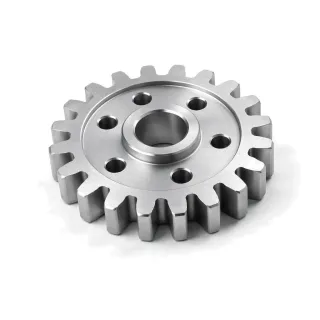 Citric Acid PassivationPassivation & electropolishingCitric-acid passivation is a separately searched and specified stainless-steel passivation route that removes free iron without nitric acid.CorrosionHardnessCost$
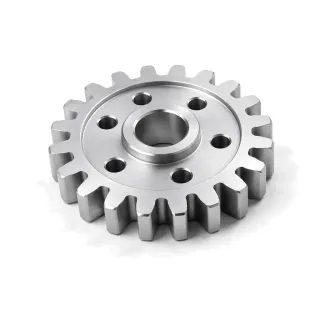 Stainless Steel PassivationPassivation & electropolishingPassivation removes free iron and shop contamination from stainless steel so its chromium-rich passive film can reform.CorrosionHardnessCost$
AMS 2700 — frequently asked
What is AMS 2700 Method 1 versus Method 2?
Method 1 uses nitric acid and has eight alloy- and process-specific types. Method 2 uses 4–10% citric acid and avoids nitric acid and sodium dichromate.
Does passivation add thickness?
No controlled dimensional coating is deposited. Passivation removes free iron and promotes a clean corrosion-resistant surface.
Must a drawing state a Method 1 type?
Yes, when engineering needs to control the nitric route. The selected type must be compatible with the stainless alloy and heat-treatment condition.
Is citric passivation always interchangeable with nitric passivation?
No. Both are covered, but the drawing, alloy qualification, acceptance class, and customer requirements determine whether Method 2 is allowed.
AMS 2700 is copyrighted by SAE International. This page explains the document so a drawing can be read; it does not reproduce the standard. Purchase the current edition from the publisher. Official source ↗