
Plating & metallizing · finish comparison
Electroless Nickel Plating vs Hard Chrome Plating
Electroless Nickel Plating and Hard Chrome Plating are both electroplating & electroless plating finishes; electroless nickel resists corrosion better (100–1,000 h vs 24–96 h salt spray).
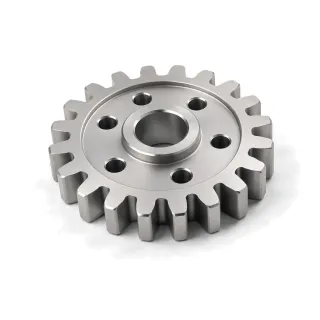
Electroless Nickel Plating
Electroplating & electroless plating · $$$ · instant quote
Electroless nickel is an autocatalytic nickel-phosphorus coating with nearly uniform thickness on complex geometry.
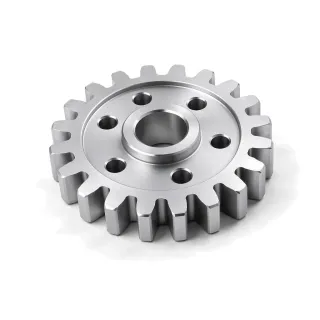
Hard Chrome Plating
Electroplating & electroless plating · $$$$ · instant quote
Hard chrome is a thick engineering chromium deposit for wear, low friction, and dimensional restoration.
When to choose which
Choose Electroless nickel
Choose Electroless nickel when uniform coating without finish grinding is more important.
- Uniform 5–75 µm buildup on complex shapes
- About 450–550 HV as plated; suitable heat treatment can approach 1000 HV
- High-phosphorus classes provide strong barrier corrosion resistance
Choose Hard chrome
Hard chrome is the pick when its strengths below matter more than Electroless nickel's.
- 850–1050 HV typical hardness
- 10–500 µm engineering thickness (wear to salvage)
- Low adhesive friction and good galling resistance
What the numbers say
- Electroless nickel resists corrosion better (100–1,000 h vs 24–96 h salt spray).
- Electroless nickel is the lower-cost option ($$$).
- Electroless nickel is the thinner coating (5–75 µm), so it disturbs tight fits less.
- Hard chrome tolerates more heat (400 °C continuous).
Buyer's decision notes
Choose electroless nickel for uniform coverage and corrosion control on complex engineering geometry. Choose hard chrome when a mature engineering chromium route, selective heavy build, low-friction surface or grind-to-size repair is central to the design.
- Coverage
- Electroless nickel can follow irregular surfaces when the bath circulates. Hard chrome is governed by current distribution and anode access; edges, recesses and deep bores need plating-specific tooling and cannot be assumed to receive the nominal drawing thickness.
- Fit and finishing
- Both can affect precision fits. Specify deposit thickness on significant surfaces, machining allowance and final size; for hard chrome, also state whether the surface is delivered as plated, ground, honed or lapped.
- Failure mode
- Choose from the actual contact: sliding, abrasion, impact, corrosion, lubricant and counterface. Hardness by itself does not rank coating life, and salt-spray hours do not represent wear-corrosion service on a moving interface.
- Steel integrity
- Cleaning and electroplating can introduce hydrogen into susceptible steel. Put stress relief, post-coating heat treatment and verification on the order when the substrate strength and governing specification require them.
Put this on the RFQ
- Provide substrate, heat treatment or hardness, service medium, wear mode, mating material and lubrication.
- Define coating class or process specification, significant surfaces, masked areas, thickness and final grind or roughness.
- State hydrogen-embrittlement controls and whether dimensional restoration or new-part protection is the objective.
Primary references
- ASTM — B733 — Active engineering specification for autocatalytic nickel-phosphorus coatings and their composition and heat-treatment choices.
- ASTM — B177/B177M — Active guide for engineering chromium electroplating, including racking, substrate preparation, finishing and hydrogen controls.
FabDigit resources: Electroless nickel datasheet · Hard chrome datasheet · surface finish selection guide
Scores side by side
Each score is 0–100 against every finish in this catalog. Corrosion is derived from salt-spray test duration and surface hardness from the finish layer's Vickers hardness where a measured figure exists; a finish that leaves the base metal's own surface is not rated for hardness. Cosmetic, lubricity and cost are FabDigit's engineering assessment. Scores and typical figures are screening data, not matched side-by-side tests or service-life rankings; ASTM B117 is a controlled salt-fog method, not a field-life prediction.
| Score | Electroless nickel | Hard chrome |
|---|---|---|
| Corrosion resistance | 70 Very good | 40 Fair |
| Surface hardness / wear | 68 Good | 73 Very good |
| Cosmetic quality | 55 Good | 45 Fair |
| Lubricity | 30 Low | 65 Good |
| Cost | 60 $$$ | 78 $$$$ |
Key numbers
| Property | Electroless nickel | Hard chrome |
|---|---|---|
| Thickness | 5–75 µm | 10–500 µm |
| Surface hardness | 450–1,000 HV | 850–1,050 HV |
| Salt-spray test duration | 100–1,000 h | 24–96 h |
| Max service temperature | 250 °C | 400 °C |
| Electrical | Conductive | Conductive |
| Colours | silver | silver |
| Relative cost | Premium ($$$) | High ($$$$) |
| Added lead time | 3–7 working days | 5–10 working days |
| RoHS | Compliant | Compliant |
| Instant quote | Yes | Yes |
Bold marks the side that is ahead on a row where more (or less, for cost and lead time) is better. Ranges are the typical specification window; the drawing call-out fixes the class.
Which materials take each finish
| Material family | Electroless nickel | Hard chrome |
|---|---|---|
| Brass | Yes | With care |
| Copper Alloy | Yes | With care |
| Stainless Steel | Yes | With care |
| Steel | Yes | Yes |
| Aluminum | With care | With care |
| DMLS / SLM | With care | With care |
| Nickel Alloy | — | With care |
| Titanium | With care | Limited |
| Zinc Alloy | With care | No |
| Magnesium Alloy | Limited | No |
| Polymer | Limited | No |
| SLA | Limited | No |
Specifications and drawing call-outs
Electroless nickel vs Hard chrome — frequently asked
What is the difference between Electroless nickel and Hard chrome?
Electroless Nickel Plating and Hard Chrome Plating are both electroplating & electroless plating finishes; electroless nickel resists corrosion better (100–1,000 h vs 24–96 h salt spray). Electroless nickel is the lower-cost option ($$$). Electroless nickel is the thinner coating (5–75 µm), so it disturbs tight fits less.
When should I use Electroless nickel instead of Hard chrome?
Choose Electroless nickel when uniform coating without finish grinding is more important.
Is Electroless nickel or Hard chrome cheaper?
Electroless nickel is the lower-cost finish ($$$ against $$$$ for Hard chrome) among the finishes FabDigit quotes. Both are priced per part with a lot minimum; the exact figure appears on the instant quote once the part is uploaded.
Which lasts longer in salt spray, Electroless nickel or Hard chrome?
Electroless nickel. Electroless nickel is rated 100–1,000 h and Hard chrome 24–96 h in neutral salt spray (ASTM B117 or the qualification hours of the governing specification). The figures are for the finish as specified on a clean, properly pre-treated substrate; sealing, thickness class and substrate alloy move them.