
Plating & metallizing · finish comparison
Decorative Nickel-Chrome Plating vs Hard Chrome Plating
Decorative Nickel-Chrome Plating and Hard Chrome Plating are both electroplating & electroless plating finishes; decorative chrome resists corrosion better (96–500 h vs 24–96 h salt spray).
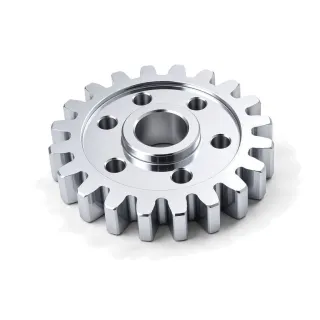
Decorative Nickel-Chrome Plating
Electroplating & electroless plating · $$$ · instant quote
Decorative chrome is a multilayer system: copper when needed, one or more nickel layers, and a very thin chromium topcoat.
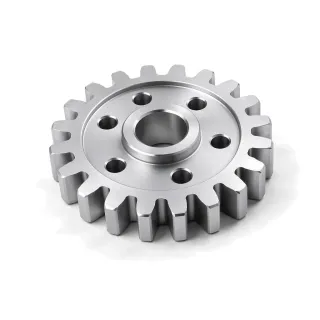
Hard Chrome Plating
Electroplating & electroless plating · $$$$ · instant quote
Hard chrome is a thick engineering chromium deposit for wear, low friction, and dimensional restoration.
When to choose which
Choose Decorative chrome
Decorative chrome is the pick when its strengths below matter more than Hard chrome's.
- Mirror-bright blue-white appearance
- Chromium topcoat commonly 0.25–1.0 µm
- Nickel underlayers provide corrosion protection
Choose Hard chrome
Choose Hard chrome when thick functional wear resistance is required.
- 850–1050 HV typical hardness
- 10–500 µm engineering thickness (wear to salvage)
- Low adhesive friction and good galling resistance
What the numbers say
- Decorative chrome resists corrosion better (96–500 h vs 24–96 h salt spray).
- Decorative chrome is the lower-cost option ($$$).
- Decorative chrome is the thinner coating (0.3–1 µm), so it disturbs tight fits less.
Buyer's decision notes
Decorative chrome is a multilayer appearance-and-corrosion system whose nickel layers do most of the system work. Hard chrome is an engineering chromium deposit for wear, friction or dimensional restoration. The word “chrome” does not make the two drawing call-outs interchangeable.
- Layer stack
- Decorative nickel-chrome may include copper plus nickel plus a thin chromium surface, selected by base metal and service condition. Engineering hard chrome is commonly applied as a functional deposit and is specified by the working surface and final engineering requirement.
- Substrate and appearance
- Decorative plating exposes waviness, pits and polishing differences in the base preparation; define significant visible surfaces and an approved appearance standard. Hard chrome should be judged by functional coverage, final dimensions and surface finish rather than showroom color match.
- Fit and finishing
- Decorative plating still adds a coating stack to threads and fits. Hard chrome may be intentionally built for later grinding or honing. In both cases, specify thickness on significant surfaces and final dimensions separately.
- Service validation
- ASTM B456 service conditions classify decorative-system exposure; they do not turn it into a wear coating. Conversely, hard chrome hardness or thickness does not establish decorative corrosion performance without the required underlayers and porosity control.
Put this on the RFQ
- Say “decorative nickel-chrome” or “engineering chromium” and cite the correct specification instead of using “chrome plate” alone.
- For decorative work, give base metal, service condition, layer classification, visible surfaces, color or appearance sample and rack-mark limits.
- For hard chrome, give substrate condition, functional surfaces, thickness, grind or hone allowance, final roughness and hydrogen controls.
Primary references
- ASTM — B456 — Active specification for copper-plus-nickel-plus-chromium and nickel-plus-chromium decorative coating systems and service conditions.
- ASTM — B177/B177M — Active guide distinguishing engineering or hard chromium and covering its process and finishing considerations.
FabDigit resources: Decorative chrome datasheet · Hard chrome datasheet · surface finish selection guide
Scores side by side
Each score is 0–100 against every finish in this catalog. Corrosion is derived from salt-spray test duration and surface hardness from the finish layer's Vickers hardness where a measured figure exists; a finish that leaves the base metal's own surface is not rated for hardness. Cosmetic, lubricity and cost are FabDigit's engineering assessment. Scores and typical figures are screening data, not matched side-by-side tests or service-life rankings; ASTM B117 is a controlled salt-fog method, not a field-life prediction.
| Score | Decorative chrome | Hard chrome |
|---|---|---|
| Corrosion resistance | 64 Good | 40 Fair |
| Surface hardness / wear | 71 Very good | 73 Very good |
| Cosmetic quality | 95 Excellent | 45 Fair |
| Lubricity | 40 Fair | 65 Good |
| Cost | 55 $$$ | 78 $$$$ |
Key numbers
| Property | Decorative chrome | Hard chrome |
|---|---|---|
| Thickness | 0.3–1 µm | 10–500 µm |
| Surface hardness | 700–1,000 HV | 850–1,050 HV |
| Salt-spray test duration | 96–500 h | 24–96 h |
| Max service temperature | — | 400 °C |
| Electrical | Conductive | Conductive |
| Colours | bright silver, satin silver | silver |
| Relative cost | Premium ($$$) | High ($$$$) |
| Added lead time | 5–10 working days | 5–10 working days |
| RoHS | Compliant | Compliant |
| Instant quote | Yes | Yes |
Bold marks the side that is ahead on a row where more (or less, for cost and lead time) is better. Ranges are the typical specification window; the drawing call-out fixes the class.
Which materials take each finish
| Material family | Decorative chrome | Hard chrome |
|---|---|---|
| Brass | Yes | With care |
| Copper Alloy | Yes | With care |
| Steel | Yes | Yes |
| Aluminum | With care | With care |
| DMLS / SLM | With care | With care |
| Nickel Alloy | — | With care |
| Stainless Steel | With care | With care |
| Zinc Alloy | With care | No |
| Magnesium Alloy | Limited | No |
| Polymer | Limited | No |
| SLA | Limited | No |
| Titanium | Limited | Limited |
Specifications and drawing call-outs
Decorative chrome
- ASTM B456 — Standard Specification for Electrodeposited Coatings of Copper Plus Nickel Plus Chromium and Nickel Plus Chromium
DECORATIVE COPPER-NICKEL-CHROMIUM PLATE PER ASTM B456, SERVICE CONDITION SC3, BRIGHT FINISH; SIGNIFICANT SURFACES AS SHOWN
Decorative chrome vs Hard chrome — frequently asked
What is the difference between Decorative chrome and Hard chrome?
Decorative Nickel-Chrome Plating and Hard Chrome Plating are both electroplating & electroless plating finishes; decorative chrome resists corrosion better (96–500 h vs 24–96 h salt spray). Decorative chrome is the lower-cost option ($$$). Decorative chrome is the thinner coating (0.3–1 µm), so it disturbs tight fits less.
When should I use Decorative chrome instead of Hard chrome?
Conversely: choose Hard chrome when thick functional wear resistance is required.
Is Decorative chrome or Hard chrome cheaper?
Decorative chrome is the lower-cost finish ($$$ against $$$$ for Hard chrome) among the finishes FabDigit quotes. Both are priced per part with a lot minimum; the exact figure appears on the instant quote once the part is uploaded.
Which lasts longer in salt spray, Decorative chrome or Hard chrome?
Decorative chrome. Decorative chrome is rated 96–500 h and Hard chrome 24–96 h in neutral salt spray (ASTM B117 or the qualification hours of the governing specification). The figures are for the finish as specified on a clean, properly pre-treated substrate; sealing, thickness class and substrate alloy move them.