
EMI Shielding Coating
Coatings for plastics · Spray applied
EMI shielding coating is a conductive metal-filled paint applied mainly to the inside of nonconductive enclosures.
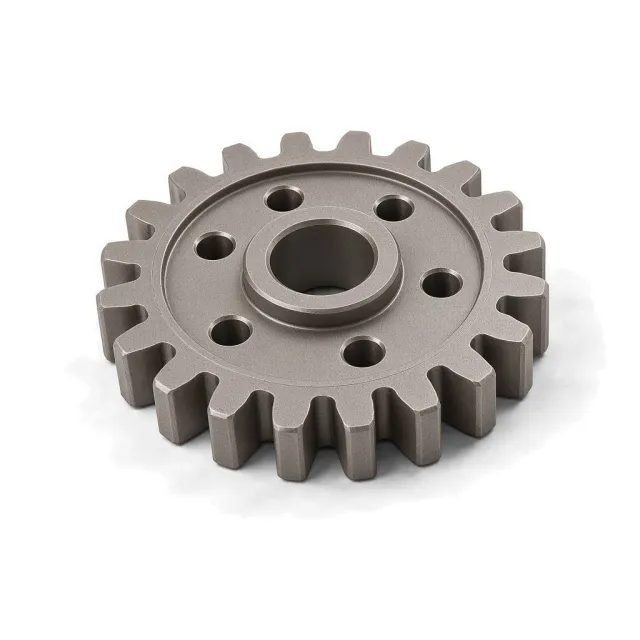
What is EMI coating?
It creates a continuous electrical shell that attenuates electromagnetic fields when correctly bonded across seams and to chassis ground.
How it works
Silver, copper, nickel, or hybrid conductive particles are dispersed in a polymer binder and sprayed onto cleaned, activated plastic. After curing, particle-to-particle contact forms a conductive network. Shielding depends not only on the coating but also on thickness, continuity, aperture size, seam design, gasket contact, and grounding. Overspray or a decorative topcoat can insulate intended contact lands, so the grounding architecture and masking plan must be designed together.
Why specify it
- Converts polymer housings into conductive shielding surfaces
- Typical v1 film is 15–30 µm
- Spray reaches complex interior enclosure geometry
- Can be locally masked around antennas and high-voltage clearances
Where it falls short
- Scratches and seams interrupt current paths
- Deep recesses can receive low film thickness
- Metal-filled coatings add cost and galvanic compatibility concerns
- Shielding cannot be guaranteed from coating thickness alone
EMI coating at a glance
EMI coating is a middle-of-the-range finish; its best score is cosmetic quality (25 of 100), at a high cost. Surface hardness is not rated: the finish leaves the part's own surface.
Each score is 0–100 against every finish in this catalog. Corrosion comes from salt-spray life (ASTM B117, log scale) and hardness from the finish layer's Vickers or pencil hardness; cosmetic, lubricity and cost are FabDigit's engineering assessment. Economy on the radar is the inverse of cost.
EMI coating key numbers
Typical values from the governing specifications and shop practice; bars are this finish against the highest value among coatings for plastics finishes.
- Thickness
- 15–30 µm in the v1 catalog; exact product data sheet controls
- Electrical
- Conductive
- Colours
- silver
- copper
- gray
- Appearance
- Functional metallic gray, silver, or copper interior film; usually not selected as a cosmetic exterior.
Specifications for EMI coating
The documents a drawing cites to define this finish, with the Type / Class rows that apply. Each links to a page explaining the standard.
Drawing call-out
NICKEL/COPPER EMI SHIELDING COATING ON ENCLOSURE INTERIOR, 20–30 µm DFT; MAINTAIN CONTINUOUS COATING ACROSS GASKET LANDS; MASK ANTENNA KEEP-OUT AND CONNECTOR INSULATORSWhich materials take EMI coating?
Verdict per material family, with the grades that behave differently. Each family links to its datasheets in the material library.
| Material family | Verdict | Notes |
|---|---|---|
| Yes | Primary use; surface activation or primer may be required. | |
| With care | Clean tarnish and qualify adhesion. | |
| With care | Seal porosity and account for any conductive reinforcement. | |
| With care | Clean tarnish and qualify adhesion; some solvents stain copper. | |
| With care | Seal layer lines so the conductive film is continuous across seams. | |
| With care | Needs conversion coating or primer before an organic film. | |
| With care | Clean and seal before conductive coating. | |
| With care | Post-cure and verify solvent compatibility. | |
| With care | Seal porous nylon before applying a continuous shield. | |
| With care | Needs conversion coating or primer; some solvents attack zinc. | |
| Limited | Bulk aluminum already shields; coating is for polymer housings, not the metal itself. | |
| Limited | Stainless already conducts; coating is for polymer enclosures. | |
| Limited | Bulk steel already shields; this coating is for polymer enclosures. | |
| Limited | Titanium already conducts; coating is for polymer enclosures. | |
| No | Metal AM enclosures already provide a conductive shield. |
How EMI coating is applied, and what it does to the part
- 1Clean and activate plastic
- 2Mask
- 3Prime if required
- 4Mix conductive coating
- 5Spray controlled passes
- 6Cure
- 7Measure thickness and resistance
- 8Verify assembled shielding performance
| Dimensions | Allow 15–30 µm in grooves and seams; keep gasket contact lands coated but free of insulating topcoat. |
|---|---|
| Build-up per side | 15–30 µm — Conductive dry film adds its thickness and must remain exposed at designed contact lands. |
| Masking | Usually needed. Mask antennas, connectors, creepage and clearance zones, threads, optical areas, and all surfaces not intended to join the shield. |
| Electrical | Conductive |
| Appearance | Functional metallic gray, silver, or copper interior film; usually not selected as a cosmetic exterior. |
| Added lead time | 4–8 working days on top of the bare part |
Design rules for EMI coating
What to decide on the drawing before the part goes to the finisher.
- Design a continuous conductive path across every enclosure seam.A conductive panel does not shield through an unbonded seam.
- Keep apertures small relative to the shortest wavelength of concern.Coating cannot close an electromagnetic slot.
- Expose coating at gasket and ground contacts.Decorative paint over the shield blocks electrical bonding.
- Test the assembled enclosure, not a flat coupon alone.Geometry, cables, seams, and apertures dominate shielding effectiveness.
EMI coating versus the alternatives
Finishes engineers weigh against EMI coating, and when each wins.
| Finish | Corrosion | Hardness | Cosmetic | Cost | Thickness | Choose it when |
|---|---|---|---|---|---|---|
EMI coating this page | 20 | — | 25 | $$$$ | 15–30 µm | — |
| 15 | — | 20 | $$$ | 15–50 µm | when conductivity is needed without a defined EMI enclosure function | |
| 45 | — | 94 | $$$$ | 0.05–1 µm | when a thinner deposited metal layer is preferred |
The radar overlays EMI coating with Conductive Coating, its most common alternative — chosen when conductivity is needed without a defined EMI enclosure function. Scores in the table are 0–100 across every finish in the catalog.
Cost, lead time and compliance
Relative cost
EMI Shielding Coating is a high-cost finish ($$$$): more expensive than about 73 % of the finishes FabDigit quotes.
Finishing is priced per part with a lot minimum, from FabDigit's own China-side rates. The exact figure appears on the instant quote once the part is uploaded.
Lead time and compliance
| Added lead time | 4–8 working days |
|---|---|
| RoHS | Compliant |
| Notes | Confirm metal powder, binder, solvent, and restricted-substance compliance for the exact product. |
What EMI coating is used for
- Medical electronics housings
- Radio enclosures
- Instrument cases
- Aerospace electronics covers
- Printed prototype enclosures
EMI coating — frequently asked
does conductive paint block EMI
Metal-filled paint can form an effective shield on a plastic enclosure, but coating alone is not enough. Seams, apertures, grounding, and gasket contact control assembled performance.
how thick is EMI shielding coating
The v1 catalog uses 15–30 µm for this class. Follow the named product data sheet and verify resistance and shielding on the assembled enclosure.
nickel vs copper EMI shielding paint
Copper-filled systems generally offer high conductivity, while nickel-containing systems can provide different oxidation and cost tradeoffs. Selection must also consider galvanic contacts and the required frequency range.
can EMI coating be painted over
A decorative topcoat can cover non-contact areas if the system is compatible. Ground and gasket lands must remain electrically exposed because an insulating topcoat breaks the shield bond.
does EMI coating affect threads
A 15–30 µm film can tighten threads and create uncontrolled conductive debris during assembly. Mask ordinary threads, or explicitly design a qualified conductive fastening interface.
Other coatings for plastics finishes
 Clear CoatingClear coating is a transparent liquid topcoat used to protect color, graphics, and prepared printed-polymer surfaces while controlling gloss.CorrosionHardnessCost$$
 Hydrophobic Nano-CoatingHydrophobic nano-coating is an ultrathin water-repellent treatment that lowers surface energy so droplets bead and shed.CorrosionHardnessCost$$
 Soft-Touch CoatingSoft-touch coating is a flexible polyurethane-class finish that gives rigid plastic a warm, rubber-like tactile feel and improved grip.CorrosionHardnessCost$$$
 UV-Cured CoatingUV-cured coating is a clear or pigmented liquid film polymerized rapidly by ultraviolet light.CorrosionHardnessCost$$