
Anodizing, conversion & passivation · finish comparison
Black Oxide vs Manganese Phosphate
Black Oxide and Manganese Phosphate are both black oxide & phosphate finishes; black oxide is the lower-cost option ($).
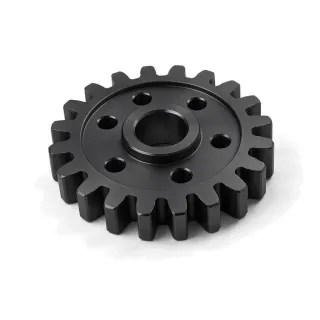
Black Oxide
Black oxide & phosphate · $ · instant quote
Black oxide converts the surface of ferrous parts to black magnetite for low-reflectance appearance and minimal dimensional change.
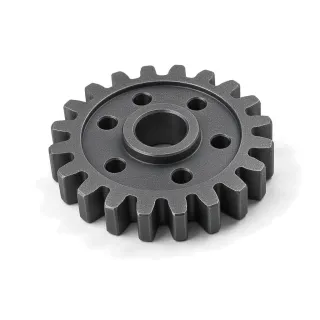
Manganese Phosphate
Black oxide & phosphate · $$ · instant quote
Manganese phosphate is a heavy crystalline conversion coating for steel that retains oil and improves running-in behavior on loaded sliding parts.
When to choose which
Choose Black oxide
Choose Black oxide when negligible buildup is required.
- Only about 0.5–2 µm thick
- Maintains thread and bearing-fit dimensions
- Produces nonreflective black appearance
Choose Manganese phosphate
Choose Manganese phosphate when greater oil retention and break-in wear performance are required.
- Porous 5–20 µm layer retains lubricant
- Improves running-in on gears, cams, and piston parts
- MIL-DTL-16232 controls heavy coating mass
What the numbers say
- Black oxide is the lower-cost option ($).
- Black oxide is the thinner coating (0.5–2 µm), so it disturbs tight fits less.
Buyer's decision notes
Black oxide is the minimal-build black conversion finish when appearance, light oil retention and dimensional preservation lead the decision. Manganese phosphate is the heavier crystalline conversion layer for ferrous wear interfaces, break-in and lubricant retention.
- Ferrous substrate
- Both are conversion treatments for ferrous materials, but the applicable steel classes and process route must be confirmed. Neither is a universal black finish for aluminum, zinc or arbitrary mixed-material assemblies.
- Interface behavior
- Black oxide is preferred where coating build must be kept very small. Manganese phosphate creates a more substantial crystalline surface, so check close fits, rolling or sliding contacts and the intended break-in condition.
- Supplementary treatment
- Oil, wax or another approved preservative is part of the functional system rather than an optional cosmetic detail. State the supplementary treatment, cleanliness requirement and whether the part will later be painted, bonded or assembled dry.
- Corrosion claim
- MIL-DTL-13924 describes only limited corrosion protection from black conversion coating under mildly corrosive conditions. Do not substitute a catalog salt-spray number for the actual preservative, handling, storage and service exposure.
Put this on the RFQ
- Provide steel grade, hardness or heat treatment, applicable MIL class or phosphate type and the required supplementary treatment.
- Identify sliding surfaces, critical fits, masked regions and whether oil retention, paint adhesion or appearance is the primary function.
- State cleanliness, residue, corrosion-test and packaging requirements, especially when parts must arrive oiled or dry.
Primary references
- DLA ASSIST — MIL-DTL-13924 — Specification for inorganic black coatings on ferrous metals; its scope explicitly characterizes the corrosion protection as limited.
- DLA ASSIST — MIL-DTL-16232 — Active specification for heavy manganese- or zinc-base phosphate coatings on ferrous metals and supplementary treatments.
FabDigit resources: Black oxide datasheet · Manganese phosphate datasheet · surface finish selection guide
Scores side by side
Each score is 0–100 against every finish in this catalog. Corrosion is derived from salt-spray test duration and surface hardness from the finish layer's Vickers hardness where a measured figure exists; a finish that leaves the base metal's own surface is not rated for hardness. Cosmetic, lubricity and cost are FabDigit's engineering assessment. Scores and typical figures are screening data, not matched side-by-side tests or service-life rankings; ASTM B117 is a controlled salt-fog method, not a field-life prediction.
| Score | Black oxide | Manganese phosphate |
|---|---|---|
| Corrosion resistance | 38 Fair | 38 Fair |
| Surface hardness / wear | — — | — — |
| Cosmetic quality | 55 Good | 25 Low |
| Lubricity | 30 Low | 60 Good |
| Cost | 10 $ | 25 $$ |
Key numbers
| Property | Black oxide | Manganese phosphate |
|---|---|---|
| Thickness | 0.5–2 µm | 5–20 µm |
| Salt-spray test duration | 24–72 h | 24–72 h |
| Max service temperature | 300 °C | — |
| Electrical | Semi-conductive | Semi-conductive |
| Colours | black | dark gray, black |
| Relative cost | Budget ($) | Standard ($$) |
| Added lead time | 2–4 working days | 3–5 working days |
| RoHS | Compliant | Compliant |
| Instant quote | Yes | Yes |
Bold marks the side that is ahead on a row where more (or less, for cost and lead time) is better. Ranges are the typical specification window; the drawing call-out fixes the class.
Which materials take each finish
| Material family | Black oxide | Manganese phosphate |
|---|---|---|
| Steel | Yes | Yes |
| DMLS / SLM | With care | With care |
| Stainless Steel | With care | No |
Specifications and drawing call-outs
Black oxide
- MIL-DTL-13924 — Coating, Inorganic, Black, for Ferrous Metals
BLACK OXIDE PER MIL-DTL-13924 CLASS 1, WITH WATER-DISPLACING PRESERVATIVE OIL; UNIFORM BLACK APPEARANCE
Manganese phosphate
- MIL-DTL-16232 — Phosphate Coating, Heavy, Manganese or Zinc Base
MANGANESE PHOSPHATE PER MIL-DTL-16232 TYPE M, CLASS 1, 22 G/M² MINIMUM COATING WEIGHT; IMPREGNATE WITH PRESERVATIVE OIL
Black oxide vs Manganese phosphate — frequently asked
What is the difference between Black oxide and Manganese phosphate?
Black Oxide and Manganese Phosphate are both black oxide & phosphate finishes; black oxide is the lower-cost option ($). Black oxide is the thinner coating (0.5–2 µm), so it disturbs tight fits less.
When should I use Black oxide instead of Manganese phosphate?
Choose Black oxide when negligible buildup is required. Conversely: choose Manganese phosphate when greater oil retention and break-in wear performance are required.
Is Black oxide or Manganese phosphate cheaper?
Black oxide is the lower-cost finish ($ against $$ for Manganese phosphate) among the finishes FabDigit quotes. Both are priced per part with a lot minimum; the exact figure appears on the instant quote once the part is uploaded.
Do Black oxide and Manganese phosphate protect equally against corrosion?
On paper, yes: both are rated 24–72 h in neutral salt spray (ASTM B117 or the qualification hours of the governing specification). In service the difference comes from sealing, thickness class and the substrate alloy rather than from the choice between the two.