
Cross-group finish comparison
Nylon Part Dyeing vs Wet Painting
Nylon Part Dyeing (colouring & dyeing) and Wet Painting (paint, powder & polymer coatings) solve the same problem by different routes; nylon dyeing is the lower-cost option ($).
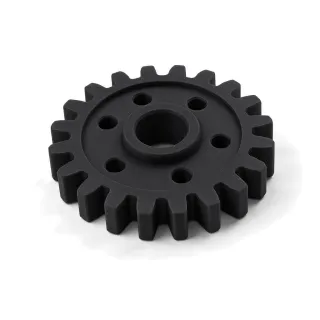
Nylon Part Dyeing
Colouring & dyeing · $ · instant quote
Nylon part dyeing colors porous SLS and MJF polyamide by immersing finished parts in a heated dye bath.
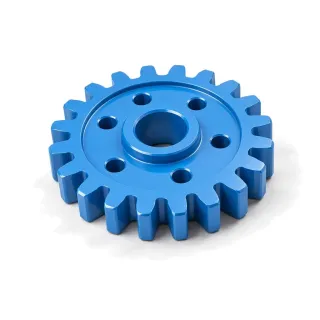
Wet Painting
Paint, powder & polymer coatings · $$ · instant quote
Wet painting atomizes a liquid resin, pigment, and solvent or water system onto prepared metal or plastic.
When to choose which
Choose Nylon dyeing
Nylon dyeing is the pick when its strengths below matter more than Wet paint's.
- Adds color with essentially no separate film buildup
- Preserves molded-like texture and fine geometry
- Black hides handling soil and print-to-print color variation
Choose Wet paint
Choose Wet paint when an exact bright color or smooth filled surface is required.
- Matches RAL, Pantone, or customer master colors
- Covers metals, molded plastics, and printed polymers with suitable primer
- Multi-layer systems can separate adhesion, color, and UV-protection functions
What the numbers say
- Nylon dyeing is the lower-cost option ($).
- Nylon dyeing is unchanged; Wet paint is insulating.
Scores side by side
Each score is 0–100 against every finish in this catalog. Corrosion is derived from salt-spray test duration and surface hardness from the finish layer's Vickers hardness where a measured figure exists; a finish that leaves the base metal's own surface is not rated for hardness. Cosmetic, lubricity and cost are FabDigit's engineering assessment. Scores and typical figures are screening data, not matched side-by-side tests or service-life rankings; ASTM B117 is a controlled salt-fog method, not a field-life prediction.
| Score | Nylon dyeing | Wet paint |
|---|---|---|
| Corrosion resistance | — — | 59 Good |
| Surface hardness / wear | — — | 10 Minimal |
| Cosmetic quality | 75 Very good | 90 Excellent |
| Lubricity | 10 Minimal | 15 Low |
| Cost | 15 $ | 30 $$ |
Key numbers
| Property | Nylon dyeing | Wet paint |
|---|---|---|
| Thickness | — | 20–80 µm |
| Salt-spray test duration | — | 96–250 h |
| Max service temperature | — | 120 °C |
| Electrical | Unchanged | Insulating |
| Colours | black, blue, red, green, custom dark color | RAL colors, Pantone colors, custom color, clear |
| Relative cost | Budget ($) | Standard ($$) |
| Added lead time | 2–5 working days | 3–7 working days |
| RoHS | Compliant | Compliant |
| Instant quote | Yes | Yes |
Bold marks the side that is ahead on a row where more (or less, for cost and lead time) is better. Ranges are the typical specification window; the drawing call-out fixes the class.
Which materials take each finish
| Material family | Nylon dyeing | Wet paint |
|---|---|---|
| Aluminum | No | Yes |
| MJF | Yes | Limited |
| SLS | Yes | Limited |
| Steel | No | Yes |
| Brass | No | With care |
| Composite | With care | With care |
| Copper Alloy | No | With care |
| DMLS / SLM | No | With care |
| Magnesium Alloy | No | With care |
| Polymer | With care | With care |
| Stainless Steel | No | With care |
| Titanium | No | With care |
| Zinc Alloy | No | With care |
| FDM | Limited | Limited |
| SLA | No | Limited |
Nylon dyeing vs Wet paint — frequently asked
What is the difference between Nylon dyeing and Wet paint?
Nylon Part Dyeing (colouring & dyeing) and Wet Painting (paint, powder & polymer coatings) solve the same problem by different routes; nylon dyeing is the lower-cost option ($). Nylon dyeing is unchanged; Wet paint is insulating.
When should I use Nylon dyeing instead of Wet paint?
Conversely: choose Wet paint when an exact bright color or smooth filled surface is required.
Is Nylon dyeing or Wet paint cheaper?
Nylon dyeing is the lower-cost finish ($ against $$ for Wet paint) among the finishes FabDigit quotes. Both are priced per part with a lot minimum; the exact figure appears on the instant quote once the part is uploaded.