
Cross-group finish comparison
Nitriding and QPQ vs Titanium Nitride PVD
Nitriding and QPQ (anodizing & conversion coatings) and Titanium Nitride PVD (pvd hard coatings) solve the same problem by different routes; nitriding resists corrosion better.
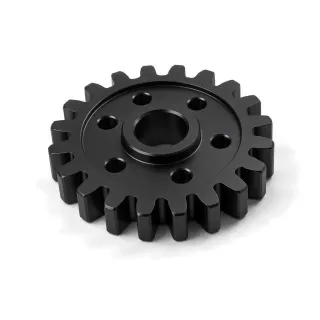
Nitriding and QPQ
Anodizing & conversion coatings · $$$$
Nitriding diffuses nitrogen into steel to create a hard wear-resistant case without depositing a conventional coating.
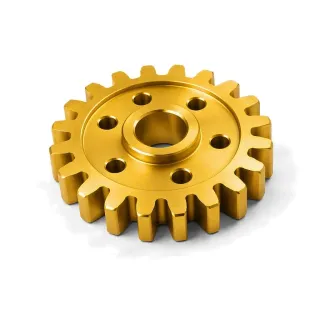
Titanium Nitride PVD
PVD hard coatings · $$$$ · instant quote
TiN is a gold, hard ceramic PVD coating for cutting tools, moulds, medical instruments, and decorative stainless hardware.
When to choose which
Choose Nitriding
Nitriding is the pick when its strengths below matter more than TiN PVD's.
- Surface hardness commonly 700–1200 HV
- Case depth about 0.1–0.7 mm
- Low distortion compared with carburizing
Choose TiN PVD
Choose TiN PVD when a deposited hard film is preferred.
- About 2300 HV surface hardness
- Recognizable gold decorative colour
- 1–5 µm film preserves sharp edges
What the numbers say
- Nitriding resists corrosion better.
- TiN PVD is the harder surface (2,000–2,500 HV vs 700–1,200 HV).
- Nitriding is the lower-cost option ($$$$).
- TiN PVD is the thinner coating (1–5 µm), so it disturbs tight fits less.
- Nitriding is unchanged; TiN PVD is conductive.
- TiN PVD tolerates more heat (600 °C continuous).
Scores side by side
Each score is 0–100 against every finish in this catalog. Corrosion is derived from salt-spray test duration and surface hardness from the finish layer's Vickers hardness where a measured figure exists; a finish that leaves the base metal's own surface is not rated for hardness. Cosmetic, lubricity and cost are FabDigit's engineering assessment. Scores and typical figures are screening data, not matched side-by-side tests or service-life rankings; ASTM B117 is a controlled salt-fog method, not a field-life prediction.
| Score | Nitriding | TiN PVD |
|---|---|---|
| Corrosion resistance | 55 Good | 45 Fair |
| Surface hardness / wear | 73 Very good | 87 Excellent |
| Cosmetic quality | 55 Good | 88 Excellent |
| Lubricity | 58 Good | 45 Fair |
| Cost | 72 $$$$ | 72 $$$$ |
Key numbers
| Property | Nitriding | TiN PVD |
|---|---|---|
| Thickness | 5–20 µm | 1–5 µm |
| Surface hardness | 700–1,200 HV | 2,000–2,500 HV |
| Max service temperature | 500 °C | 600 °C |
| Electrical | Unchanged | Conductive |
| Colours | silver-grey, black QPQ | gold |
| Relative cost | High ($$$$) | High ($$$$) |
| Added lead time | 7–15 working days | 5–10 working days |
| RoHS | Compliant | Compliant |
| Instant quote | On request | Yes |
Bold marks the side that is ahead on a row where more (or less, for cost and lead time) is better. Ranges are the typical specification window; the drawing call-out fixes the class.
Which materials take each finish
| Material family | Nitriding | TiN PVD |
|---|---|---|
| Stainless Steel | With care | Yes |
| Steel | Yes | Yes |
| Tungsten Alloy | — | Yes |
| DMLS / SLM | With care | — |
| Titanium | Limited | With care |
| Aluminum | No | Limited |
| Brass | No | Limited |
| Copper Alloy | No | Limited |
Nitriding vs TiN PVD — frequently asked
What is the difference between Nitriding and TiN PVD?
Nitriding and QPQ (anodizing & conversion coatings) and Titanium Nitride PVD (pvd hard coatings) solve the same problem by different routes; nitriding resists corrosion better. TiN PVD is the harder surface (2,000–2,500 HV vs 700–1,200 HV). Nitriding is the lower-cost option ($$$$).
When should I use Nitriding instead of TiN PVD?
Conversely: choose TiN PVD when a deposited hard film is preferred.
Is Nitriding or TiN PVD cheaper?
Nitriding is the lower-cost finish ($$$$ against $$$$ for TiN PVD) among the finishes FabDigit quotes. Both are priced per part with a lot minimum; the exact figure appears on the instant quote once the part is uploaded.