
Paint, powder & polymer coatings · finish comparison
Cerakote vs PTFE Dry-Film Coating
Cerakote and PTFE Dry-Film Coating are both paint, powder & polymer coatings finishes; cerakote is the lower-cost option ($$$).
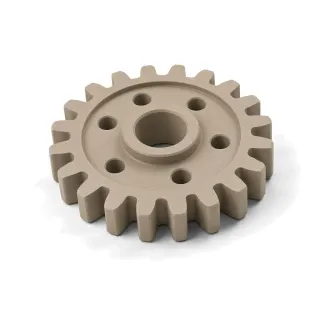
Cerakote
Paint, powder & polymer coatings · $$$ · instant quote
Cerakote is a trademarked ceramic-polymer thin-film coating supplied in product-specific air-cure and oven-cure series.
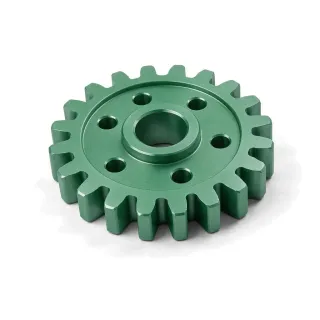
PTFE Dry-Film Coating
Paint, powder & polymer coatings · $$$ · instant quote
PTFE dry-film coating is a fluoropolymer-based low-friction, non-stick coating for metal components.
When to choose which
Choose Cerakote
Choose Cerakote when color and harder thin-film handling are more important than maximum lubricity.
- H-Series is commonly applied near 25 µm dry-film thickness
- Thin film preserves markings and sharper feature definition than powder coat
- Broad color and low-gloss options support cosmetic hardware
Choose PTFE coating
PTFE coating is the pick when its strengths below matter more than Cerakote's.
- Typical dry film is 15–50 µm
- Representative dry coefficient of friction is approximately 0.05–0.1
- Selected systems can serve to approximately 260 °C
What the numbers say
- Cerakote is the lower-cost option ($$$).
- PTFE coating tolerates more heat (260 °C continuous).
Scores side by side
Each score is 0–100 against every finish in this catalog. Corrosion is derived from salt-spray test duration and surface hardness from the finish layer's Vickers hardness where a measured figure exists; a finish that leaves the base metal's own surface is not rated for hardness. Cosmetic, lubricity and cost are FabDigit's engineering assessment. Scores and typical figures are screening data, not matched side-by-side tests or service-life rankings; ASTM B117 is a controlled salt-fog method, not a field-life prediction.
| Score | Cerakote | PTFE coating |
|---|---|---|
| Corrosion resistance | 83 Very good | 78 Very good |
| Surface hardness / wear | 27 Low | — — |
| Cosmetic quality | 88 Excellent | 45 Fair |
| Lubricity | 30 Low | 95 Excellent |
| Cost | 55 $$$ | 55 $$$ |
Key numbers
| Property | Cerakote | PTFE coating |
|---|---|---|
| Thickness | 20–30 µm | 15–50 µm |
| Salt-spray test duration | 500–1,000 h | 250–1,000 h |
| Max service temperature | 200 °C | 260 °C |
| Electrical | Insulating | Insulating |
| Colours | black, gray, tan, green, blue, red, custom product color | black, gray, green, blue, custom product color |
| Relative cost | Premium ($$$) | Premium ($$$) |
| Added lead time | 4–8 working days | 5–10 working days |
| RoHS | Compliant | Compliant |
| Instant quote | Yes | Yes |
Bold marks the side that is ahead on a row where more (or less, for cost and lead time) is better. Ranges are the typical specification window; the drawing call-out fixes the class.
Which materials take each finish
| Material family | Cerakote | PTFE coating |
|---|---|---|
| Aluminum | Yes | Yes |
| DMLS / SLM | Yes | With care |
| Stainless Steel | Yes | Yes |
| Steel | Yes | Yes |
| Titanium | Yes | With care |
| Brass | With care | With care |
| Copper Alloy | With care | With care |
| Magnesium Alloy | With care | With care |
| Zinc Alloy | With care | With care |
| FDM | No | Limited |
| MJF | Limited | Limited |
| Polymer | Limited | Limited |
| SLA | No | Limited |
| SLS | Limited | Limited |
Cerakote vs PTFE coating — frequently asked
What is the difference between Cerakote and PTFE coating?
Cerakote and PTFE Dry-Film Coating are both paint, powder & polymer coatings finishes; cerakote is the lower-cost option ($$$). PTFE coating tolerates more heat (260 °C continuous).
When should I use Cerakote instead of PTFE coating?
Choose Cerakote when color and harder thin-film handling are more important than maximum lubricity.
Is Cerakote or PTFE coating cheaper?
Cerakote is the lower-cost finish ($$$ against $$$ for PTFE coating) among the finishes FabDigit quotes. Both are priced per part with a lot minimum; the exact figure appears on the instant quote once the part is uploaded.
Which lasts longer in salt spray, Cerakote or PTFE coating?
Cerakote. Cerakote is rated 500–1,000 h and PTFE coating 250–1,000 h in neutral salt spray (ASTM B117 or the qualification hours of the governing specification). The figures are for the finish as specified on a clean, properly pre-treated substrate; sealing, thickness class and substrate alloy move them.